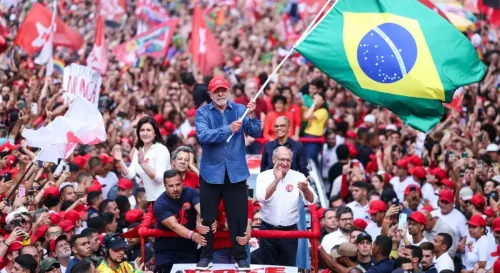
Lula da Silva wins Brazil presidential election, secures historic 4th term
Synopsis
Lula da Silva has done what few politicians anywhere manage — win a fourth presidential term after prison time, conviction, and political exile. His defeat of Flavio Bolsonaro in the runoff closes a dramatic chapter and opens a new one, with Brazil's social agenda and BRICS-oriented foreign policy set to deepen from January 2027.
Key Takeaways
Luiz Inácio Lula da Silva won the Brazilian presidential runoff , defeating Liberal Party candidate Flavio Bolsonaro .
This is Lula's fourth presidential term ; he is set to be sworn in on 5 January 2027 .
Lula previously served as president from 2003 to 2010 and won a third term in 2022 by defeating Jair Bolsonaro.
All corruption convictions against him from the Operation Car Wash probe were annulled by Brazil's Supreme Federal Court in March 2021 .
His policy agenda centres on social spending, workers' rights, BRICS cooperation, and stronger ties with China .
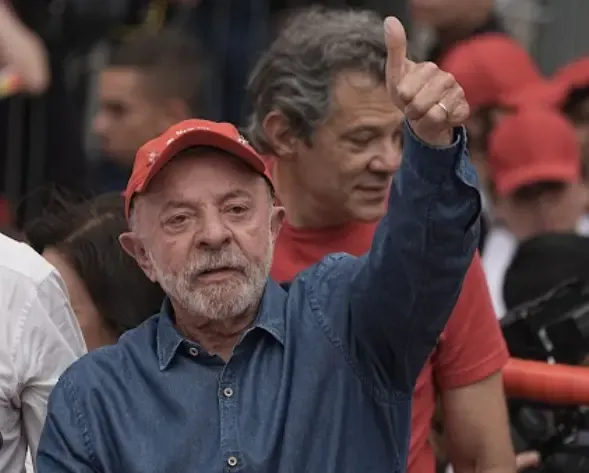
Luiz Inácio Lula da Silva has won the Brazilian presidential runoff, defeating Liberal Party candidate Flavio Bolsonaro — who had led after the first round — to claim a fourth term in the country's highest office. The result cements Lula's position as one of the most consequential political figures in Latin American history.
A Life Shaped by Poverty and Politics
Born in October 1945 in northeastern Brazil, Lula was the seventh child in a poor rural family. By the early 1970s, he had risen to prominence as a trade union leader, becoming a prominent voice for the working class and a central figure in the resistance against Brazil's military regime. In 1980, he co-founded the Workers' Party (PT), which would become the vehicle for his political ascent.
Presidential Career and the Bolsa Família Legacy
Lula won a landslide in the 2002 presidential election, becoming Brazil's first president from a working-class background. Re-elected in 2006, his tenure is most closely associated with the flagship Bolsa Família (Family Allowance) cash transfer programme, widely credited with lifting millions of Brazilians out of poverty. His two initial terms transformed Brazil's social safety net and its standing in international affairs.
Corruption Charges, Prison, and Vindication
In 2014, Brazilian judicial authorities launched the sweeping anti-corruption probe known as Operation Car Wash. Lula was subsequently investigated, convicted, and imprisoned. However, in March 2021, Brazil's Supreme Federal Court annulled all corruption convictions against him, clearing the path for his return to politics. He re-entered the presidential race in 2022, defeating then-President Jair Bolsonaro and becoming the first Brazilian president elected to three terms by popular vote.
Policy Priorities and Foreign Policy Stance
Lula advocates a stronger role for government in the economy, robust social protections, and enhanced workers' rights. On the global stage, he favours active engagement in multilateral forums, with BRICS cooperation and South-South cooperation forming key planks of his foreign policy agenda. He has also placed significant emphasis on Brazil's relationship with China, actively promoting deeper bilateral ties. Notably, his foreign policy approach marks a clear departure from his predecessor's more isolationist posture.
What Comes Next
Lula is scheduled to begin his fourth four-year presidential term on 5 January 2027. His victory, coming after defeating Flavio Bolsonaro — the son of former President Jair Bolsonaro — adds a sharp political dimension to the result. The incoming term is expected to deepen Brazil's re-engagement with multilateral institutions and social spending programmes.
Frequently Asked Questions
Who is Luiz Inácio Lula da Silva?
Luiz Inácio Lula da Silva is a Brazilian politician and the leader of the Workers' Party (PT), now elected to his fourth presidential term. Born in 1945 in northeastern Brazil, he rose from a poor rural background to become a trade union leader before entering politics, serving as president from 2003 to 2010 and again from 2023.
Who did Lula defeat in the presidential runoff?
Lula defeated Flavio Bolsonaro, the Liberal Party candidate and son of former President Jair Bolsonaro, in the presidential runoff. Flavio Bolsonaro had led after the first round of voting.
When will Lula begin his fourth presidential term?
Lula is scheduled to begin his fourth four-year presidential term on 5 January 2027, following his runoff victory.
What happened with Lula's corruption charges?
Lula was investigated, convicted, and imprisoned as part of Brazil's Operation Car Wash anti-corruption probe that began in 2014. Brazil's Supreme Federal Court annulled all corruption convictions against him in March 2021, clearing him to return to politics and contest the presidency.
What are Lula's key policy positions?
Lula advocates a greater role for the government in the economy, stronger social policies, and enhanced workers' rights. On foreign policy, he favours active engagement in multilateral forums, with BRICS cooperation and South-South cooperation as priorities, alongside stronger ties with China.