Trillions Flowing Into US: Commerce Sec Lutnick Defends Trade Policy Before Congress
Synopsis
Commerce Secretary Howard Lutnick told Congress trillions in capital are flooding into America — but lawmakers fired back with data on $1,700 food cost hikes, manufacturing job losses, and a $1.8 billion budget cut that critics say will gut small business support. The administration's industrial revival promise comes with a brutal two-to-three-year waiting period.
Key Takeaways
Commerce Secretary Howard Lutnick testified before the House Appropriations Subcommittee on April 25, 2025 , claiming trillions in capital investment are entering the United States .
US exports reached $3.4 trillion in 2025 , a six per cent increase , with the trade deficit at a 16-year low , according to Lutnick.
The proposed Commerce Department budget of $9.2 billion represents a $1.8 billion (16.5%) cut from current spending levels.
Rosa DeLauro cited estimates that Trump-era tariffs have raised household food costs by $1,700 in 2025 , challenging the administration's economic narrative.
Lutnick admitted new manufacturing jobs from current investments are two to three years away , as factories have yet to come online.
The Bureau of Industry and Security was described as the frontline defence against China acquiring advanced US semiconductor and technology assets.
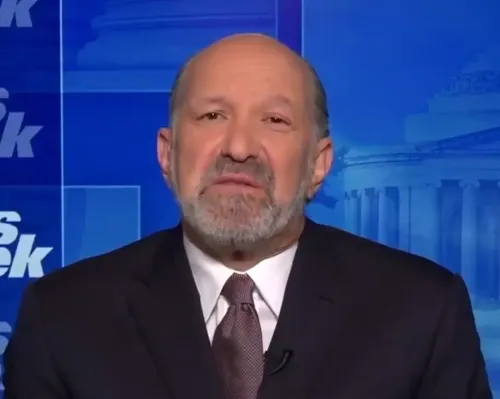
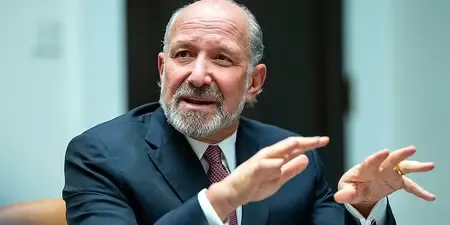
Washington, April 25, 2025 — US Commerce Secretary Howard Lutnick declared before Congress that "trillions of dollars of capital investment are pouring into America", mounting a robust defence of the Trump administration's trade and economic agenda even as lawmakers from both parties challenged the policy's human cost. Lutnick testified before the House Appropriations Subcommittee on Friday, April 25, where he faced pointed questions on tariffs, job losses, and proposed budget cuts to federal programmes.
Record Investment Claims and Industrial Revival
Lutnick opened his testimony by asserting that the United States remains "the strongest and most resilient economy in the world", pointing to a surge in manufacturing and energy sector investments as proof of a broader industrial renaissance. He cited major commitments in semiconductor fabrication and energy infrastructure across multiple states, saying "company after company and industry after industry" had made record-setting pledges to build domestically.
On trade metrics, Lutnick stated that US exports reached $3.4 trillion in 2025, representing a six per cent year-on-year increase, while the trade deficit fell to its lowest level in 16 years. He credited the administration's "America First trade policy" for both boosting domestic production and attracting unprecedented levels of foreign direct investment.
This comes amid a broader global recalibration of supply chains, as multinational corporations reassess their dependence on China following years of geopolitical tension — a trend that predates the current administration but has accelerated under its tariff regime.
National Security and Technology Export Controls
Lutnick described the Bureau of Industry and Security (BIS) as "the frontline and our key defence from China trying to get our best chips and our best technology". He argued that expanding enforcement capacity within BIS would help prevent illicit technology transfers to adversarial nations.
The emphasis on semiconductor export controls reflects a deepening bipartisan consensus in Washington that advanced chip technology represents a critical national security asset. Notably, restrictions on chip exports to China have been tightened progressively since 2022, with each successive regulatory update drawing fierce diplomatic pushback from Beijing.
Budget Cuts and Programme Eliminations Draw Fire
The Commerce Secretary also defended the administration's proposal to eliminate or restructure several federal programmes, arguing that systemic inefficiencies justified the cuts. Regarding the Minority Business Development Agency (MBDA), Lutnick was blunt, claiming that "over 92 per cent of the awards should never have been made" and calling the agency "a mess."
Subcommittee Chairman Harold Rogers noted that the overall budget proposal totals $9.2 billion — a $1.8 billion, or 16.5 per cent, reduction from current funding levels. Ranking Member Grace Meng warned the plan "would hurt American jobs, small businesses and economically distressed communities", specifically criticising the proposed elimination of development programmes and export assistance initiatives.
Rosa DeLauro, Ranking Member of the Full Committee, delivered the sharpest rebuke, calling it "difficult to view the Trump administration's trade policy as anything short of disastrous." She cited estimates that tariffs had raised household food expenses by $1,700 in 2025 alone — a figure that, if accurate, disproportionately burdens lower-income families already squeezed by post-pandemic inflation.
Bipartisan Concerns Over Jobs, Tariffs, and Economic Chaos
Representative Joseph Morelle challenged Lutnick on policy unpredictability, telling the Secretary that "the chaos remains the only predictable thing in this administration" and warning that businesses cannot make long-term investment decisions without regulatory stability. This concern echoes findings from multiple business surveys showing that tariff uncertainty has delayed capital expenditure decisions across US manufacturing sectors.
Representative Glenn Ivey questioned whether tariff refunds would actually reach small businesses and everyday consumers, pressing Lutnick on consumer-facing relief mechanisms. Representative Frank Mrvan raised labour concerns, urging the Secretary to intervene in an ongoing dispute affecting union workers in his district and challenging the administration's energy policy stance.
Lutnick acknowledged that near-term job losses were likely but argued that the current investment cycle would generate employment once factories come online. "The manufacturing is going to start in two or three years when these factories come online," he said — a timeline that critics argue offers little comfort to workers displaced today.
What Happens Next: The Stakes of America's Trade Gamble
The deeper contradiction embedded in Lutnick's testimony is one of timing: the administration is asking Americans to absorb present-day pain — higher prices, job losses, programme cuts — in exchange for a promised industrial payoff that is, by the Secretary's own admission, two to three years away. Whether that trade-off holds politically and economically will likely define the administration's legacy on economic policy.
With Congressional budget negotiations intensifying and mid-term political pressures building, the Commerce Department's funding levels and programme priorities will face continued scrutiny in the weeks ahead. Investors, manufacturers, and trade partners will be watching closely for any signals of policy moderation — or escalation — in US-China trade relations through the remainder of 2025.
Point of View
Programme cuts, and job displacement — while betting on a long-term manufacturing revival that won't materialise for years. The $1,700 food cost increase cited by Democrats is not an abstraction; it is a lived reality for working families who cannot wait two years for a factory to open. More critically, the administration's own Commerce Secretary has now publicly conceded the timeline, inadvertently handing political ammunition to opponents heading into the next electoral cycle. The real story here is not the trillions promised — it is who bears the cost of waiting for them.
NationPress
16 Sept 2026
Frequently Asked Questions
What did Commerce Secretary Howard Lutnick say before Congress in April 2025?
Commerce Secretary Howard Lutnick testified before the House Appropriations Subcommittee on April 25, 2025, claiming that trillions of dollars in capital investment are flowing into the US and that exports reached $3.4 trillion in 2025. He defended the Trump administration's America First trade policy while acknowledging near-term job losses.
How much have US exports grown under the Trump trade policy in 2025?
According to Secretary Lutnick's Congressional testimony, US exports reached $3.4 trillion in 2025, a six per cent increase over the prior year. He also stated that the US trade deficit was at its lowest level in 16 years.
Why are Democrats criticising the Trump administration's trade and tariff policy?
Democratic lawmakers argue that tariffs have raised household food costs by an estimated $1,700 in 2025 and contributed to manufacturing job losses. Ranking Member Rosa DeLauro called the trade policy "disastrous," while Grace Meng warned it would harm small businesses and distressed communities.
What is the proposed Commerce Department budget for 2025 and what does it cut?
The proposed Commerce Department budget totals $9.2 billion, representing a $1.8 billion or 16.5 per cent decrease from current funding levels. Critics say the cuts would eliminate key development programmes, including restructuring or eliminating the Minority Business Development Agency.
When does the Trump administration expect manufacturing jobs to materialise from new investments?
Secretary Lutnick acknowledged that new manufacturing jobs would not arrive immediately, stating that factory construction would begin yielding employment "in two or three years" once facilities come online. This timeline has drawn criticism from lawmakers who say displaced workers cannot afford to wait.