India's MoS Margherita in Tuvalu: Climate & Development Talks
Synopsis
India's MoS Pabitra Margherita made his first-ever official visit to Tuvalu on April 24, meeting the island nation's Environment Minister to advance climate resilience and disaster preparedness cooperation. The visit signals India's strategic push to counter China's growing influence in one of the world's most climate-vulnerable regions, backed by the FIPIC framework and Grants in Aid programme.
Key Takeaways
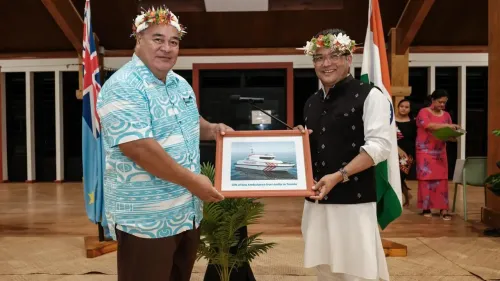
MoS Pabitra Margherita made his first official visit to Tuvalu on April 24, 2025 , meeting Minister Maina Vakafua Talia to discuss climate and development cooperation.
Key discussion areas included climate resilience , disaster preparedness , sustainable development , and capacity building — critical priorities for the low-lying Pacific island nation.
Margherita is scheduled to hold bilateral meetings with Tuvalu's Prime Minister and Foreign Minister during the visit, signalling high-level diplomatic engagement.
India's Grants in Aid programme is funding ongoing developmental assistance projects in Tuvalu, which the MoS reviewed during the trip.
The visit follows Margherita's meeting with Vanuatu PM Jotham Napat on April 23 in Port Vila , making it a dual-nation Pacific outreach mission.
Both visits are linked to the 3rd FIPIC Summit held in Port Moresby in May 2023 , underscoring India's sustained strategic engagement with Pacific Island nations .
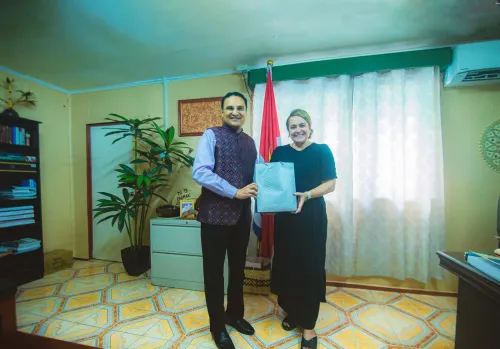
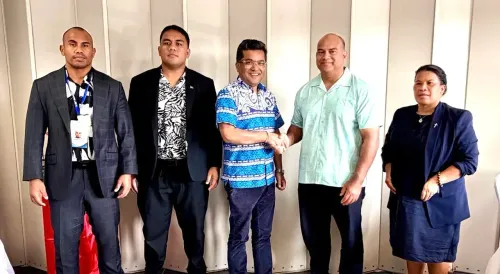
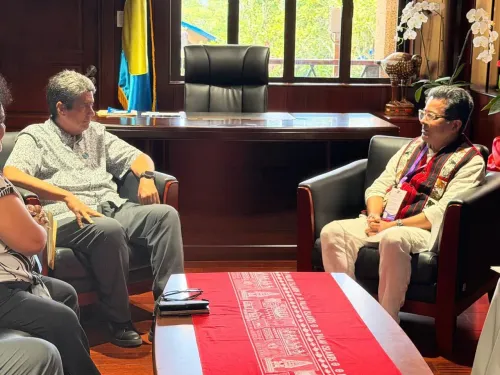
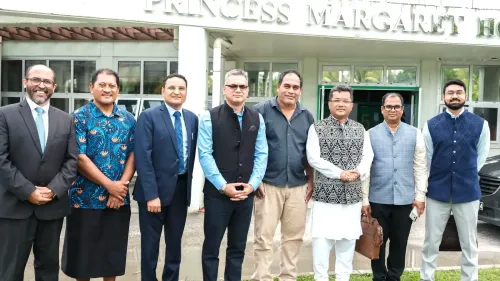
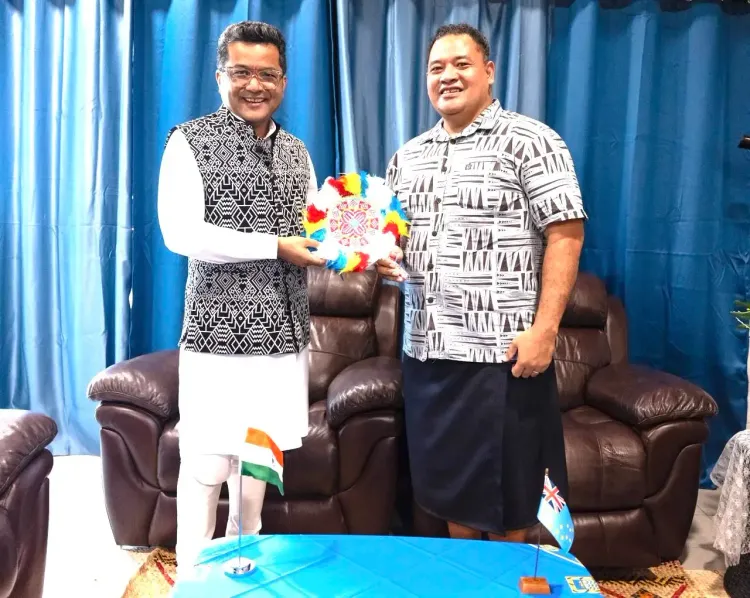
Funafuti, April 24: Union Minister of State for External Affairs Pabitra Margherita held a significant bilateral meeting in Funafuti, Tuvalu on Friday, April 24, with Tuvalu's Minister for Home, Climate Change, and Environment, Maina Vakafua Talia. The two leaders explored concrete pathways to deepen cooperation on climate resilience, disaster preparedness, sustainable development, and capacity building — areas of existential urgency for a low-lying Pacific island nation like Tuvalu.
High-Stakes Climate Dialogue in Funafuti
Tuvalu is among the world's most climate-vulnerable nations, with its highest point barely 3 metres above sea level. For this island nation of roughly 11,000 people, the threat of rising seas is not a distant policy abstraction — it is an imminent civilisational crisis. India's engagement here carries both strategic and humanitarian weight.
Following the meeting, MoS Margherita posted on social media platform X: Happy to meet Tuvalu's Minister for Home, Climate Change, and Environment, Maina Vakafua Talia. Exchanged views on strengthening cooperation on climate resilience, disaster preparedness, sustainable development and capacity building.
The discussions signal India's intent to position itself as a genuine development partner — not merely a geopolitical player — in the Pacific Island region.
First Official Visit to Tuvalu: What It Means
This marks MoS Margherita's first official visit to Tuvalu, arriving directly after concluding what the Ministry of External Affairs (MEA) described as a successful visit to Vanuatu. Upon landing in Funafuti, Margherita posted: Arrived in Funafuti on my first official visit to Tuvalu. Looking forward to productive engagements to further strengthen our longstanding friendship and partnership.
According to the MEA, the Minister of State is also scheduled to hold bilateral meetings with Tuvalu's Prime Minister, the Foreign Minister, and other senior dignitaries during the visit. He will additionally review ongoing developmental assistance projects being implemented in Tuvalu under India's Grants in Aid programme — a key instrument of New Delhi's soft power in the Pacific.
India-Vanuatu Bilateral Engagement Precedes Tuvalu Visit
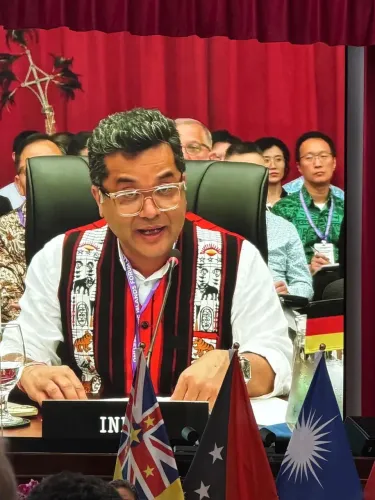
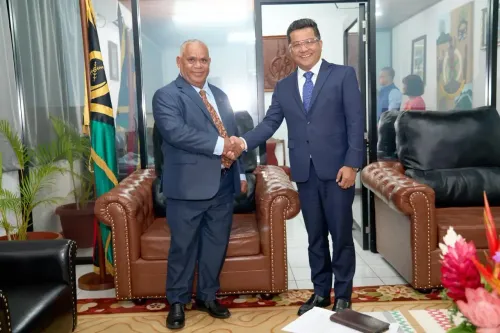
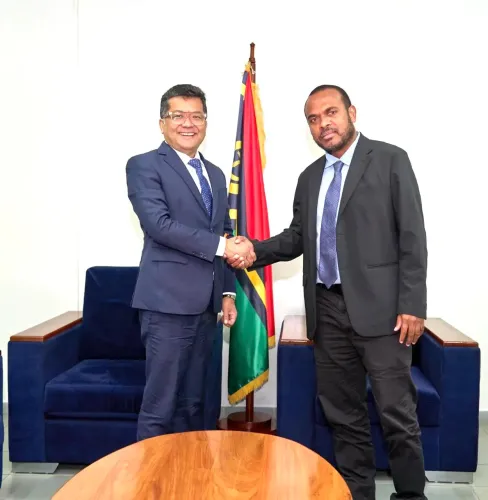
A day earlier, on Thursday, April 23, Margherita called on Vanuatu's Prime Minister Jotham Napat in Port Vila. The two leaders held what Margherita described as warm and productive discussions on strengthening India-Vanuatu bilateral cooperation across key sectors, reaffirming their shared commitment to the well-being and progress of both nations' people.
The Vanuatu engagement is notable given that the island nation — also highly vulnerable to climate disasters and cyclones — represents another front in India's expanding Pacific diplomacy.
FIPIC Framework: India's Broader Pacific Strategy
The visits to both Vanuatu and Tuvalu are not isolated diplomatic gestures. The MEA explicitly linked them to the continuation of the landmark 3rd Summit of the Forum for India-Pacific Islands Cooperation (FIPIC), held in May 2023 in Port Moresby, Papua New Guinea. That summit, attended by Prime Minister Narendra Modi, saw India announce a USD 12 million grant package for Pacific Island nations and commit to enhanced cooperation across health, technology, and climate sectors.
This comes amid intensifying competition between India, China, Australia, and the United States for influence across the Pacific — a region that controls vast maritime zones and critical sea lanes. China has in recent years signed security and development agreements with several Pacific Island states, prompting a recalibration of strategy by New Delhi and its partners.
India's Grants in Aid programme and capacity-building initiatives are increasingly seen as tools to build durable, people-centric partnerships that can withstand geopolitical pressures — a model distinct from debt-driven infrastructure diplomacy.
Why This Matters for India's Foreign Policy
India's engagement with small island developing states like Tuvalu reflects a broader foreign policy evolution — one that recognises climate diplomacy as inseparable from strategic outreach. With India holding a prominent voice in global climate negotiations under frameworks like the International Solar Alliance (ISA) and the Coalition for Disaster Resilient Infrastructure (CDRI), partnerships with frontline climate nations like Tuvalu lend moral authority to New Delhi's multilateral positions.
As MoS Margherita continues his engagements in Funafuti, further bilateral outcomes — including potential agreements on capacity building and disaster response — are expected to be announced in the coming days, reinforcing India's commitment to the Pacific Island community.
Point of View
New Delhi is signalling that its Pacific engagement has graduated from symbolic to structural. What mainstream coverage often misses is that India's climate diplomacy with nations like Tuvalu also serves a multilateral purpose — these small island states are powerful voices in UN climate negotiations, and their alignment with India's positions can shape global outcomes far beyond their geographic size.
NationPress
16 Sept 2026
Frequently Asked Questions
Why did MoS Pabitra Margherita visit Tuvalu in April 2025?
MoS Pabitra Margherita visited Tuvalu on April 24, 2025, to strengthen bilateral ties focusing on climate resilience, disaster preparedness, sustainable development, and capacity building. The visit also included a review of India's ongoing developmental assistance projects under its Grants in Aid programme in the country.
What is the FIPIC summit and how does it relate to this visit?
FIPIC, or the Forum for India-Pacific Islands Cooperation, is India's multilateral engagement platform with 14 Pacific Island nations. The 3rd FIPIC Summit was held in Port Moresby in May 2023, and India's current visits to Vanuatu and Tuvalu are a direct continuation of the commitments made at that summit.
How vulnerable is Tuvalu to climate change?
Tuvalu is one of the world's most climate-vulnerable nations, with its highest elevation barely 3 metres above sea level, making it acutely threatened by rising seas. Its population of approximately 11,000 people faces existential risks from coastal flooding, saltwater intrusion, and intensifying cyclones.
What other countries did MoS Margherita visit before Tuvalu?
Immediately before arriving in Tuvalu, MoS Margherita completed an official visit to Vanuatu, where he met Prime Minister Jotham Napat in Port Vila on April 23, 2025. The two leaders discussed strengthening India-Vanuatu bilateral cooperation across key sectors.
What is India's Grants in Aid programme for Pacific Island nations?
India's Grants in Aid programme provides financial assistance for developmental projects in partner countries including Pacific Island nations, covering areas like infrastructure, health, and education. MoS Margherita reviewed the progress of these ongoing projects during his Tuvalu visit.