Nationwide Protests Erupt in Pakistan for Wheat Pricing and Against Corporate Farming
Synopsis
Protests surged in over 100 cities across Pakistan, demanding a minimum wheat support price of PKR 4,000 per maund, the abolition of corporate farming, and the protection of tenant farmers. The mobilization, led by the Pakistan Kissan Rabita Committee, highlights the urgent agrarian crisis affecting rural communities.
Key Takeaways
Protests are taking place in over 100 cities across Pakistan.
Demand for a minimum support price of wheat at PKR 4,000 per maund .
Calls for the abolition of corporate farming and protection of tenant farmers.
Organized by the Pakistan Kissan Rabita Committee (PKRC) .
Concerns over the impact of corporate farming on rural communities.
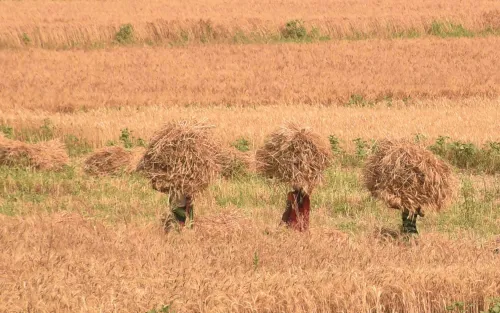
Islamabad, April 19 (NationPress) Large-scale protests erupted across over 100 cities in Pakistan, as citizens rallied for a minimum support price of wheat set at PKR 4,000 per maund. They also called for the abolition of corporate farming, the retraction of eviction notices for tenant farmers, and the cancellation of plans to procure wheat via 11 private companies, according to local media.
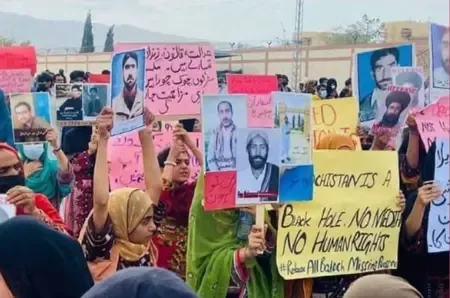
The demonstrations were organized by the Pakistan Kissan Rabita Committee (PKRC) to commemorate the International Day of Peasant Struggles. Protests in Punjab occurred in cities such as Toba Tek Singh, Jhang, Kacha Khooh, Jahanian, Iqbal Nagar, Lahore, and several others, as reported by Dawn.
In Sindh, protesters gathered in regions including Shikarpur, Sukkur, Qazi Ahmed, Ghotki, Mirpurkhas, and more.
Meanwhile, in Khyber Pakhtunkhwa, protests were held in areas like Bajaur, Swat, Lower Dir, Upper Dir, Bannu, Peshawar, and others, as noted by Dawn.
In Balochistan, demonstrations took place in Quetta, Kalat, Naseerabad, and Jhal Magsi, among others. During the Lahore rally, PKRC General Secretary Riffat Maqsood criticized the current government for its detrimental impact on farmers over the past two years.
Earlier this year, experts voiced strong opposition to the rise of corporate farming and land acquisition, arguing these government initiatives are displacing farmers and privatizing essential land and water resources, particularly in Punjab and Sindh.
A report from viacampesina.org highlighted the outcomes of a PKRC meeting in Lahore, which announced protests against corporate farming, land appropriation, and the ongoing agrarian crisis.
Approximately 170 delegates from 35 farmers' and rural workers' organizations across Pakistan evaluated the nation's political, economic, agrarian, and environmental challenges.
The report indicated that the representatives attribute rising input costs, declining farm incomes, and increasing pressures on small farmers and tenants to IMF-driven neoliberal policies.
Additionally, climate-related issues such as floods, water scarcity, and soil degradation were discussed, with attendees noting that rural communities are disproportionately affected. The meeting called for nationwide protests against corporate farming, land appropriation, unfair crop pricing, and the lack of a guaranteed minimum support price.
Point of View
It's essential to recognize the gravity of the situation affecting farmers across Pakistan. The ongoing protests reflect a deep-seated discontent with government policies that prioritize corporate interests over the livelihoods of small farmers. This movement is not just about pricing; it's a call for justice and sustainability in agriculture.
NationPress
17 Sept 2026
Frequently Asked Questions
What is the minimum support price being demanded for wheat?
Protesters are demanding a minimum support price of **PKR 4,000 per maund** for wheat.
What are the main issues raised during the protests?
The protests focus on the abolition of corporate farming, withdrawal of eviction notices for tenant farmers, and the cancellation of wheat procurement plans through private companies.
Which organization is leading the protests?
The protests are organized by the **Pakistan Kissan Rabita Committee (PKRC)**.
What regions in Pakistan are seeing these protests?
Protests are occurring in major regions including **Punjab, Sindh**, and **Khyber Pakhtunkhwa**.
Why are experts concerned about corporate farming?
Experts warn that corporate farming and land acquisition are displacing traditional farmers and privatizing crucial resources, exacerbating the agrarian crisis.