Merz pushes EU to fold Ukraine aid fully into bloc's long-term budget
Synopsis
Germany's Chancellor Merz is pushing to lock Ukraine financial support permanently into the EU's multi-year budget — a structural move that would make it far harder for holdout states like Hungary to block future aid. With at least four member states openly opposed and Budapest insisting on protecting farm and cohesion funds, the coming budget talks could become the EU's most contentious yet.
Key Takeaways
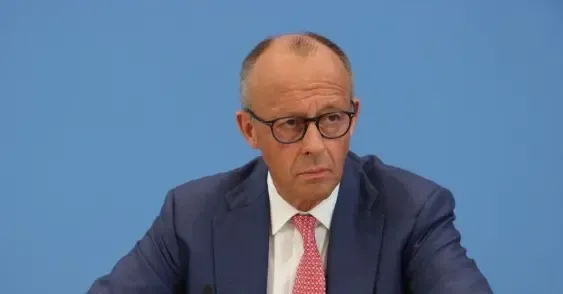
German Chancellor Friedrich Merz called on 11 November 2026 for Ukraine policy to be fully embedded in the EU's next long-term budget.
Merz described continued Ukraine support as a matter of collective European security , not an obligation for individual states.
At least four EU member states reportedly hold differing views on integrating Ukraine aid into the budget.
Hungarian PM Peter Magyar said reaching a 27-member consensus would be difficult, insisting agricultural and cohesion funding must not be cut.
Hungary pledged to be a 'constructive partner' in negotiations but said it would not compromise on its national interests .
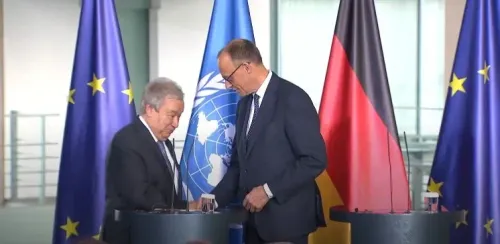
German Chancellor Friedrich Merz on Tuesday, 11 November 2026, called on the European Union to fully integrate its Ukraine policy into the bloc's budget, arguing that all future financial support for Kyiv must be anchored in negotiations over the EU's next long-term spending framework. Merz made the remarks at a joint press conference in Berlin alongside visiting Hungarian Prime Minister Peter Magyar.
What Merz Said
Merz said negotiations on the EU's next multi-year budget were entering a 'critical stage' and that it was imperative for member states to reach a common understanding on how to support Ukraine in the years ahead. He stressed that the EU must not reduce its financial support for Ukraine, framing continued assistance as a matter of collective European security rather than the obligation of individual member states.
He explicitly stated that Ukraine policy 'must be fully included' in the EU budget, while acknowledging that at least four member states held differing views on the question, according to reports citing Xinhua.
Hungary's Cautious Position
Magyar, whose country has been among the most vocal sceptics of unconditional Ukraine support within the EU, said reaching a budget consensus among all 27 member states would not be straightforward, as each nation had its own national interests to protect. He said Hungary believed that funding for traditional policy areas — particularly agricultural and cohesion policies — should not be cut to accommodate Ukraine-related spending.
Magyar also called for revisions to the current budget proposal and to member states' contribution structures. While committing Hungary to remain a 'constructive partner' in the talks, he made clear that Budapest would not compromise on its core national interests.
Why This Matters for the EU
The EU's next long-term budget — formally known as the Multiannual Financial Framework (MFF) — governs spending across all 27 member states and typically covers a seven-year cycle. Embedding Ukraine support directly into the MFF would institutionalise the commitment in a way that ad hoc packages do not, making it harder for individual governments to block or reduce funding in future budget cycles.
This comes amid persistent divisions within the bloc over Ukraine policy, with countries such as Hungary repeatedly vetoing or delaying EU-wide decisions on military and financial assistance. Merz's push effectively seeks to remove that veto leverage by locking Ukraine aid into the broader budget negotiation, where trade-offs with agriculture and cohesion funds give holdouts an incentive to deal.
The Road Ahead
Budget negotiations among EU members are historically protracted, often running past formal deadlines. The current framework has seen repeated clashes over rule-of-law conditionalities, cohesion fund allocations, and defence spending. With the Ukraine dimension now formally on the table, the talks are set to grow considerably more complex. All sides agree a deal is necessary; whether one is reachable before the next framework cycle begins remains uncertain.
Point of View
Germany is attempting to convert a politically reversible commitment into a structural one — stripping individual veto-players of their most effective blocking tool. The irony is that the same budget architecture that Merz wants to use as a shield for Ukraine could become the very leverage that Hungary and other sceptics exploit to extract concessions on cohesion and agricultural funds. The joint press conference with Magyar — a pro-EU reformist within Hungary — signals Berlin is trying to split Budapest's domestic politics rather than confront the Orbán government directly. Whether that gambit works will shape not just Ukraine's finances but the internal coherence of the EU for the next decade.
NationPress
11 Nov 2026
Frequently Asked Questions
What did German Chancellor Friedrich Merz propose regarding Ukraine and the EU budget?
Merz called for the EU to fully integrate its Ukraine policy into the bloc's next long-term budget, so that all future financial support for Kyiv is part of the Multiannual Financial Framework negotiations rather than handled through separate, one-off packages. He made the remarks at a joint press conference in Berlin on 11 November 2026.
Why does Merz want Ukraine aid inside the EU's long-term budget?
Merz argued that supporting Ukraine is a matter of collective European security and a shared EU responsibility, not an individual member-state obligation. Embedding it in the MFF would make it structurally harder for any single country to block or reduce aid in future budget cycles.
What is Hungary's position on the EU budget and Ukraine support?
Hungarian Prime Minister Peter Magyar said a 27-member consensus would be difficult to achieve, with each country defending national interests. Hungary insists that traditional funding areas — particularly agricultural and cohesion policies — must not be cut, and that the current budget proposal still requires significant changes.
How many EU member states reportedly oppose integrating Ukraine policy into the budget?
According to Merz, at least four EU member states hold different views on the question of fully including Ukraine policy in the bloc's long-term budget, though he did not publicly name them.
What is the EU's Multiannual Financial Framework (MFF)?
The MFF is the EU's long-term spending plan, typically covering a seven-year period, that sets binding ceilings on expenditure across policy areas including agriculture, cohesion, defence, and foreign policy. Integrating Ukraine support into the MFF would institutionalise that commitment for the duration of the framework.