EU leaders back Hungary's return to Brussels fold at Budapest parliament
Synopsis
Two of the EU's most senior leaders travelled to Budapest to address the Hungarian parliament directly — a striking diplomatic signal that Hungary's fractious relationship with Brussels is on the mend. With EU funding restored, Horizon Europe and Erasmus+ access back on the table, and Next Generation EU funds potentially in play, this marks one of the most consequential moments in Hungary's EU membership since accession.
Key Takeaways
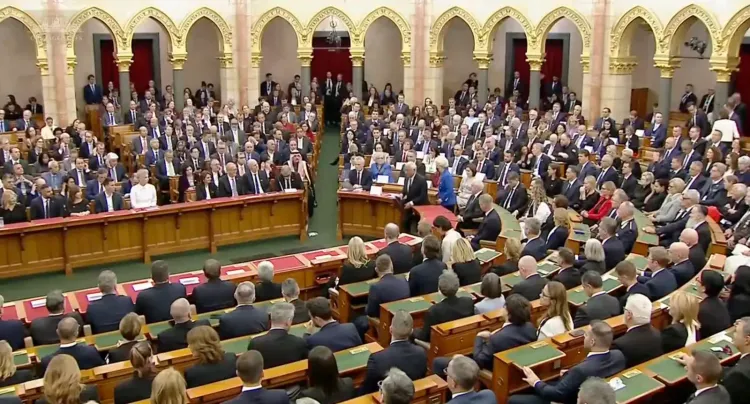
European Commission President Ursula von der Leyen and European Council President António Costa addressed Hungary's parliament on 23 October 2026 in Budapest .
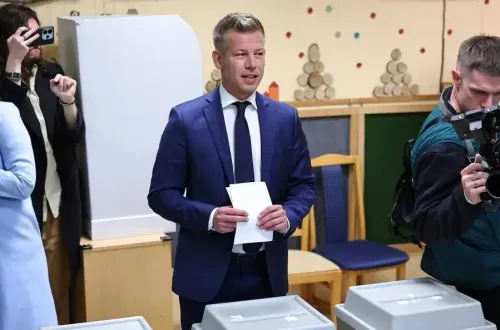
Von der Leyen acknowledged reforms under Prime Minister Peter Magyar on anti-corruption, transparency, and rule of law, linking them to the restoration of EU funding .
Hungary has regained access to Horizon Europe and Erasmus+ , with further opportunities available under Next Generation EU .
Costa noted Hungary's economy has nearly tripled and average wages have grown fivefold since EU accession in 2004 .
The EU accounts for nearly 80% of Hungary's exports and almost 70% of its imports.
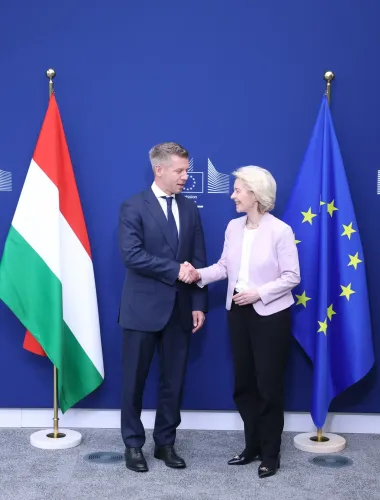
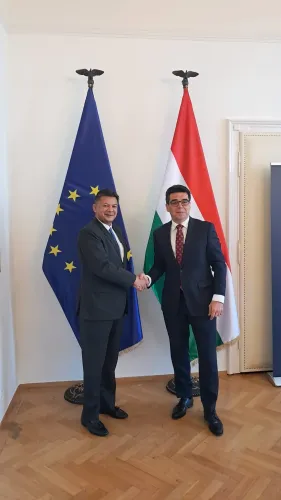
European Commission President Ursula von der Leyen and European Council President António Costa on Friday, 23 October 2026, addressed a special session of the Hungarian parliament in Budapest, underscoring Hungary's deep ties with the European Union (EU) and the transformative gains of European integration. The joint appearance marked a significant moment in the reset of relations between Hungary and the EU's top institutions.
Von der Leyen: Hungary Is 'Part of the European Family'
Von der Leyen welcomed Hungary's renewed commitment to the bloc, framing the country's trajectory as inseparable from the broader European project. 'Your story is our European story. Your future is our European future,' she said in her address to the parliament.
She acknowledged efforts by the government of Prime Minister Peter Magyar to strengthen anti-corruption legislation, increase transparency in public spending, and reinforce the rule of law. Von der Leyen said these reforms were already producing measurable outcomes, including the restoration of EU funding and renewed access to flagship European programmes such as Horizon Europe and Erasmus+.
She also pointed to additional fiscal opportunities available through the EU's Next Generation EU recovery programme, arguing that Hungary's re-engagement would contribute to a stronger and more cohesive Europe overall.
Costa Highlights Economic Dividends Since 2004 Accession
Costa focused on the tangible economic transformation Hungary has undergone since joining the EU in 2004. Over the past 22 years, Hungary's economy has nearly tripled in size, while average wages have increased fivefold, he noted.
He further highlighted that the EU currently accounts for nearly 80 per cent of Hungary's exports and almost 70 per cent of its imports — figures that underscore just how deeply embedded Hungary is within the European single market. Costa stressed that European cooperation strengthens competitiveness, strategic autonomy, and economic resilience while creating new pathways for investment, innovation, and job creation.
'Hungary's accession to the European Union in 2004 was a crucial step in reuniting Europe. In fact, by joining the European Union, Hungary reconfirmed what more than 1,000 years of history had repeatedly shown — that the Hungarian nation lies at the heart of Europe. That is the true spirit of the European Union: free nations joining together to build peace, security and prosperity through cooperation,' Costa said.
Broader Significance: A Diplomatic Reset
The joint address to the Hungarian parliament is notable in the context of years of friction between Budapest and Brussels over democratic backsliding, judicial independence, and the rule of law. This comes amid a broader shift under Prime Minister Magyar's government, which has signalled a more cooperative posture toward EU institutions compared to its predecessor.
Both von der Leyen and Costa emphasised the importance of European unity, describing Hungary as an essential pillar of the European project rather than a peripheral or contested member. Notably, the return of EU funding and access to research programmes represents a concrete policy dividend of the diplomatic thaw.
What Comes Next
The speeches are expected to accelerate the disbursement of previously withheld EU funds to Hungary, with further tranches potentially linked to continued legislative reform. Analysts will be watching whether the commitments made in Budapest translate into sustained institutional changes, and how the broader EU membership responds to what appears to be a formal rehabilitation of Hungary's standing within the bloc.
Point of View
Not just a technical thaw. But the gap between a ceremonial speech and durable institutional change in Hungary has historically been wide. The restoration of EU funding is real, but it is also reversible; past Hungarian governments have made reform commitments that quietly unwound once fiscal pressure eased. The bigger question is whether the legislative changes on anti-corruption and rule of law are structurally embedded or merely cosmetic enough to unlock cash. European voters in donor states will want to see that conditionality has teeth, not just ribbon-cutting in Budapest.
NationPress
23 Oct 2026
Frequently Asked Questions
Why did EU leaders address the Hungarian parliament?
European Commission President Ursula von der Leyen and European Council President António Costa addressed a special session of the Hungarian parliament on 23 October 2026 to mark Hungary's renewed commitment to the EU and highlight the benefits of European integration. The visit signals a significant diplomatic reset after years of tension between Budapest and Brussels.
What reforms has Hungary undertaken to restore EU ties?
Under Prime Minister Peter Magyar's government, Hungary has taken steps to strengthen anti-corruption legislation, improve transparency in public spending, and reinforce the rule of law. These reforms have led to the restoration of EU funding and renewed access to programmes such as Horizon Europe and Erasmus+.
How much has Hungary's economy grown since joining the EU?
According to European Council President António Costa, Hungary's economy has nearly tripled in size and average wages have increased fivefold since the country joined the EU in 2004. The EU now accounts for nearly 80 per cent of Hungary's exports and almost 70 per cent of its imports.
What EU funding and programmes is Hungary now accessing?
Hungary has regained access to Horizon Europe and Erasmus+ following its recent reform measures. Von der Leyen also pointed to further funding opportunities under the Next Generation EU recovery programme as part of Hungary's renewed engagement with the bloc.
What happens next for Hungary-EU relations?
Analysts expect the Budapest speeches to accelerate the disbursement of previously withheld EU funds, with further tranches likely tied to continued legislative reform. The durability of Hungary's institutional changes will be closely monitored by EU institutions and member states in the coming months.