Hungary unlocks €16.4 billion in EU funds after Brussels deal
Synopsis
Hungary's new government has unlocked €16.4 billion in frozen EU funds — roughly 13% of the country's GDP — after agreeing to sweeping anti-corruption and rule-of-law reforms, including joining the European Public Prosecutor's Office. The deal marks a sharp break from the previous government's standoff with Brussels and restores Hungarian students' access to Erasmus.
Key Takeaways
Hungary has secured €16.4 billion in previously frozen EU funds following a deal with Brussels on 29 May 2025 .
The package equals approximately 13% of Hungary's GDP, or around 6,000 billion forints .
Funds are split across €10 billion (Recovery and Resilience Plan), €4.2 billion (cohesion), and €2.2 billion (higher education reforms).
Hungary agreed to join the European Public Prosecutor's Office (EPPO) and phase out controversial public-interest trusts.
Hungarian students will regain access to the Erasmus exchange programme from the next academic year.
Further details of the agreement are expected in the coming days, with disbursements tied to reform milestones.
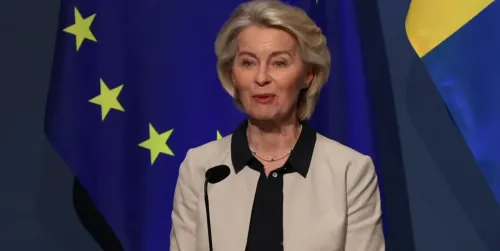
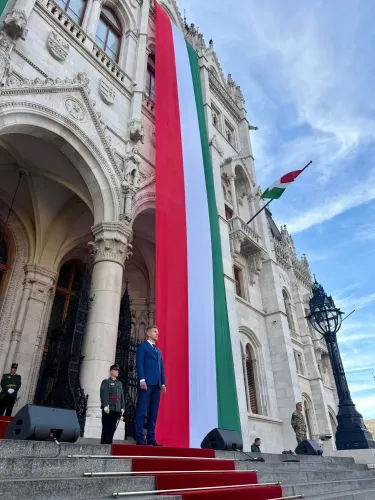
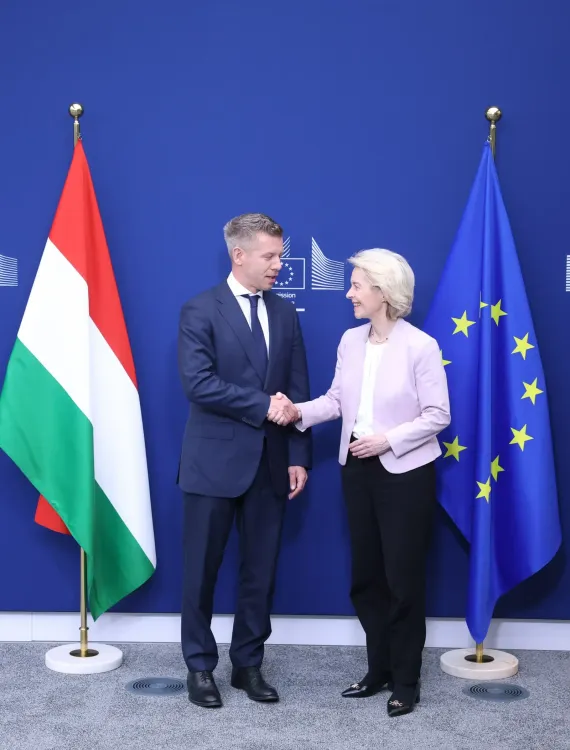
Hungarian Prime Minister Peter Magyar announced on Friday, 29 May that Hungary had reached a political agreement with the European Union to release €16.4 billion (approximately $19.1 billion) in previously frozen EU funds. The deal, struck following talks with European Commission President Ursula von der Leyen in Brussels, would unlock roughly 6,000 billion forints in EU resources — equivalent to about 13 percent of Hungary's gross domestic product.
What the Package Contains
The funding is structured across three components. €10 billion can be unlocked under Hungary's revised Recovery and Resilience Plan, contingent on the implementation of agreed reforms and investments. A further €4.2 billion in cohesion funds has been released following progress on governance-related conditions. An additional €2.2 billion is linked to reforms in higher education and academic freedom, according to von der Leyen.
Magyar said the resources would support electricity grid upgrades, railway modernisation, rental housing projects, healthcare, and education development. Several billion euros are also reportedly available for projects already completed or currently under implementation.
Key Reforms Hungary Agreed To
Von der Leyen said the agreement followed weeks of intensive cooperation between the Commission and Hungary's new government on reforms targeting anti-corruption safeguards and rule-of-law standards. Hungary has agreed to join the European Public Prosecutor's Office (EPPO), strengthen its Integrity Authority, revise public procurement rules, and gradually phase out public-interest trusts that had raised concerns about conflicts of interest and state capture.
'We agreed on a robust architecture to ensure that Hungary addresses corruption and rule-of-law concerns,' von der Leyen said.
Erasmus Access Restored
In a notable development for students, von der Leyen announced that Hungarian students would be able to participate in the Erasmus exchange programme again from the next academic year, following progress on academic freedom and governance in higher education institutions. The programme had been effectively suspended for Hungarian students amid earlier disputes over university governance.
Significance and What Comes Next
Magyar described the outcome as a 'historic day' for Hungary. 'We are taking home the thousands of billions of forints in European Union support that belong to the Hungarian people,' he said. This comes amid a broader shift in Hungary's relationship with Brussels under Magyar's new government, which has moved to address long-standing EU concerns that had caused the funds to be frozen in the first place.
Further details of the agreement are expected to be released in the coming days, with disbursements tied to the pace of reform implementation.
Point of View
Brussels froze these funds over rule-of-law and anti-corruption concerns that the previous Hungarian government dismissed as political interference. Magyar's willingness to join the EPPO and dismantle the public-interest trust structure signals a genuine course correction — but the real test is implementation, not the signing ceremony. Disbursements are tied to reform milestones, which means Brussels retains significant leverage. Whether Hungary sustains these commitments under domestic political pressure, or whether this becomes another headline agreement that stalls in execution, will define the lasting significance of this deal.
NationPress
24 Sept 2026
Frequently Asked Questions
What is the Hungary-EU funds agreement announced on 29 May 2025?
It is a political agreement between Hungary and the European Commission to release €16.4 billion in previously frozen EU funds. The deal covers three tranches tied to recovery plan reforms, cohesion fund conditions, and higher education governance improvements.
Why were Hungary's EU funds frozen in the first place?
The funds were frozen due to EU concerns over rule-of-law deficiencies, anti-corruption safeguards, and governance issues in Hungary, including the operation of public-interest trusts accused of enabling conflicts of interest and state capture.
What reforms did Hungary agree to in exchange for the funds?
Hungary agreed to join the European Public Prosecutor's Office (EPPO), strengthen its Integrity Authority, revise public procurement rules, and gradually phase out public-interest trusts. Reforms in higher education governance were also required to unlock the €2.2 billion education tranche.
When will Hungarian students regain Erasmus access?
European Commission President Ursula von der Leyen announced that Hungarian students will be able to participate in the Erasmus exchange programme again from the next academic year, following progress on academic freedom and higher education governance.
How significant is €16.4 billion to Hungary's economy?
The amount is equivalent to approximately 13% of Hungary's gross domestic product, making it one of the largest single unlocks of EU funding for any member state. Prime Minister Peter Magyar described the deal as a 'historic day' for Hungary.