EU Approves Historic €90 Billion Loan for Ukraine in 2025
Synopsis
The EU has approved a historic €90 billion loan for Ukraine, with €30 billion for budgetary support and €60 billion for defence industry. The EU itself will repay the loan — effectively making it a grant — while simultaneously adopting its 20th sanctions package against Russia, marking a major escalation in European strategic commitment.
Key Takeaways
The European Union formally approved a €90 billion loan for Ukraine on April 23, 2025 , confirmed by European Council President António Costa . €30 billion is allocated for macroeconomic and budgetary support, while €60 billion is earmarked for Ukraine's defence industrial capacity , including defence product procurement.
The EU itself will repay the loan , with Ukraine receiving the funds free of charge, as Kyiv cannot currently service its sovereign debt obligations.
Cyprus Finance Minister Makis Keravnos announced that disbursements will begin as soon as possible, structured in line with Ukraine's own financing strategy.
The 20th package of EU sanctions against Russia was adopted simultaneously, aimed at reducing Moscow's capacity to sustain its war effort.
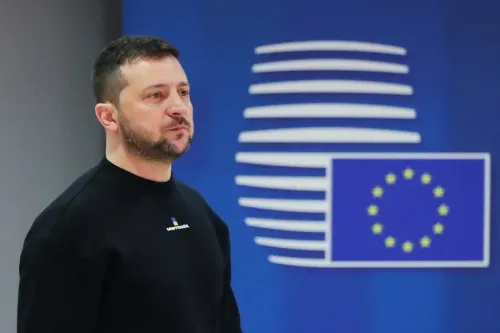
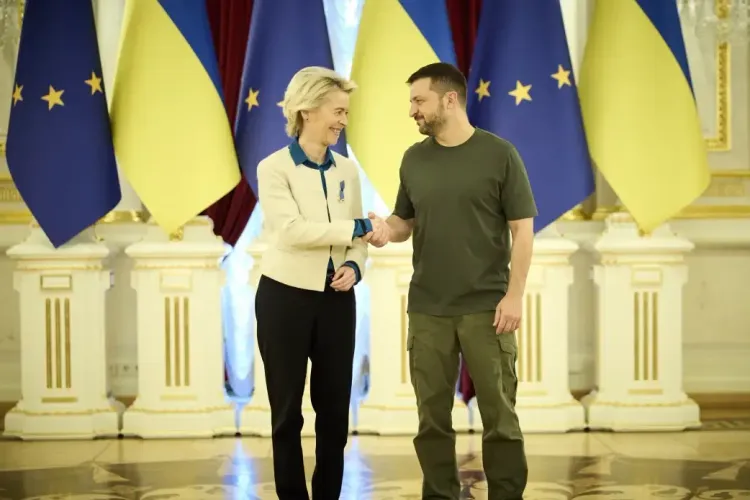
Ukrainian President Volodymyr Zelensky met with Costa on April 21 to discuss the package, also highlighting new security cooperation deals under the Drone Deal framework with Middle Eastern and Gulf nations.
The European Union officially approved the disbursement of a landmark €90 billion loan for Ukraine on Thursday, April 23, marking one of the largest financial commitments in the bloc's history. European Council President António Costa confirmed the decision, which aims to address Ukraine's most critical budgetary shortfalls and defence industrial requirements through 2026 and 2027. The loan comes with a strict conditional framework requiring Kyiv to uphold the rule of law and actively combat corruption.
Loan Structure and Allocation Breakdown
The €90 billion package is divided into two distinct tranches with clearly defined purposes. €30 billion has been earmarked for macroeconomic stabilisation — covering Ukraine's most urgent day-to-day budgetary needs — while the remaining €60 billion will be directed toward strengthening Ukraine's defence industrial capacity, including the direct procurement of defence products.
Disbursements will be made in phases, aligned with a financing strategy prepared by Ukraine itself, ensuring that fund releases correspond with actual financial requirements on the ground. Crucially, the EU itself will service and repay the loan, meaning Ukraine receives the funds effectively free of charge — a recognition that Kyiv is currently unable to service sovereign debt obligations under wartime conditions.
Cyprus Presidency Plays Key Role in Finalisation
Cyprus Finance Minister Makis Keravnos announced the Council's approval, crediting the Cyprus Presidency for its relentless efforts to finalise all necessary elements of the loan agreement. "Loan disbursements will start flowing as soon as possible, providing vital support for Ukraine's most pressing budgetary needs," he stated.
Keravnos reaffirmed the EU's unwavering commitment to Ukraine's sovereignty and territorial integrity, framing the loan as both a financial lifeline and a geopolitical signal to Moscow.
Costa: Two Pillars — Strengthen Ukraine, Pressure Russia
António Costa outlined the EU's dual-track strategy in a post on X (formerly Twitter), stating: "The EU's strategy to achieve a just and lasting peace in Ukraine rests on two pillars: strengthening Ukraine; increasing pressure on Russia. Today we moved forward on both."
Alongside the loan approval, Costa confirmed that the European Council also adopted the 20th package of sanctions against Russia, designed to further erode Moscow's capacity to finance and sustain its military campaign in Ukraine. This represents a significant escalation in the EU's economic warfare toolkit against Russia.
Zelensky-Costa Meeting Preceded Final Approval
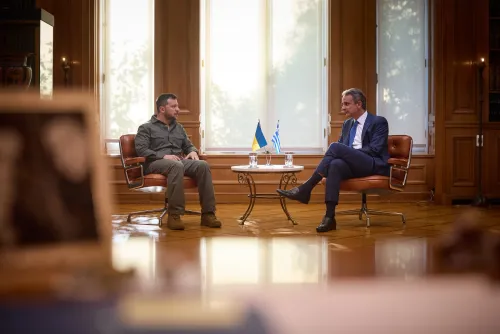
Ukrainian President Volodymyr Zelensky had met with Costa on April 21 — just two days before the formal approval — specifically to discuss the unblocking of the financial assistance package. Zelensky also highlighted progress on Ukraine's security cooperation with Middle Eastern and Gulf region nations, particularly under the Drone Deal framework.
"The Ukrainian system for protecting lives, which we are offering to partners in the Drone Deal format, is truly unique. We have already begun this cooperation with several European countries as well," Zelensky wrote on X. This signals that Ukraine is simultaneously seeking to diversify its security partnerships beyond traditional Western allies.
Geopolitical and Economic Implications
This loan is not merely a financial transaction — it is a strategic document. The €90 billion commitment, originally agreed at the European Council in December 2024, signals that the EU is prepared to sustain long-term support for Ukraine even as peace negotiations remain elusive and US policy under the Trump administration has shown signs of wavering commitment.
Notably, the EU's decision to absorb repayment responsibility removes the debt burden from a war-ravaged economy, effectively transforming what is structurally a loan into a de facto grant. This sets a significant precedent in international financial architecture for conflict-affected sovereign states.
Critics may question whether the strict anti-corruption conditionalities attached to the loan can be effectively monitored and enforced given the ongoing conflict environment. Ukraine's track record on reform has been uneven, and the EU will need robust oversight mechanisms to ensure funds are deployed transparently and efficiently.
With the 20th sanctions package against Russia now in effect and €90 billion in fresh financing flowing toward Kyiv, the coming months will test whether this dual-pressure strategy accelerates a negotiated settlement or deepens the conflict's entrenchment. All eyes will be on the first disbursement tranche and whether Ukraine meets the stipulated governance benchmarks.
Point of View
And largely under-reported, is that by absorbing the repayment burden itself, the EU has essentially converted a loan into a grant, bypassing the political optics of outright aid. The simultaneous adoption of the 20th Russia sanctions package reveals a coordinated pressure campaign that goes beyond rhetoric. The real test, however, lies in enforcement — whether the anti-corruption conditionalities attached to this loan are rigorously monitored, or whether they become the fine print that nobody reads.
NationPress
1 Oct 2026
Frequently Asked Questions
What is the EU's €90 billion loan to Ukraine for?
The EU's €90 billion loan is designed to cover Ukraine's most urgent financial and defence needs in 2026 and 2027. Of this, €30 billion supports macroeconomic stability and budgetary requirements, while €60 billion is allocated for defence industrial capacity and procurement of defence products.
Who will repay the EU's €90 billion loan to Ukraine?
The European Union itself will service and repay the €90 billion loan, not Ukraine. This arrangement was made because Ukraine is currently unable to service its sovereign debt obligations due to the ongoing war with Russia.
What conditions are attached to the EU loan for Ukraine?
The loan comes with a strict conditional framework requiring Ukraine to adhere to the rule of law, including active measures to combat corruption. Disbursements will be tied to a financing strategy prepared by Ukraine and monitored by the European Council.
What is the EU's 20th sanctions package against Russia?
The 20th sanctions package against Russia was adopted by the European Council on April 23, 2025, alongside the Ukraine loan approval. It is designed to further reduce Russia's ability to finance and sustain its military operations in Ukraine.
When will Ukraine receive the EU loan disbursements?
According to Cyprus Finance Minister Makis Keravnos, disbursements will begin as soon as possible following the Council's formal approval on April 23, 2025. The release of funds will be phased and aligned with Ukraine's own financing strategy.