Italy backs Ukraine's full EU membership via standard accession process
Synopsis
Italy is backing Ukraine's EU bid — but strictly through the front door. Foreign Minister Tajani's offer to deploy Italy's financial crime police to help Kyiv tackle corruption is the clearest signal yet that Rome wants Ukraine in the EU on merit, not on a fast track. That puts Italy at quiet odds with Germany's 'associate membership' shortcut floated just 24 hours earlier.
Key Takeaways
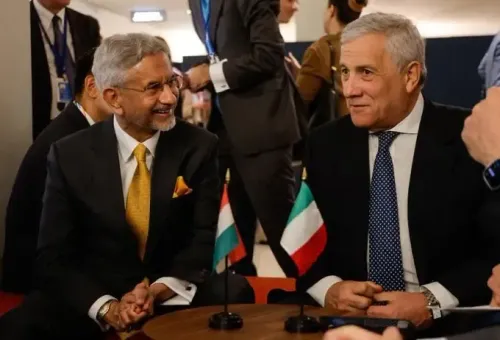
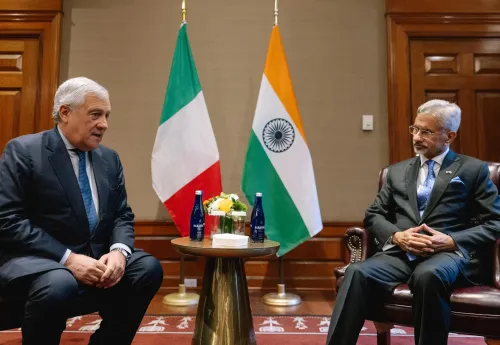
Italian Foreign Minister Antonio Tajani reaffirmed support for Ukraine's full EU membership at the NATO foreign ministers meeting in Helsingborg, Sweden on 22 May .
Tajani stressed Ukraine must meet all 35 EU accession chapters , with anti-corruption reform identified as a key requirement.
Italy offered to deploy officers from its tax police (Guardia di Finanza) to help Ukraine combat corruption ahead of accession.
German Chancellor Friedrich Merz proposed an 'associate membership' model for Ukraine on Thursday — a position Italy's standard-process stance implicitly pushes back against.
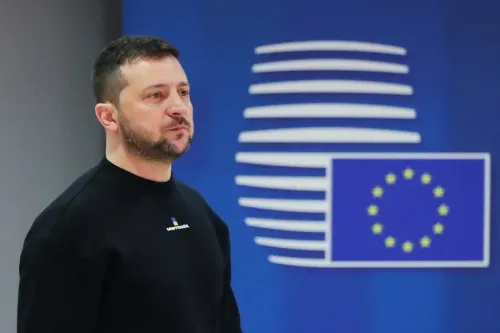
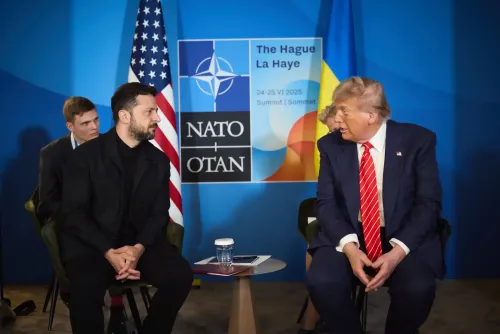
Ukraine applied for EU membership in February 2022 and began formal entry negotiations in June 2024 ; a 2027 entry date was reportedly floated in a peace proposal discussed by Zelensky and Trump in late December 2024 .
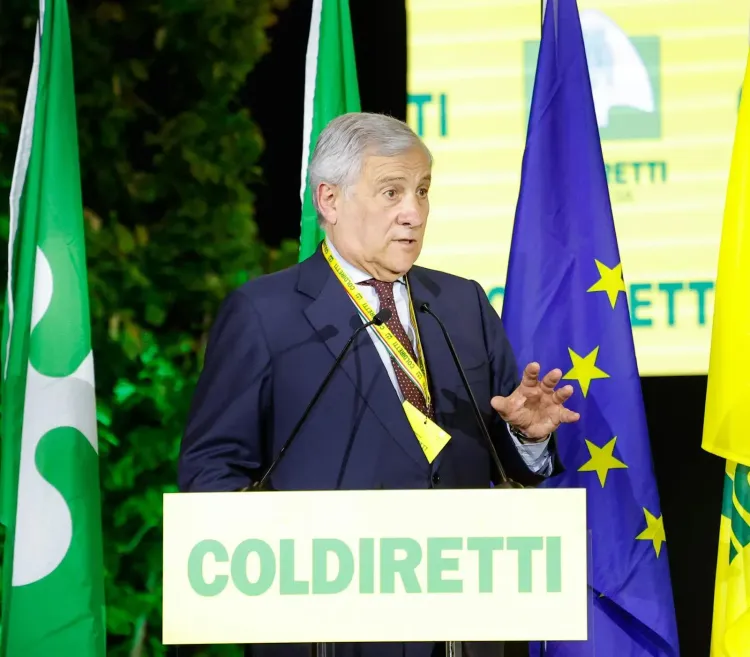
Italian Foreign Minister Antonio Tajani on Friday, 22 May reaffirmed Italy's unconditional support for Ukraine's full membership of the European Union, while stressing that Kyiv must first meet the bloc's rigorous accession criteria — particularly in the area of anti-corruption reform. Tajani made the remarks on the sidelines of a NATO foreign ministers meeting in Helsingborg, Sweden.
Italy's Position on Ukraine's EU Bid
'We are in favour of Ukraine joining the EU as a full member, but we must lay the groundwork to achieve this goal,' Tajani told reporters. He added that the 'ultimate goal' was to see Ukraine enter the EU as a full member, alongside Western Balkan countries — a priority he described as 'of crucial importance' to Italy.
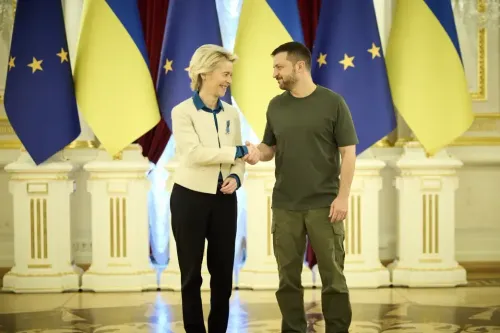
Tajani noted that 'certain rules must be respected,' signalling that Rome does not support fast-tracking membership outside the established framework. He said he had discussed Italy's potential role in tackling graft directly with Ukrainian President Volodymyr Zelensky during a recent visit to Ukraine.
Italy's Anti-Corruption Offer to Kyiv
In a concrete show of support, Italy is reportedly prepared to deploy officers from its Guardia di Finanza — the country's tax police force, which has extensive experience in financial crime and anti-corruption operations — to assist Ukraine. According to Tajani, these officers are already in contact with Ukraine's economy and finance ministry.
'We are looking at how we can help combat corruption and thus help Ukraine comply with all the EU accession criteria. This is a concrete contribution,' he said. The offer underscores Italy's preference for practical, process-driven engagement over symbolic gestures.
Germany's 'Associate Membership' Proposal Adds Complexity
Tajani's remarks came a day after German Chancellor Friedrich Merz floated an alternative path in a letter to EU leaders on Thursday. Merz proposed an 'associate membership' arrangement for Ukraine — one that would grant Ukrainian officials access to EU summits and ministerial meetings without voting rights.
Merz argued the move could help President Zelensky sell a peace agreement to the Ukrainian public to end the more-than-four-year-old Russian invasion. He also suggested the EU make a 'political commitment' to apply its mutual assistance clause to Ukraine, which he described as a 'substantial security guarantee' in the event Ukraine neither regains all its territory nor joins NATO.
Italy's insistence on the standard accession route stands in contrast to Berlin's more flexible framing, highlighting a divergence within the EU on how quickly — and under what terms — Ukraine should be integrated.
Where Ukraine's EU Accession Currently Stands
Ukraine applied for EU membership in February 2022, days after Russia's full-scale invasion, and formally began entry negotiations in June 2024. The accession process requires candidate countries to align with EU norms across 35 policy chapters — covering everything from justice and anti-corruption standards to agricultural and fisheries rules. All 27 EU member states must unanimously agree before each chapter can be opened and closed.
Senior European officials have acknowledged that full membership within the next few years is unrealistic. Notably, however, a 2027 entry date was reportedly included in a 20-point peace proposal discussed by Zelensky and US President Donald Trump in late December 2024. How that timeline squares with the technical demands of the accession process remains an open question as EU capitals weigh both the geopolitical urgency and institutional integrity of enlargement.
Point of View
In effect, resisting any precedent that could dilute the EU's enlargement framework. The anti-corruption offer is also a tell: Rome knows Kyiv's governance gap is the real bottleneck, not political will. The 2027 entry date floated in the Trump-Zelensky peace talks was always more political theatre than technical roadmap; Italy appears to be quietly reminding everyone of that reality. The deeper tension is whether the EU can hold its accession process together under geopolitical pressure, or whether Ukraine's war-driven urgency eventually bends the rules that have governed enlargement for decades.
NationPress
7 Oct 2026
Frequently Asked Questions
What did Italy's Foreign Minister say about Ukraine's EU membership?
Italian Foreign Minister Antonio Tajani said Italy fully supports Ukraine joining the EU as a full member, but stressed that Kyiv must complete the standard accession process, including meeting anti-corruption requirements. He made the remarks at the NATO foreign ministers meeting in Helsingborg, Sweden on 22 May.
What is Italy offering to help Ukraine's EU accession bid?
Italy is reportedly prepared to deploy officers from its Guardia di Finanza — its tax police — to assist Ukraine in combating corruption, a key EU accession requirement. Tajani said these officers are already in contact with Ukraine's economy and finance ministry.
What is Germany's 'associate membership' proposal for Ukraine?
German Chancellor Friedrich Merz proposed on Thursday that Ukraine be granted 'associate membership' of the EU, allowing Ukrainian officials to attend EU summits and ministerial meetings without voting rights. He argued this could help President Zelensky sell a peace deal domestically and provide a security guarantee short of full NATO membership.
Where does Ukraine's EU accession process currently stand?
Ukraine applied for EU membership in February 2022 and formally began accession negotiations in June 2024. Candidates must align with EU norms across 35 policy chapters, requiring unanimous agreement from all 27 member states. European officials have said full membership within the next few years is unrealistic, though a 2027 target was reportedly discussed in a peace proposal between Zelensky and Trump in late December 2024.
Why is anti-corruption reform so important for Ukraine's EU bid?
Anti-corruption standards fall under the EU's accession chapters on justice and the rule of law, which are among the most scrutinised in any enlargement process. Ukraine has faced longstanding concerns about governance and graft, and EU officials have consistently identified reform in this area as a prerequisite for meaningful progress in accession talks.