US ties Venezuela elections to economic recovery, Rubio tells UN
Synopsis
At the UN General Assembly, Secretary of State Rubio broke from the usual election-first playbook — insisting Venezuela must rebuild its economy and democratic institutions in tandem before any credible vote can be held. The remarks followed a Trump-Rodriguez meeting that signals a rare direct US-Venezuela engagement, with debt restructuring, media freedom, and the fate of the diaspora all on the table.
Key Takeaways
Secretary of State Marco Rubio said the US wants Venezuela to pursue economic recovery and electoral reform simultaneously, not separately.
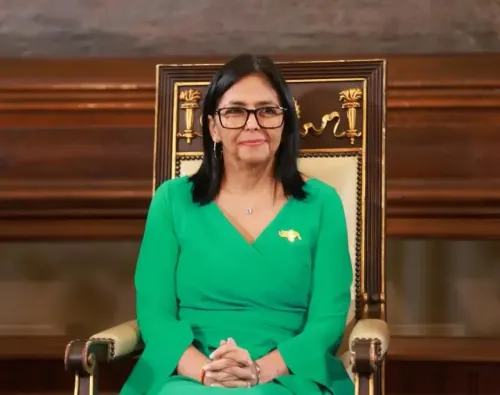
President Donald Trump met Venezuelan acting President Delcy Rodriguez at the UN General Assembly on 23 September .
Rubio identified debt restructuring and rebuilding the 2015 National Assembly -linked institutions as key transition steps.
He gave no election date but outlined benchmarks: free candidate access, party organisation rights, and accurate vote-counting.
Rubio said he lacked details on reports that opposition figure Maria Corina Machado had been prevented from returning to Venezuela.
Several Venezuelan media outlets reportedly banned for nearly seven years had resumed broadcasting in the two weeks prior, Rubio said.
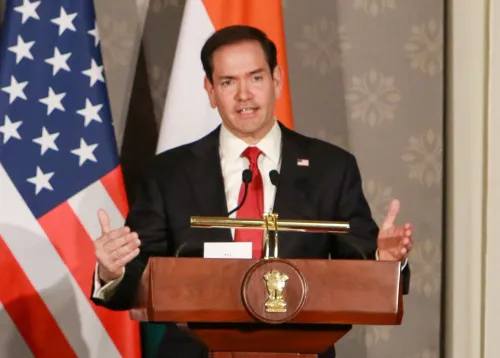
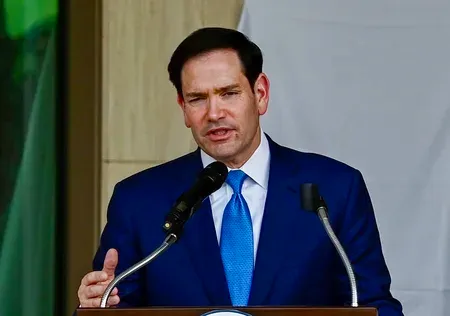
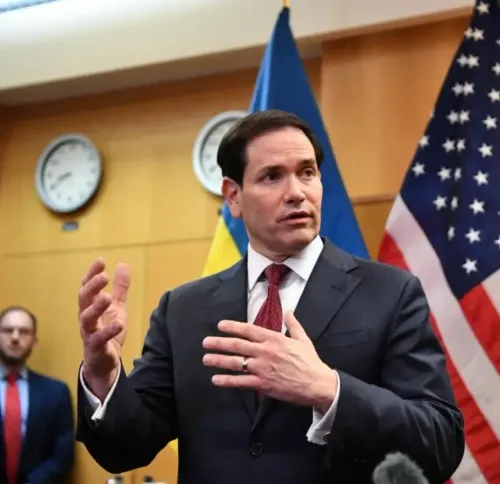
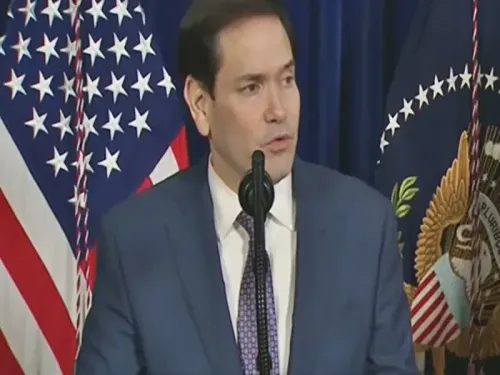
US Secretary of State Marco Rubio said on 23 September that the United States wants Venezuela to rebuild its economy and electoral institutions simultaneously — rather than sequentially — before holding new elections. Rubio spoke at the United Nations General Assembly following a meeting between President Donald Trump and Venezuelan acting President Delcy Rodriguez.
What Rubio Said at the UN
Rubio described the Trump-Rodriguez meeting as 'short but important,' saying both sides discussed steps toward economic recovery and a political transition. Central to those discussions, he said, were talks between Venezuela's interim authorities and leaders from the country's 2015 National Assembly.
'There has to be a political transition process, which is underway,' Rubio told reporters. He added that the talks were aimed at rebuilding the institutions necessary for free and fair elections, though he offered no specific election date.
Why Washington Wants Economy and Elections Together
Rubio argued that an elected government would struggle to survive if it took office amid severe economic and social dysfunction. Washington's position is that greater economic stability and a credible vote must advance together, not as separate tracks. Debt restructuring was identified as part of that recovery effort, with Rubio noting that any such restructuring would need to be handled carefully. He also flagged a recent earthquake as an additional strain on a country already facing deep economic hardship.
Conditions for a Credible Vote
Rubio outlined several benchmarks he said any legitimate election would need to meet: candidates must be able to reach voters, political parties must be able to organise freely, and votes must be counted and reported accurately. Electoral authorities, he said, would need to earn the trust of ordinary Venezuelans.
He pointed to what he described as signs of expanding media freedom — several Venezuelan outlets reportedly barred from broadcasting for nearly seven years had resumed operations in the previous two weeks. The original account offered no independent confirmation of that claim.
Opposition Rebuilding and the Diaspora Question
Rubio acknowledged that opposition parties needed time to reconstitute themselves. Several of their leaders remain outside Venezuela, and he said the parties must be able to function as political organisations rather than protest movements. He noted that an election producing a government unable to function would not serve Venezuela's long-term interests.
Asked about reports that prominent opposition figure Maria Corina Machado had been blocked from returning to Venezuela, Rubio said he did not know the specific details and would seek further information. He praised her but stopped short of calling for her immediate return.
Rubio also addressed the broader question of the Venezuelan diaspora — the millions who have left the country in recent years — saying the United States wanted those who wished to return to feel safe enough to reopen businesses and re-engage in political and economic life. Progress on transition and reconciliation talks, he said, was key to rebuilding that confidence.
Wider Context
Venezuela is a major South American oil producer that has endured years of economic collapse and political crisis. The country's population has shrunk significantly as millions emigrated in search of stability. Rubio offered no timetable for completing institutional reforms or scheduling a national vote, but framed Washington's goal as an election that would produce a durable democracy and a functioning economy.
Point of View
But it also gives the Maduro-era apparatus more runway before accountability. The Trump-Rodriguez meeting at the UN is the most direct high-level engagement in years, yet Rubio's careful hedging on Maria Corina Machado's return suggests Washington is prioritising a managed transition over a clean break. Debt restructuring as a carrot raises the question of who ultimately benefits and on what terms. The diaspora angle is politically potent: millions of Venezuelans abroad are watching whether these talks translate into genuine safety guarantees or become another cycle of unfulfilled diplomatic promises.
NationPress
24 Sept 2026
Frequently Asked Questions
What did Marco Rubio say about Venezuela elections at the UN?
Rubio said the United States wants Venezuela to rebuild its economy and electoral institutions at the same time, rather than rushing to elections first. He argued that an elected government taking office amid severe economic dysfunction would struggle to survive, and that Washington sought both stability and a credible vote in tandem.
Did Trump meet Venezuelan acting President Delcy Rodriguez?
Yes. President Donald Trump met Venezuelan acting President Delcy Rodriguez on the sidelines of the UN General Assembly on 23 September. Rubio described the meeting as 'short but important' and said it covered economic recovery and political transition steps.
What conditions does the US say Venezuela needs to meet before elections?
Rubio outlined three core conditions: candidates must be able to reach voters freely, political parties must be able to organise as parties rather than protest movements, and votes must be counted and reported accurately. He also said electoral authorities would need to earn public trust.
What is the situation with Maria Corina Machado?
Rubio said he did not know the details of reports that prominent Venezuelan opposition figure Maria Corina Machado had been prevented from returning to Venezuela, and that he would seek more information. He praised her but did not call for her immediate return.
Why has Venezuela been in economic and political crisis?
Venezuela is a major South American oil producer that has experienced years of economic collapse, hyperinflation, and political conflict, leading millions of its citizens to emigrate. The crisis stems from a combination of mismanagement, sanctions, falling oil revenues, and authoritarian governance, making it one of the most severe humanitarian emergencies in the Western Hemisphere.