Norway backs India's UNSC permanent seat; Modi visits Oslo after 43 years

Synopsis
Norway has formally backed India's permanent UNSC membership and condemned the Pahalgam attacks — just as PM Modi prepares for the first Indian prime ministerial visit to Oslo in 43 years. With a $100 billion EFTA investment deal in play and three government agreements set to be signed, this is more than a courtesy call: it is a strategic reset of India's Nordic engagement.
Key Takeaways
PM Modi will visit Norway — the first Indian prime ministerial visit in 43 years — to attend the 3rd India-Nordic Summit on 19 May .
Norway has consistently supported India's permanent membership in the UNSC , according to Ambassador Gloria Gangte .
Oslo has strongly condemned terrorism, including the attacks at Pahalgam and the Red Fort .
The India-EFTA TEPA agreement envisions $100 billion in investment over 15 years and one million jobs in India.
Three government-to-government agreements are expected to be signed during the visit.
Around 10 per cent of Norwegian Shipowners' Association new-ship orders are currently placed with India, underlining maritime ties.
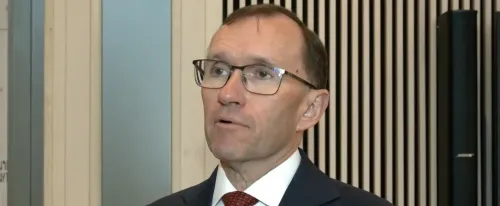
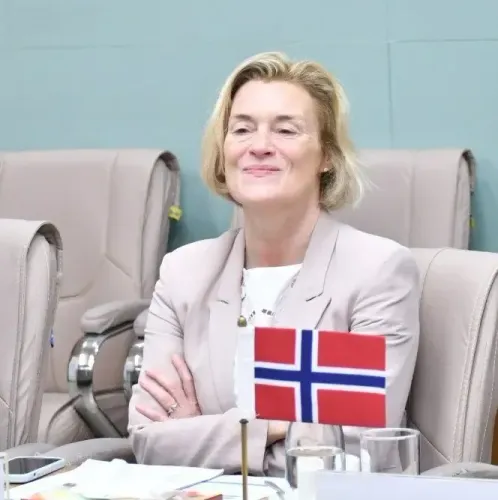
India's Ambassador to Norway, Gloria Gangte, has confirmed that Oslo formally supports New Delhi's permanent membership in the United Nations Security Council (UNSC) and has strongly condemned terrorism, including the attacks at Pahalgam and the Red Fort, ahead of Prime Minister Narendra Modi's landmark visit to Norway — the first by an Indian prime minister in 43 years.
A Historic Visit After Four Decades
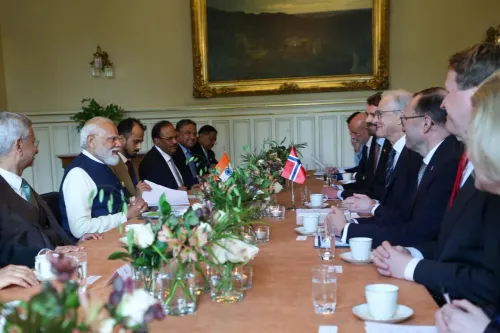
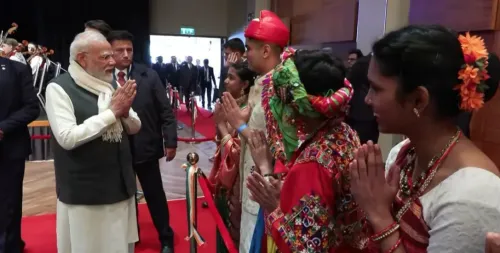
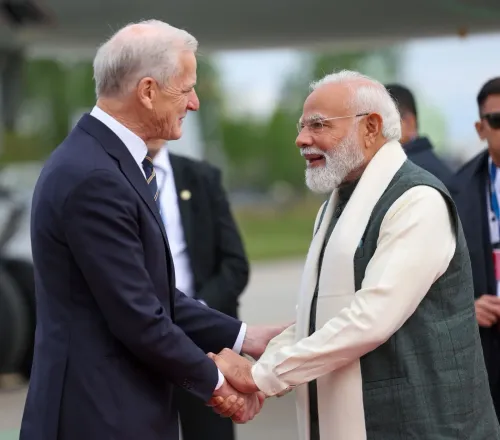
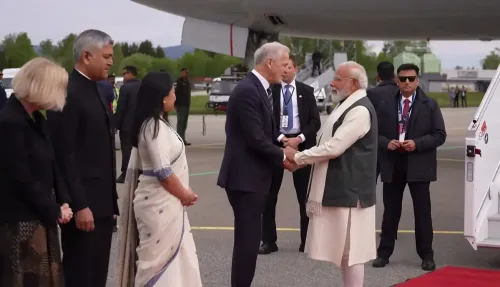
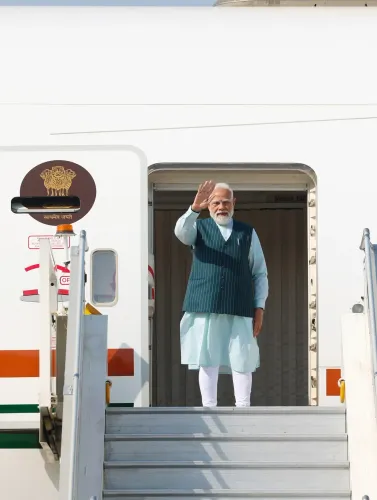
PM Modi is set to arrive in Oslo on Monday to participate in the 3rd India-Nordic Summit, scheduled for 19 May, and hold key bilateral engagements with Norwegian leadership. He will call on King Harald V and Queen Sonja, and hold formal talks with Norwegian Prime Minister Jonas Gahr Støre. The visit is being described as a milestone in India-Nordic relations, coming at a time of heightened global flux and deepening economic integration.
'This is Prime Minister Modi's first visit to Norway and is taking place after a gap of 43 years since the last prime ministerial visit from India to Norway,' Ambassador Gangte said. She noted that the visit coincides with the operationalisation of the India-EFTA Trade and Economic Partnership Agreement (TEPA), which includes a provision for investment by EFTA countries of approximately $100 billion over 15 years and the creation of one million jobs in India.
Norway's Support on UNSC and Terrorism
Ambassador Gangte underscored that Norway's backing on strategic matters goes beyond diplomatic courtesy. 'Norway believes that India deserves to be in the United Nations Permanent Security Council, and it has consistently supported India's membership there,' she said. She further noted that Norway had 'strongly condemned terrorism, especially the attacks that happened at Pahalgam and Red Fort' — a statement that carries weight given the current security climate in the region.
This comes amid India's sustained diplomatic campaign to secure a permanent seat in a reformed UNSC, a goal that has gained renewed urgency as calls for multilateral institutional reform grow louder globally.
Key Agreements and Bilateral Agenda
According to the Ambassador, three government-to-government agreements are expected to be signed during the visit, alongside several government-to-business and business-to-business accords. The agenda will span bilateral issues as well as regional and global peace discussions. 'There are a number of discussions that will take place, and both sides are looking at what they can do in terms of discussions for global peace and solutions in various regions of the world,' Gangte said.
She also highlighted the maritime sector as a flagship pillar of India-Norway cooperation, noting that around 10 per cent of the Norwegian Shipowners' Association's orders for new ships are currently being placed with India. Both nations are also collaborating on port development and ship recycling initiatives.
The India-Nordic Summit: What to Expect
The 3rd India-Nordic Summit in Oslo will bring together Prime Minister Modi alongside the heads of government of Norway, Denmark, Finland, Iceland, and Sweden. The summit format, now in its third edition, reflects the growing institutional weight India places on its engagement with the Nordic bloc — nations known for their technological innovation, green energy leadership, and multilateral influence.
'The fact that the third India-Nordic Summit is taking place shows the great potential we are looking at,' Gangte remarked. With the India-EFTA TEPA framework now in place and bilateral momentum building, the Oslo summit is expected to set the tone for the next phase of India's northern European partnerships.
Point of View
But its timing — stated explicitly on the eve of a high-profile Modi visit — signals that New Delhi is converting diplomatic goodwill into formal, on-record commitments. What is underreported is the maritime dimension: a 10 per cent share of Norwegian new-ship orders flowing to Indian yards is a quietly significant industrial win that rarely makes headlines. The India-EFTA TEPA's $100 billion investment target over 15 years will face the same credibility test as every large-number trade promise — whether disbursement mechanisms are robust enough to translate pledges into factory floors and employment. The Nordic summits, now in their third edition, are also maturing from photo-opportunity forums into a structured multilateral channel, which suits India's current foreign policy posture of building parallel coalitions outside the traditional G7 and BRICS axes.
NationPress
3 Oct 2026
Frequently Asked Questions
Why is PM Modi's visit to Norway significant?
PM Modi's visit to Norway is the first by an Indian prime minister in 43 years, making it historically significant. It coincides with the 3rd India-Nordic Summit in Oslo on 19 May and the activation of the India-EFTA TEPA agreement, which targets $100 billion in investment and one million jobs in India.
Does Norway support India's permanent membership in the UNSC?
Yes. Ambassador Gloria Gangte confirmed that Norway has consistently supported India's permanent membership in the United Nations Security Council. Norway has also strongly condemned terrorism, including the attacks at Pahalgam and the Red Fort.
What agreements will be signed during PM Modi's Norway visit?
Three government-to-government agreements are expected to be signed, along with several government-to-business and business-to-business accords. The exact details of the agreements had not been disclosed ahead of the visit.
What is the India-EFTA TEPA agreement?
The India-EFTA Trade and Economic Partnership Agreement (TEPA) is a trade and investment pact between India and the European Free Trade Association (EFTA) countries — Norway, Switzerland, Iceland, and Liechtenstein. It includes a provision for approximately $100 billion in investment over 15 years and targets the creation of one million jobs in India.
Which countries are participating in the 3rd India-Nordic Summit?
The 3rd India-Nordic Summit, held in Oslo on 19 May, brings together PM Modi alongside the heads of government of Norway, Denmark, Finland, Iceland, and Sweden.