Modi's Oslo visit: India-Norway elevate ties to green strategic partnership
Synopsis
Modi's Oslo visit wasn't ceremonial — it produced a formal upgrade to a green strategic partnership between India and Norway, with agreements signed and a shared framework for clean energy cooperation. Norwegian PM Store's candid acknowledgement of differences on Ukraine, paired with a deliberate emphasis on shared democratic values, signals that both sides are investing in the relationship precisely because global alignments are in flux.
Key Takeaways
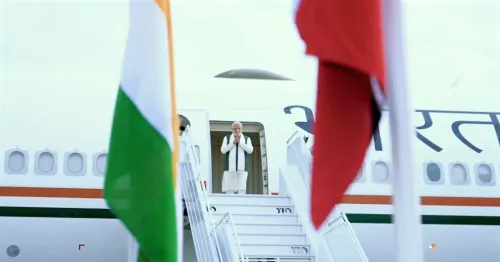
PM Narendra Modi visited Oslo on 18 May , marking a significant moment in India-Norway bilateral ties.
India and Norway formally elevated their relationship to a green strategic partnership .
Norwegian PM Jonas Gahr Store called on both nations to resist the weaponisation of diplomacy, trade, and technology.
Both leaders discussed the wars in Ukraine and the Middle East at a joint press conference.
Store acknowledged that India and Norway do not always agree on every issue but emphasised shared democratic values as the stronger foundation.
Multiple bilateral agreements were signed during the visit to advance the new partnership framework.
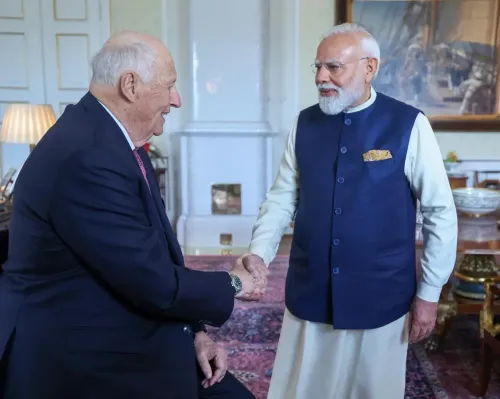
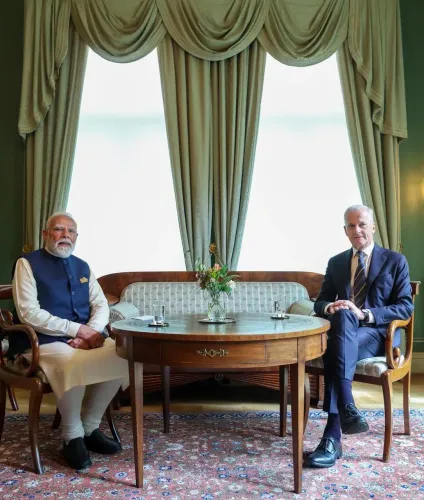
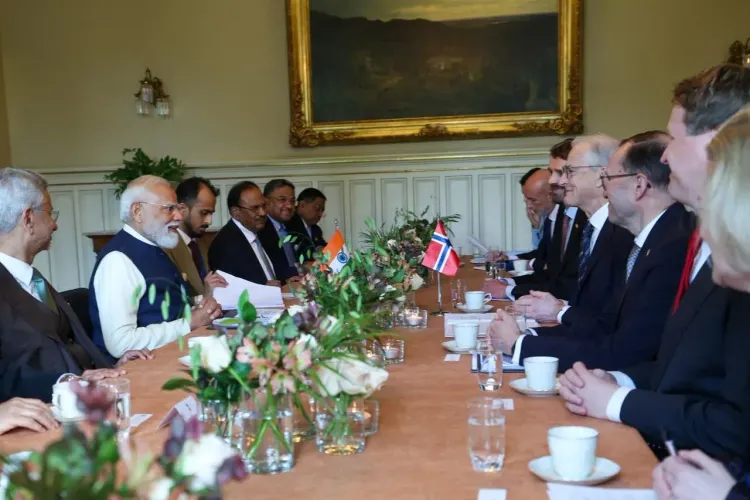
Prime Minister Narendra Modi's visit to Oslo on 18 May has marked a significant upgrade in bilateral ties, with India and Norway formally elevating their relationship to a green strategic partnership. Norwegian Prime Minister Jonas Gahr Store described the visit as a reflection of the growing partnership between the two democracies and their shared ambition to deepen cooperation across multiple domains.
Store's Key Message: Rules-Based Order Under Pressure
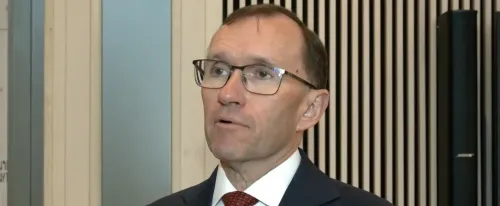
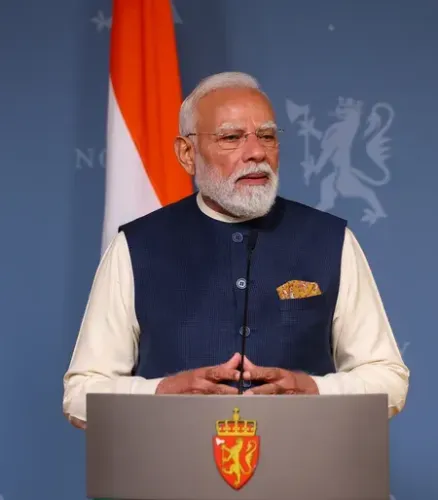
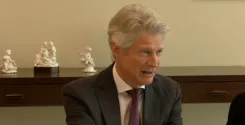
Addressing a joint press conference alongside Modi, Store underscored that the current global moment — marked by rising protectionism and heightened geopolitical tensions — makes it more urgent than ever for like-minded democracies to stand together. 'We have to stand up against those who weaponise diplomacy, trade, and technology. At a time of rising protectionism and more tense geopolitical dynamics, it's more important than ever to stand together for a rule-based order,' Store said.
He added that both sides had used the occasion to discuss pressing global flashpoints, including the wars in Ukraine and the Middle East, and expressed appreciation for direct diplomatic engagement between the two countries on these issues.
Shared Values Over Shared Positions
Store acknowledged that India and Norway do not always converge on every international question — a candid admission given the two countries' differing stances on the Russia-Ukraine conflict. However, he framed this as a feature of mature democracies rather than a fault line. 'India does not always see eye to eye on all issues. Nobody does, and we are both respectful democracies who handle those issues in ways that live up to democratic standards,' he said, adding that a shared belief in multilateralism and cooperation over unilateralism was the stronger bond.
This framing is notable: Norway, a NATO member, has been among the most vocal European voices on the war in Ukraine, while India has maintained strategic autonomy and continued energy trade with Russia. That both sides chose to emphasise common ground rather than divergence signals a deliberate diplomatic calibration.
Green Strategic Partnership: What It Means
India and Norway are elevating their bilateral framework to a green strategic partnership, creating a structured platform to align on knowledge-sharing, natural resources, and clean energy transition. Store described both nations as equally committed to the green transition's success. The partnership is expected to be underpinned by a series of agreements signed during Modi's visit, spanning sectors where Norway's expertise — offshore wind, maritime decarbonisation, and aquaculture — complements India's scale and ambition.
This comes amid India's accelerating push toward renewable energy targets and Norway's interest in diversifying its strategic partnerships beyond the transatlantic axis as global trade architecture shifts.
Why This Visit Matters Beyond the Bilateral
Modi's Oslo visit is part of a broader European outreach at a time when India is deepening ties with the continent amid stalled India-EU free trade agreement talks and shifting supply chain dynamics. Norway, while not an EU member, is deeply integrated into European economic structures through the EEA and brings significant sovereign wealth — the Government Pension Fund Global, the world's largest sovereign wealth fund, has substantial exposure to Indian markets. Strengthening the political relationship carries implicit financial and strategic weight.
With multiple agreements signed and a new green partnership framework in place, the next phase will test whether the ambitions articulated in Oslo translate into measurable outcomes on clean energy, trade, and diplomatic coordination.
Point of View
Offshore wind expertise, and maritime decarbonisation credentials make it a genuinely useful partner for India's energy transition, not merely a symbolic one. Store's careful framing around Ukraine — acknowledging disagreement while stressing shared democratic identity — reflects how both sides are managing a real divergence without letting it define the relationship. The harder test comes when that divergence surfaces in multilateral forums where abstentions carry costs.
NationPress
23 Sept 2026
Frequently Asked Questions
What is the India-Norway green strategic partnership announced during PM Modi's Oslo visit?
It is a formal upgrade of the bilateral relationship, creating a structured framework for India and Norway to collaborate on clean energy, knowledge-sharing, and natural resources. The partnership was announced during PM Modi's visit to Oslo on 18 May, with multiple agreements signed to advance cooperation.
What did Norwegian PM Jonas Gahr Store say at the joint press conference with PM Modi?
Store called on both nations to resist the weaponisation of diplomacy, trade, and technology, and emphasised the importance of upholding a rules-based international order. He also acknowledged that India and Norway do not always agree on every issue but said shared democratic values and a belief in multilateralism were stronger bonds.
Did India and Norway discuss the Ukraine and Middle East conflicts during the Oslo visit?
Yes. Store confirmed that both sides discussed the wars in Ukraine and the Middle East at the joint press conference. He expressed appreciation for direct diplomatic engagement between Norway and India on these global flashpoints.
Why is PM Modi's Oslo visit significant for India's foreign policy?
The visit is part of India's broader European outreach at a time of shifting global trade and supply chain dynamics. Norway's expertise in offshore wind, maritime decarbonisation, and its position as home to the world's largest sovereign wealth fund make it a strategically valuable partner for India beyond the symbolic.
Do India and Norway agree on all international issues, including Ukraine?
No. Norwegian PM Store explicitly acknowledged that India and Norway do not always see eye to eye on every issue. Norway, a NATO member, has been a vocal critic of Russia's invasion of Ukraine, while India has maintained strategic autonomy. Both sides chose to frame their differences as manageable within a broader democratic partnership.