How Did An Indian American-Led County in Pennsylvania Achieve a Rare Bipartisan Budget?
Synopsis
Montgomery County, Pennsylvania, led by Indian American Commissioner Neil Makhija, has achieved a historic bipartisan budget for 2026. This $1.2 billion plan focuses on housing, public health, infrastructure, and workforce development, marking a significant moment in local governance. Explore how this budget sets a precedent for cooperation amid political division.
Key Takeaways
Historic bipartisan budget passed in Montgomery County.
Investment of $1.2 billion focusing on local needs . $5.3 million allocated for housing and homelessness solutions. $7.2 million designated for public health and safety initiatives. $35 million committed to infrastructure upgrades .
Washington, Dec 28 (NationPress) A county in Pennsylvania, led by an Indian American, has achieved a remarkable milestone by unanimously passing its 2026 budget. This marks the first bipartisan county budget in almost ten years, featuring significant investments in housing, public health, infrastructure, and workforce development.
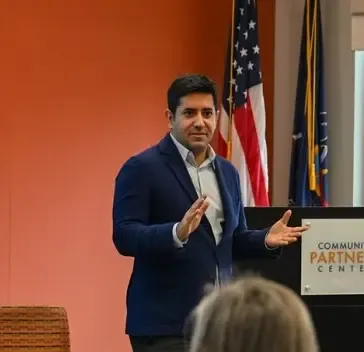
Montgomery County, known as Pennsylvania's third-largest county with a population of approximately 865,000 residents, approved a $1.2 billion budget last week under the guidance of County Commissioner Neil Makhija, an Indian American serving as the chair of the Board of Commissioners. County officials described this budget as a data-driven initiative that addresses local needs amid the political dysfunction observed at both the federal and state levels.
The unanimous approval of the budget demonstrates a rare bipartisan agreement in a politically significant county that has a larger population than four U.S. states and Washington, D.C. Montgomery County holds a crucial position within Pennsylvania, a state known for its pivotal role in U.S. elections.
As part of the approved budget, $5.3 million will be used to enhance housing and homelessness solutions, including the establishment of new transitional housing throughout the county. The affordability of housing and homelessness have become increasingly pressing issues in the suburbs surrounding Philadelphia.
An investment of $7.2 million is allocated for public health and safety initiatives. This funding aims to bolster emergency communications systems and enhance crisis response, which county officials have identified as essential areas of focus.
Infrastructure receives significant attention in the budget, with a commitment of $35 million to maintain and upgrade 131 bridges and 75 miles of roads utilized by millions of residents and commuters annually. Local officials emphasize that these investments are vital for ensuring safety and fostering economic activity.
Additionally, the budget allocates $16.6 million for the maintenance of nearly 6,000 acres of parks, trails, and historic sites, which attract over three million visitors each year and are integral to the county's environmental and recreational resources.
Furthermore, more than $1.5 million is designated to cultivate a stronger and more equitable county workforce while enhancing operational efficiency. Officials noted that the focus is on improving employee support and streamlining county operations.
County leaders assured that the budget remains balanced while integrating cost-saving strategies. Savings were achieved through the efforts of the Office of Innovation, Strategy, and Performance, which identified both state and federal grants, minimized redundancies, mandated vendor competition, and garnered philanthropic support. The savings have been redirected to address prioritized community needs.
Commissioner Makhija, who leads the Board of Commissioners, oversees the county budget and approximately 3,000 county employees responsible for infrastructure, public safety, human services, and the criminal justice system.
Before his election, he taught election law at the University of Pennsylvania Law School and represented Pennsylvania counties in legal actions against pharmaceutical companies concerning the opioid crisis. He has also served as the executive director of Indian American Impact, a civic organization that promotes civic engagement among South Asians.
Officials from Montgomery County assert that this bipartisan budget exemplifies how local governments can achieve results even amidst the polarized nature of broader political discussions, positioning the county favorably for the upcoming year in light of economic uncertainty and escalating demands for public services.
Point of View
I see Montgomery County's bipartisan budget as a testament to the potential for local governance to transcend political divides. This development is not just a financial plan; it reflects a commitment to addressing pressing community issues while navigating the complexities of national politics. It’s a model that could inspire other regions to prioritize collaboration over partisanship.
NationPress
5 Oct 2026
Frequently Asked Questions
What is the significance of the bipartisan budget?
The bipartisan budget represents a rare consensus among political factions, highlighting the ability of local governments to collaborate on important issues despite broader political polarization.
What are the key areas of investment in the budget?
Key investments include housing solutions, public health initiatives, infrastructure maintenance, and workforce development, focusing on addressing local needs.
Who is Neil Makhija?
Neil Makhija is the Indian American County Commissioner who chairs the Board of Commissioners in Montgomery County, overseeing the budget and county operations.
How will the budget address homelessness?
The budget allocates $5.3 million to expand housing and homelessness solutions, including new transitional housing across the county.
What measures were taken to ensure the budget is balanced?
The budget remains balanced through cost-saving measures identified by the Office of Innovation, Strategy, and Performance, including grants and reduced redundancies.