Why is the US condemning the killing of a Hindu worker and urging Bangladesh to protect minorities?
Click to start listening
Synopsis
In a significant turn of events, the US has condemned the brutal murder of Hindu garment worker Dipu Chandra Das in Bangladesh, highlighting the alarming rise in religious violence. This incident has sparked outrage among US lawmakers and advocacy groups, urging immediate action to protect minority communities.
Key Takeaways
- Dipu Chandra Das was a victim of religious violence in Bangladesh.
- The US has condemned this act and called for protection of minorities.
- There is a growing concern over the safety of Hindus and other religious minorities.
- US lawmakers are advocating for stronger measures against religious hatred.
- Support for religious freedom is a core part of US foreign policy.
Washington, Dec 28 (NationPress) The US State Department has voiced its condemnation regarding the alarming rise in religious violence in Bangladesh. A prominent US legislator referred to the brutal lynching of Dipu Chandra Das, a Hindu garment worker, as ‘horrific’ and called for a strong denunciation of religious hatred.
In response to inquiries about the tragic incident involving Das, the spokesperson stated, 'The United States upholds religious freedom and the rights to expression, peaceful assembly, and association.' They reiterated the US’s firm stance against religious violence in all its manifestations and welcomed the initiatives undertaken by the Bangladeshi Interim Government aimed at safeguarding all communities.
This response comes as concerns mount in Washington and among advocacy groups following the death of Dipu Chandra Das and a disturbing pattern of violence against minority groups.
US lawmakers have also voiced their outrage over the incident. Congressman Ro Khanna described the murder as 'horrific' and emphasized the need for clear condemnation of acts of religious hatred.
'The murder of Dipu Chandra Das, a 27-year-old Hindu garment worker, is appalling, and my thoughts and prayers are with his loved ones,' Khanna expressed on X.
He further added, 'We must unequivocally denounce these despicable acts of hatred and bigotry.'
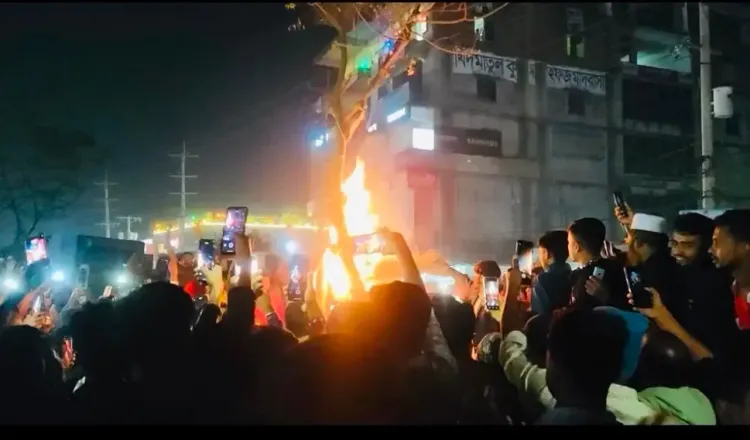
Dipu Chandra Das, hailing from Bhaluka, Bangladesh, tragically lost his life on December 18 after being attacked by a mob, beaten to death, and having his body set ablaze due to allegations of blasphemy.
This incident has sharpened scrutiny regarding the plight of religious minorities in Bangladesh, particularly Hindus, in the wake of the country's political turmoil. Advocacy groups report a rise in assaults on minority communities, highlighting incidents of mob violence, vandalism, and intimidation.
While the State Department did not disclose specific diplomatic engagements, its response to IANS underscored the condemnation of religious violence and welcomed measures adopted by Bangladesh’s interim authorities to ensure security for every community.
US officials have consistently affirmed that support for religious freedom and the safeguarding of minority rights are fundamental tenets of American foreign policy. Advocacy groups assert that attacks on minority communities have escalated, citing numerous instances of mob violence, vandalism, and intimidation.
The State Department’s response highlights Washington’s firm position that religious violence is intolerable and that securing the safety of all communities is crucial for enduring stability, especially as the situation in Bangladesh garners heightened international focus.
Point of View
It's imperative to acknowledge the gravity of the incident involving Dipu Chandra Das. We stand firm in our belief that the protection of minority rights and the promotion of religious freedom are essential for a harmonious society. The international community must remain vigilant and proactive in addressing instances of violence and discrimination.
NationPress
08/01/2026
Frequently Asked Questions
What happened to Dipu Chandra Das?
Dipu Chandra Das, a Hindu garment worker in Bangladesh, was brutally attacked by a mob and killed due to allegations of blasphemy.
What is the US government's stance on religious violence?
The US government unequivocally condemns religious violence in all forms and supports the protection of minority rights and religious freedom.
How has the international community reacted?
The international community, including US lawmakers and advocacy groups, has expressed outrage over the killing and called for stronger protective measures for minority communities.
What actions are being taken by the Bangladeshi government?
The Bangladeshi Interim Government is reportedly taking measures to enhance the safety and security of all communities in the country.
Why is this incident significant?
This incident underscores the ongoing issues of religious intolerance and violence against minorities in Bangladesh, raising concerns about human rights and social stability.