Muizzu's Pakistan visit stirs debate in Maldives over India ties
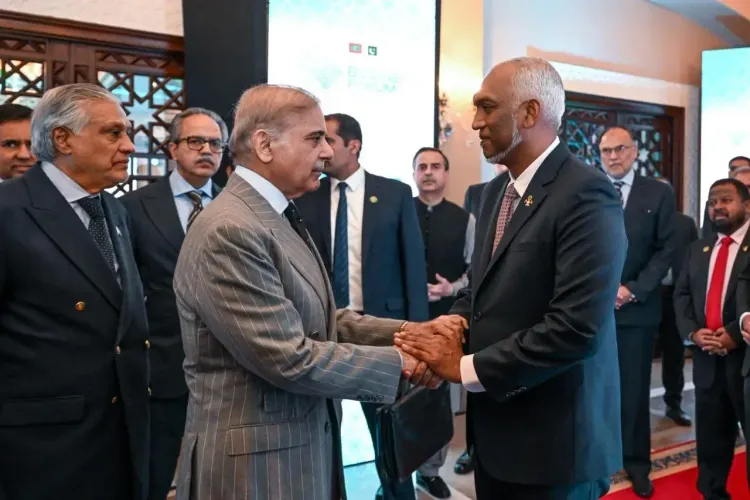
Synopsis
Maldivian President Muizzu's first Pakistan visit in eleven years — sealed with 20 MoUs covering defence and maritime security — has set off alarm bells in Male's opposition and strategic discomfort in New Delhi. The trip lays bare a structural challenge for India: geographic proximity no longer guarantees influence when rivals are actively courting its maritime neighbours.
Key Takeaways
Maldivian President Mohamed Muizzu visited Pakistan from 20 to 22 October 2026 — the first such visit in eleven years .
The two sides signed 20 MoUs covering defence, maritime security, trade, education, healthcare, agriculture, and fisheries.
Bilateral trade is pledged to rise from approximately $13.9 million to $200 million within two years.
Opposition leaders in the Maldives warned the visit could strain Male's ties with India .
The International Centre for Peace Studies report urged India to respond with 'strategic vigilance' and 'diplomatic maturity' rather than alarm.
The visit coincided with the 60th anniversary of Pakistan-Maldives diplomatic relations.
Maldivian President Mohamed Muizzu's state visit to Pakistan from 20 to 22 October 2026 has ignited a political debate within the Maldives, with opposition leaders warning that deepening security cooperation with Islamabad could jeopardise Male's ties with India, according to a report by the International Centre for Peace Studies. The visit — the first by a Maldivian president to Pakistan in eleven years — coincided with the 60th anniversary of diplomatic relations between the two countries.
What the Visit Covered
The two sides signed 20 memorandums of understanding (MoUs) spanning defence, maritime security, trade, education, healthcare, agriculture, and fisheries. A key economic pledge was made to raise bilateral trade from approximately $13.9 million to $200 million within two years. While economic cooperation formed the core of the agenda, the defence and maritime dimensions drew particular attention in New Delhi given the Maldives' strategic position in the Indian Ocean.
Why New Delhi Is Watching Closely
The report noted that Pakistan's renewed outreach into the Indian Ocean region — though limited in practical implications so far — reflects Islamabad's willingness to exploit diplomatic openings and cultivate strategic relationships within India's immediate maritime neighbourhood. The visit, the report argued, 'serves as a reminder that India cannot take its geographical proximity and historical ties with the Maldives for granted amid growing competition in the Indian Ocean.'
The India-Maldives Backdrop
Relations between India and the Maldives had deteriorated sharply following Muizzu's 'India Out' campaign and a standoff over the presence of Indian military personnel on the island nation. Ties have since partially recovered, but Muizzu's outreach to Pakistan underscores Male's continuing effort to diversify its foreign-policy and security partnerships rather than rely exclusively on any single partner. The report characterised this as the Maldives 'signalling its intention to exercise its foreign-policy autonomy by engaging with multiple partners.'
What the Report Recommends for India
The analysis called for a calibrated Indian response — neither alarmist nor dismissive. It argued that India's influence in the Indian Ocean would ultimately rest 'not on its geographical centrality alone, but on its ability to remain the most dependable, responsive and consequential partner for its maritime neighbours.' The report urged a strategy combining 'strategic vigilance with diplomatic maturity, economic responsiveness and credible security cooperation.'
Broader Regional Significance
The visit reflects a wider pattern of smaller Indian Ocean states hedging their strategic bets amid intensifying great-power competition in the region. For India, the challenge is structural: geography alone no longer guarantees influence when rivals are willing to offer attractive partnership terms. How New Delhi responds — economically, diplomatically, and in security terms — will shape the trajectory of its Indian Ocean strategy in the months ahead.
Point of View
Particularly in defence and maritime security; the practical value of the pacts is modest. What matters strategically is the optics: that Male is willing to shop around. India's past response to Maldivian assertiveness — oscillating between pressure and neglect — has not served it well. The real risk is not Pakistan planting a naval base in Male, but India continuing to treat the Maldives as a captive partner rather than one that must be actively retained through responsive, credible engagement.
NationPress
8 Nov 2026
Frequently Asked Questions
Why did Muizzu's Pakistan visit spark a debate in the Maldives?
Maldivian opposition leaders expressed concern that the defence and maritime security MoUs signed during the visit could damage Male's ties with India, which remains the Maldives' most significant regional partner. The debate reflects broader divisions over how the Maldives should balance its foreign-policy relationships.
What agreements were signed during Muizzu's visit to Pakistan?
The two countries signed 20 MoUs covering defence, maritime security, trade, education, healthcare, agriculture, and fisheries. They also pledged to increase bilateral trade from approximately $13.9 million to $200 million within two years.
How does this visit affect India-Maldives relations?
India-Maldives ties had already been strained by Muizzu's earlier 'India Out' campaign and a dispute over Indian military personnel on the islands. The Pakistan visit signals that Male is continuing to diversify its partnerships rather than return fully to India's orbit, adding a new layer of complexity to the bilateral relationship.
What is the significance of Pakistan engaging with the Maldives?
The Maldives occupies a strategic position in the Indian Ocean, sitting astride key shipping lanes. Pakistan's outreach, according to the International Centre for Peace Studies, reflects Islamabad's willingness to build strategic relationships in India's immediate maritime neighbourhood, even if the practical impact remains limited for now.
What should India do in response, according to analysts?
The International Centre for Peace Studies report recommended that India respond with strategic vigilance combined with diplomatic maturity, economic responsiveness, and credible security cooperation — arguing that India's influence in the Indian Ocean must be earned through reliable partnership, not assumed from geography alone.