Myanmar Picks Pro-China Ex-General as Foreign Minister
Synopsis
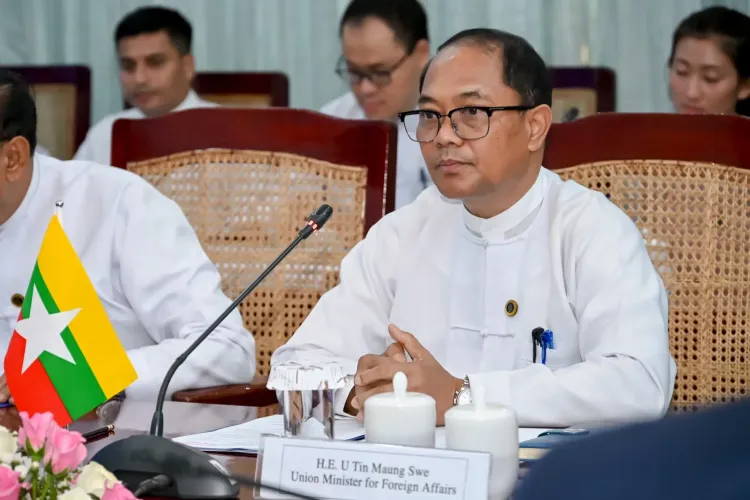
Myanmar's military government has appointed ex-Ambassador to Beijing Tin Maung Swe as Foreign Minister — a deliberate signal of deeper China alignment. As the junta faces Western isolation post-2021 coup, Beijing's grip on its strategically vital southern neighbour tightens, with Myanmar's civilians left bearing the cost of this geopolitical realignment.
Key Takeaways
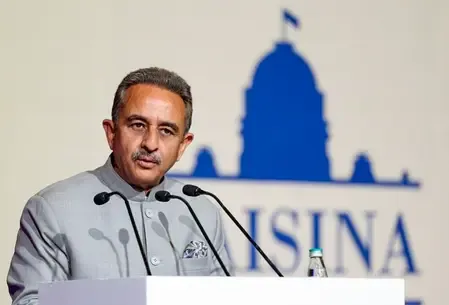
Tin Maung Swe , a former Brigadier General and Myanmar's ex-Ambassador to Beijing , has been appointed Foreign Minister by the military government.
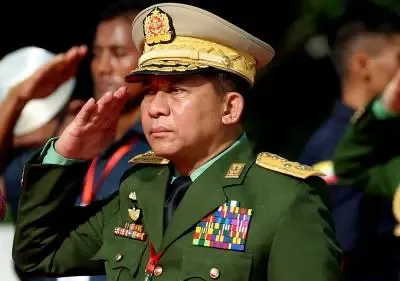
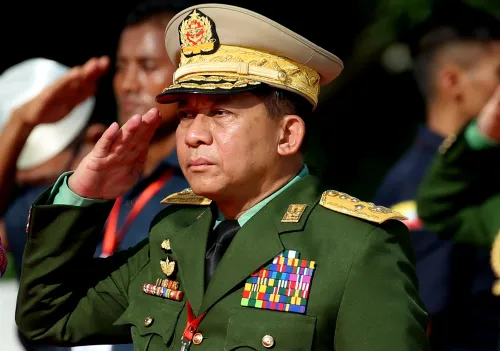
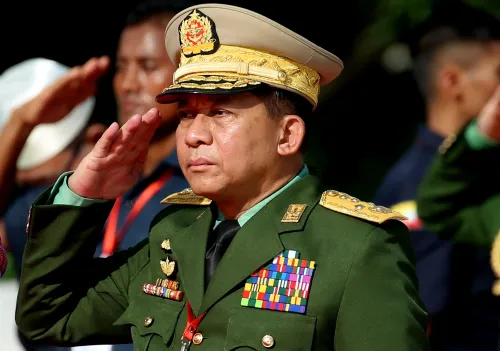
The appointment signals a deliberate strategic pivot toward China under President Min Aung Hlaing .
Myanmar's military first turned to China after the 1988 massacres triggered Western isolation — a pattern now repeating after the February 2021 coup .
Myanmar is China's only direct southern corridor to the Indian Ocean , bypassing the South China Sea and the Strait of Malacca .
Analyst Bertil Lintner , writing in The Irrawaddy , warned the evolving situation is a tragedy in which Myanmar's people have no say while the military consolidates power with Chinese backing .
The development has direct implications for India's Act East Policy and concerns about Chinese strategic encirclement through Myanmar .
Naypyidaw, April 25: Myanmar's military-led government, headed by President Min Aung Hlaing, has appointed Tin Maung Swe — a former Brigadier General and Myanmar's ex-Ambassador to Beijing — as its new Foreign Minister, a move widely interpreted as a deliberate strategic tilt toward China. The appointment, flagged in a detailed analysis published this week by The Irrawaddy, underscores the junta's intent to leverage Beijing's backing as it faces deepening international isolation.
A Calculated Pivot Away from the West
Veteran Swedish journalist, author, and strategic consultant Bertil Lintner, writing in The Irrawaddy, traced the roots of this realignment to Myanmar's post-1988 political crisis. Following the August-September 1988 massacres, the Myanmar military turned to China for economic and diplomatic lifelines after being shunned by Western nations. That dependency, Lintner argued, eventually became so suffocating that the junta was compelled to open up to the West in order to break free from Beijing's overwhelming grip.
The brief democratic opening that followed produced unintended consequences — a flourishing civil society and two consecutive landslide election victories for Aung San Suu Kyi's National League for Democracy (NLD). Threatened by this democratic momentum, Senior General Min Aung Hlaing staged a military coup in February 2021, triggering a fresh wave of Western sanctions and economic boycotts that pushed the junta back into China's orbit.
China's Strategic Interest in Myanmar
The geographic and economic logic behind Beijing's sustained interest in Myanmar is stark. China, despite being the world's largest exporter, has a comparatively short coastline relative to its vast landmass. Myanmar represents its only viable southern corridor to the Indian Ocean — bypassing the heavily contested South China Sea and the chronically congested Strait of Malacca.
This corridor is critical not just for Chinese export logistics but also for the import of gas, oil, and strategic minerals. The report noted that among China's neighbours, only Pakistan — geographically remote and itself crisis-ridden — and India — which has no interest in facilitating Chinese trade — share a comparable geographic position, making Myanmar irreplaceable in Beijing's Indo-Pacific strategy.
The Junta's Attempt to Correct Past Mistakes
According to Lintner's analysis, the newly reconstituted military-dominated government is making a conscious effort to diversify its foreign contacts — a lesson drawn from the over-dependence on China that hamstrung earlier juntas. However, the report cautioned that Beijing has simultaneously grown far more sophisticated and assertive in extending its influence over Naypyidaw.
The appointment of Tin Maung Swe, with his deep institutional familiarity with Chinese leadership and diplomatic channels, is seen as a signal that the junta intends to manage this relationship more strategically — while still leaning heavily on Beijing's political cover at international forums like the United Nations.
Human Cost and the Broader Geopolitical Warning
Lintner's most sobering conclusion is that this entire geopolitical chess match is being played entirely over the heads of Myanmar's civilian population. Drawing an inversion of Karl Marx's famous dictum — that history repeats itself first as tragedy, then as farce — he argued that in Myanmar's case, the cycle has reversed: what is unfolding now is pure tragedy, with no democratic corrective in sight.
This development carries significant implications for India as well, given New Delhi's own border with Myanmar and its concerns about Chinese strategic encirclement through the Belt and Road Initiative. As the Myanmar junta deepens its alignment with Beijing, India's Act East Policy and connectivity projects through Myanmar face mounting uncertainty. Analysts will be watching closely whether New Delhi recalibrates its engagement with Naypyidaw in the months ahead.
Point of View
But that ambiguity is becoming increasingly untenable. India must decide whether it will remain a passive observer as China consolidates a corridor to the Indian Ocean on India's own eastern flank.
NationPress
15 Sept 2026
Frequently Asked Questions
Who is Tin Maung Swe and why is his appointment significant?
Tin Maung Swe is a former Brigadier General and Myanmar's ex-Ambassador to China, now appointed as Foreign Minister by the military government. His appointment signals Myanmar's intent to deepen strategic and diplomatic ties with Beijing amid ongoing Western sanctions.
Why does China have such strong interest in Myanmar?
Myanmar provides China its only direct access to the Indian Ocean, allowing it to bypass the contested South China Sea and the Strait of Malacca for trade and energy imports. This makes Myanmar a critical node in China's Belt and Road Initiative and broader Indo-Pacific strategy.
What triggered Myanmar's current alignment with China?
The February 2021 military coup led by Min Aung Hlaing prompted sweeping Western sanctions and boycotts, pushing the junta to rely on Beijing for diplomatic cover and economic support. This mirrors a similar pattern from the post-1988 period when the military first turned to China after international isolation.
How does Myanmar's China tilt affect India?
India shares a border with Myanmar and has significant connectivity interests through its Act East Policy. A deeper Myanmar-China alignment risks advancing China's strategic encirclement of India and complicating New Delhi's regional infrastructure and trade projects.
What has been the impact of Myanmar's military rule on its own people?
Since the 2021 coup, Myanmar's civilian population has faced armed conflict, economic collapse, and a severe humanitarian crisis. Analysts like Bertil Lintner warn that the junta's geopolitical maneuvering is conducted entirely without civilian input, with ordinary citizens bearing the heaviest burden.