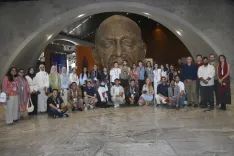
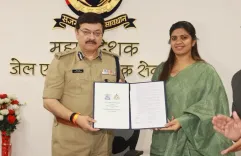
Nepal-India border security: CCTV, tech surveillance agreed at 14th JWG meet
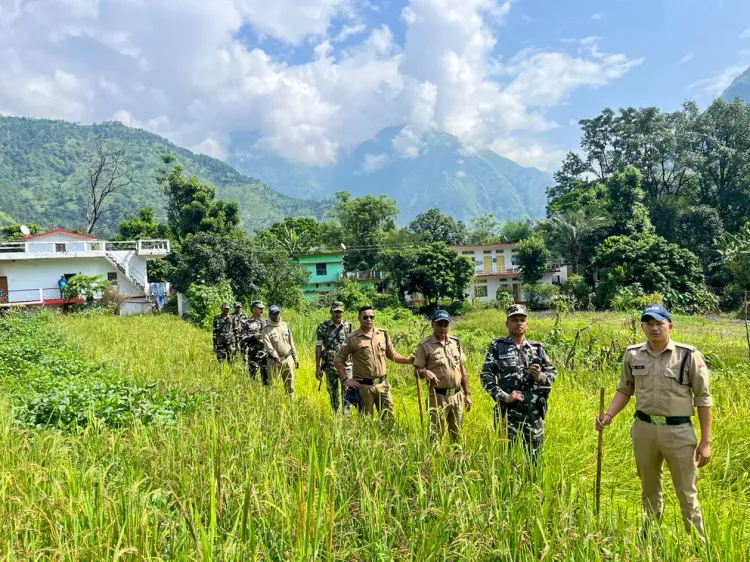
Synopsis
Nepal and India have moved to modernise their famously porous shared border with CCTV cameras and advanced surveillance tech — a significant upgrade agreed at the 14th JWG in Dehradun. With cybercrime, human trafficking, and No Man's Land encroachments all on the table, the meeting signals that the 'Roti and Beti' border is facing 21st-century security pressures that goodwill alone cannot manage.
Key Takeaways
Nepal and India agreed to deploy CCTV cameras and modern surveillance technology at sensitive border locations after the 14th JWG on Border Management in Dehradun .
Cross-border crimes discussed include drug trafficking , human trafficking , counterfeit currency , and illegal arms trade.
Nepal raised cybercrime and cross-border digital fraud as emerging threats for the first time at this forum.
Both sides discussed preventing encroachment in the No Man's Land (Dasgaja) area, an issue that sparked political controversy in Nepal in May 2025 .
The Nepali delegation was led by Anand Kafle ; the Indian delegation by Pausumi Basu , both Joint Secretaries at their respective Home Ministries.
The next JWG meeting will be held in Nepal on a mutually agreed date.
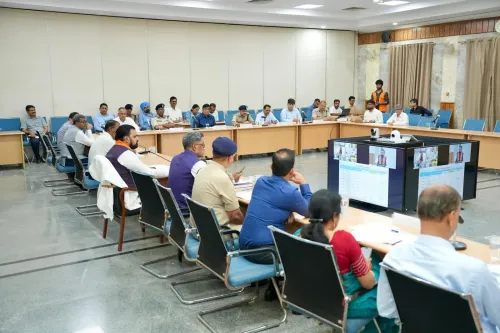
Nepal and India have agreed to deploy modern surveillance technologies, including CCTV cameras, at sensitive locations along their shared border, following the conclusion of the 14th meeting of the Nepal-India Joint Working Group (JWG) on Border Management in Dehradun on Friday, 21 August. The two-day high-level meeting focused on curbing cross-border crimes and reinforcing bilateral coordination mechanisms.
Key Agreements from the Dehradun Meeting
Both sides reaffirmed their commitment to strengthening real-time information exchange between relevant agencies to tackle cross-border criminal activity. The joint statement from India's Ministry of Home Affairs confirmed that discussions covered the full spectrum of bilateral border management and security cooperation.
The two delegations also agreed to strengthen and more effectively utilise border infrastructure, particularly Integrated Check Posts (ICPs), roads, and railway networks. Institutional coordination and capacity building across sectors were also on the agenda, with both sides committing to sustained engagement.
Cross-Border Crimes in Focus
The agenda at the JWG meeting was broad and detailed. Issues discussed included drug trafficking, trafficking of psychotropic substances and prohibited medicines, wildlife and human trafficking, economic crimes involving counterfeit currency, and the illegal trade in arms and ammunition.
Notably, the Nepali delegation raised cybercrime and cross-border digital fraud as emerging security challenges — reflecting the evolving nature of threats along what has traditionally been one of the world's most open international borders. Nepal's Home Ministry confirmed this in its official statement following the meeting.
The No Man's Land Dispute and Encroachment Issues
The meeting also held extensive discussions on preventing encroachment and unauthorised use of the No Man's Land (Dasgaja) area along the border. This issue gained political salience earlier this year when Nepal's Prime Minister Balendra Shah remarked in the House of Representatives in late May that Nepal had also encroached on Indian territory — a statement that drew sharp criticism from opposition parties within Nepal.
Nepal's Foreign Ministry subsequently clarified that the Prime Minister's remarks referred primarily to encroachments in the Dasgaja area and what he described as 'cross-border occupation' — situations arising from the Fixed Boundary Principle used in demarcating the border in riverine areas, where citizens of one country may cultivate land or reside on territory that legally falls within the other.
Other Issues on the Bilateral Agenda
Beyond security, the two sides discussed facilitating cross-border movement of citizens, strengthening mechanisms to monitor third-country nationals travelling through Nepal-India border points, improving disaster management cooperation, and making district-level Border District Coordination Committee (BDCC) meetings more effective.
The removal of encroachments and maintenance of boundary pillars were also cited as priority areas by India's Home Ministry.
Delegations and Next Steps
The Nepali delegation was led by Anand Kafle, Joint Secretary at Nepal's Ministry of Home Affairs. The Indian delegation was led by Pausumi Basu, Joint Secretary at India's Ministry of Home Affairs. Both sides agreed to hold the next JWG meeting in Nepal on a mutually convenient date, continuing the alternating-host tradition of the mechanism.
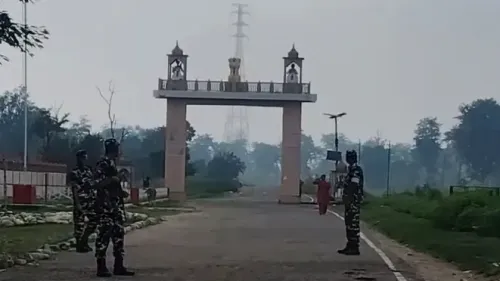
The Nepal-India border, often described through the cultural idiom of 'Roti and Beti' — reflecting deep traditions of cross-border livelihoods and intermarriage — remains one of the most open in the world, making the balance between facilitation and security a perennial challenge for both governments.
Point of View
But the harder challenge is political: the Nepal-India border's openness is both its greatest asset and its most exploited vulnerability. The inclusion of cybercrime on the JWG agenda for the first time reflects a belated recognition that border security is no longer just a physical problem. More telling is the Dasgaja encroachment issue — Prime Minister Shah's candid parliamentary admission that Nepal too has encroached on Indian land was diplomatically awkward but factually necessary. Whether the JWG mechanism has the institutional teeth to resolve such entrenched ground realities, or whether it remains a periodic goodwill exercise, is the question both governments have yet to answer credibly.
NationPress
21 Aug 2026
Frequently Asked Questions
What was agreed at the 14th Nepal-India Joint Working Group on Border Management?
Nepal and India agreed to enhance security surveillance at sensitive border locations using modern technologies including CCTV cameras, and to strengthen real-time information exchange between agencies to curb cross-border crimes. The two-day meeting concluded in Dehradun on 21 August.
What cross-border crimes were discussed at the Dehradun JWG meeting?
The meeting covered drug trafficking, trafficking of psychotropic substances and prohibited medicines, wildlife and human trafficking, counterfeit currency crimes, and illegal arms trade. Nepal also raised cybercrime and cross-border digital fraud as emerging security challenges.
What is the No Man's Land (Dasgaja) issue between Nepal and India?
The Dasgaja refers to a strip of no-man's land along the Nepal-India border where encroachment by citizens of both countries has been a longstanding issue. It gained fresh attention after Nepal's Prime Minister Balendra Shah acknowledged in parliament in late May that Nepali citizens had also encroached on Indian territory, prompting a Foreign Ministry clarification.
Who led the delegations at the 14th JWG meeting?
The Nepali delegation was led by Anand Kafle, Joint Secretary at Nepal's Ministry of Home Affairs. The Indian delegation was led by Pausumi Basu, Joint Secretary at India's Ministry of Home Affairs.
When and where will the next Nepal-India JWG on Border Management be held?
Both sides agreed that the next meeting of the Joint Working Group will be held in Nepal on a mutually convenient date. No specific date was announced following the Dehradun meeting.