Nepal PM Balendra Shah arrives in New Delhi for two-day State Visit with Modi
Synopsis
Nepal's newly elected Prime Minister Balendra Shah has landed in New Delhi for his first bilateral visit, carrying a weighty agenda: more than US $2 billion in flood relief, a contested air route dispute dating to 2009, and a joint vision document that could reframe India-Nepal ties for the next decade. The visit is as much about trust-building between two new political establishments as it is about deliverables.
Key Takeaways
Nepal PM Balendra Shah departed for New Delhi on 22 November 2026 for a two-day State Visit at PM Narendra Modi's invitation.
Shah is accompanied by a 35-member government delegation and a separate 52-member business delegation .
Delegation-level talks with PM Modi and a joint press conference are scheduled for 23 November .
Nepal is seeking more than US $2 billion in Indian aid for reconstruction after the 26 August floods , which killed over 1,400 people .
The two sides are expected to unveil a Joint Vision Document titled 'Samriddha Nepal, Samunnat Bharat' and exchange MoUs across multiple sectors.
The long-pending additional air entry route dispute, under discussion since 2009 , and border tensions over Lipulekh , Kalapani , and Limpiyadhura remain key unresolved issues.
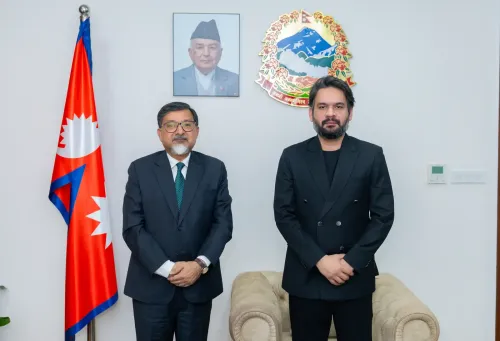
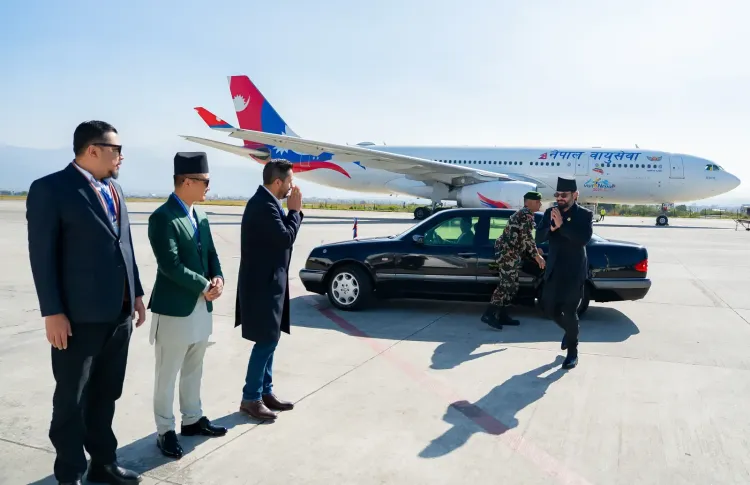
Nepali Prime Minister Balendra Shah departed Kathmandu on Sunday, 22 November 2026, aboard a Nepal Airlines flight bound for New Delhi, launching a high-stakes two-day State Visit at the invitation of Prime Minister Narendra Modi. The visit marks Shah's first bilateral trip since he was sworn in as Prime Minister on 27 March, following Nepal's 5 March elections, and comes with a substantial agenda spanning flood relief, air routes, energy, trade, and long-term bilateral cooperation.
Who is in the delegation
Shah is accompanied by a 35-member government delegation that includes Finance Minister Swarnim Wagle, Foreign Minister Shishir Khanal, and Chief Advisor to the Prime Minister Kumar Byanjankar, along with other senior officials. A separate 52-member business delegation is also participating in the visit at their own expense, signalling a strong commercial dimension to the engagement.
Key agenda: Talks, luncheon, and a joint vision document
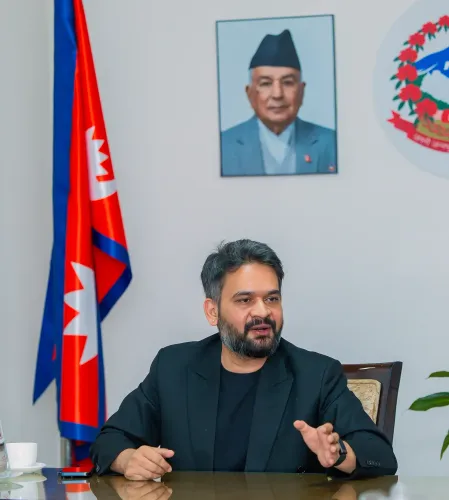
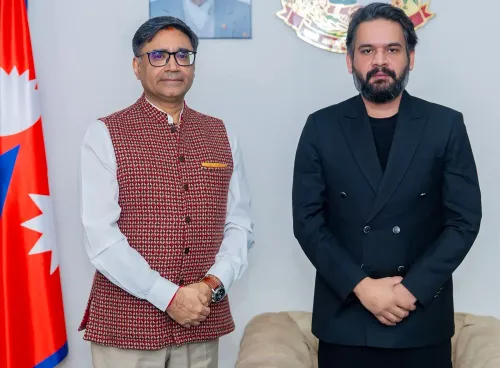
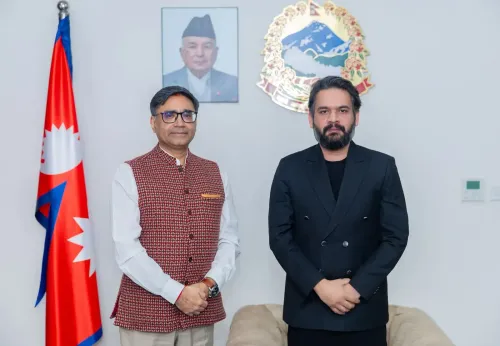
The core of the visit takes place on 23 November, when Prime Minister Shah will hold delegation-level talks with Prime Minister Modi, followed by a joint press conference. Modi will also host an official luncheon in honour of his Nepali counterpart. Shah is additionally scheduled to pay a courtesy call on President Droupadi Murmu, and External Affairs Minister S. Jaishankar is expected to call on Shah separately.
A centrepiece of the visit is the expected unveiling of a Joint Vision Document titled 'Samriddha Nepal, Samunnat Bharat' (Prosperous Nepal, Developed India), designed to chart long-term bilateral goals with concrete targets. The two sides are also set to inaugurate completed projects related to connectivity and energy, and lay foundation stones for new ventures. Memorandums of Understanding (MoUs) covering education, health, agriculture, sports, disaster management, and human resource development are also on the agenda.
Nepal's priorities: Floods, air routes, and trade concessions
According to Nepali officials, the government's top priorities include securing an additional air entry route from India, obtaining substantial financial assistance for post-flood reconstruction, and gaining trade and transit concessions. Nepal has sought more than US $2 billion in Indian support through grants and concessional loans following the 26 August floods, which killed more than 1,400 people and left more than 5,000 missing, causing extensive damage to public and private property.
The question of an additional air entry route — specifically from Nepal's western side to make the new Pokhara and Bhairahawa international airports financially viable — has been under discussion since 2009. Foreign policy advisor Dinesh Bhattarai noted that there appears to have been 'some positive movement and flexibility' on the issue, though he cautioned that reciprocal concessions sought by India were still being worked out.
India's interests: Airspace access and energy investment
On India's side, key concerns reportedly include securing access to Nepali airspace and improving the investment climate for Indian businesses in Nepal, particularly in the energy sector. Bilateral discussions are expected to focus on economic cooperation in trade, transportation, investment, energy, and infrastructure development.
Nepal's geographical position makes India its most critical partner. India is not only Nepal's largest trading partner but also its primary transit route for international commerce. Former foreign policy advisor Arun Subedi, who served under former Prime Minister Sher Bahadur Deuba, underscored that the two nations are 'indispensable and complementary neighbours,' but acknowledged that issues around supply chains, maritime connectivity, and communications remain unresolved.
Trust-building at the top: What experts say
Foreign policy experts in Nepal view the visit primarily as an opportunity for the new leadership — which represents a relatively new political force — to establish rapport with its southern neighbour. 'This is an opportunity to build political confidence between the newly emerged political forces in Nepal and the Indian political establishment,' Bhattarai said.
Bhattarai stressed that if the two leaders could develop mutual understanding at the prime ministerial level, that trust would cascade through all bilateral mechanisms. Subedi, meanwhile, called for a greater focus on corporate participation, arguing that outcomes achieved solely through government channels risked falling short of people's aspirations. The long-standing border disputes over Lipulekh, Kalapani, and Limpiyadhura — claimed by both sides — remain a sensitive irritant, though experts advised keeping such contentious matters within the framework of quiet diplomacy.
Shah is scheduled to return to Kathmandu on the evening of 23 November, departing New Delhi at 6:35 pm aboard a scheduled Nepal Airlines flight. Foreign Minister Khanal will brief the media on the outcomes at Tribhuvan International Airport after the delegation's return.
Point of View
And an India keen to secure airspace access and energy footholds. The joint vision document is a diplomatic sleight of hand — ambitious language that can mask hard unresolved bilaterals like the Lipulekh-Kalapani border dispute and the air route impasse that has dragged on since 2009. The flood relief ask of over US $2 billion is the real litmus test: if New Delhi signals a credible commitment on that, Shah can claim a win at home. If not, the optics of a 35-minister delegation and a 52-strong business convoy returning empty-handed could weaken his domestic standing. India-Nepal relations have cycled through warmth and friction repeatedly; the question is whether this visit produces structural deliverables or merely a well-worded document.
NationPress
22 Nov 2026
Frequently Asked Questions
Why is Nepal PM Balendra Shah visiting India in November 2026?
Shah is on a two-day State Visit to New Delhi at the invitation of Prime Minister Narendra Modi, his first bilateral trip since taking office on 27 March 2026. The visit aims to advance cooperation on post-flood reconstruction, trade, energy, connectivity, and a new joint bilateral vision document.
What are Nepal's top priorities for the India visit?
Nepal's top priorities include securing more than US $2 billion in Indian assistance through grants and concessional loans for reconstruction after the devastating 26 August floods, obtaining an additional air entry route from India's western side, and gaining trade and transit concessions. The air route issue has been under discussion since 2009 and is critical to making Pokhara and Bhairahawa international airports viable.
What is the 'Samriddha Nepal, Samunnat Bharat' joint vision document?
It is a Joint Vision Document expected to be unveiled during the visit, translating to 'Prosperous Nepal, Developed India.' It is designed to set long-term bilateral goals and concrete targets across sectors including trade, energy, connectivity, and infrastructure development.
What bilateral issues remain unresolved between India and Nepal?
Key unresolved issues include the border disputes over Lipulekh, Kalapani, and Limpiyadhura, which are claimed by both sides and remain a major irritant in bilateral relations. Supply chain linkages, maritime connectivity, and the air entry route question also remain outstanding. Foreign policy experts have advised keeping contentious territorial matters within quiet diplomacy while prioritising commercial cooperation.
How significant is the August 2026 Nepal flood for the bilateral agenda?
The 26 August floods were catastrophic — killing more than 1,400 people, leaving over 5,000 missing, and causing extensive property damage. Nepal has formally sought more than US $2 billion in Indian assistance for reconstruction, making post-disaster recovery one of the most pressing items on Shah's bilateral agenda with Modi.