Nord Stream sabotage trial opens in Hamburg, Ukrainian suspect in dock
Synopsis
For the first time, a suspect is in the dock for the Nord Stream pipeline sabotage — and German prosecutors are naming a Ukrainian army officer, allegedly acting on behalf of Kyiv, as the ringleader. The Hamburg trial marks a pivotal moment in untangling one of Europe's most explosive geopolitical mysteries since 2022.
Key Takeaways
The first trial over the Nord Stream sabotage opened on 14 October 2026 at the Hanseatic Higher Regional Court in Hamburg .
Defendant Serhii Kuznietsov , a former Ukrainian army officer, is charged with a war crime for allegedly leading the pipeline attack.
Prosecutors allege he acted 'on behalf of Ukrainian state authorities' and commanded a team of divers, a skipper, and an explosives expert.
The group allegedly detonated explosives on the Nord Stream 1 and 2 seabed on 26 September 2022 , near the Danish island of Bornholm .
Kuznietsov was arrested in Italy in August 2025 and transferred to Germany in November 2025 ; a second suspect, Volodymyr Z. , was arrested in Croatia in August 2026 .
The first criminal trial over the September 2022 sabotage of the Nord Stream natural gas pipelines opened on Wednesday, 14 October 2026, at the Hanseatic Higher Regional Court in Hamburg, Germany. The defendant, identified as Serhii Kuznietsov, a Ukrainian national and former officer in the Ukrainian army, faces charges of committing a war crime by attacking civilian infrastructure on behalf of Ukrainian state authorities.
Who Is the Accused
German federal prosecutors allege that Kuznietsov led a sabotage group comprising several professional divers, a skipper, and an explosives expert. The group reportedly used a rented sailing yacht to transport high-performance military-grade explosives to international waters near the Danish island of Bornholm in the Baltic Sea. On 26 September 2022, the group allegedly detonated several explosive devices placed on the pipeline seabed, triggering massive gas leaks across both the Nord Stream 1 and Nord Stream 2 pipelines.
According to prosecutors, Kuznietsov held the rank of officer in the Ukrainian army in 2022. After the escalation of the Russia-Ukraine conflict in late February that year, he and other military personnel allegedly developed and executed a plan, reportedly on behalf of Ukrainian state authorities, to destroy both pipelines.
Arrest and Extradition
Kuznietsov was arrested in Italy in August 2025 and transferred to Germany the following November. He was formally indicted by German prosecutors in June 2026. The charges against him include committing a war crime by attacking civilian objects, causing an explosive blast, destroying infrastructure, and disrupting public utilities.
A Second Suspect in Croatia
On 19 August 2026, Germany's Office of the Federal Prosecutor announced the arrest of a second Ukrainian suspect, identified as Volodymyr Z., in the Croatian coastal city of Pula, under a European arrest warrant. Prosecutors allege that Volodymyr Z., a trained diver, was part of the same team that planted explosives on the undersea pipelines. His extradition and trial proceedings are ongoing.
Background and Geopolitical Stakes
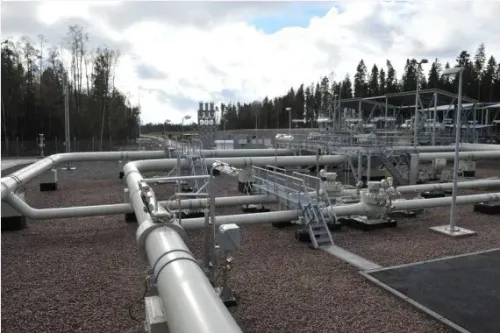
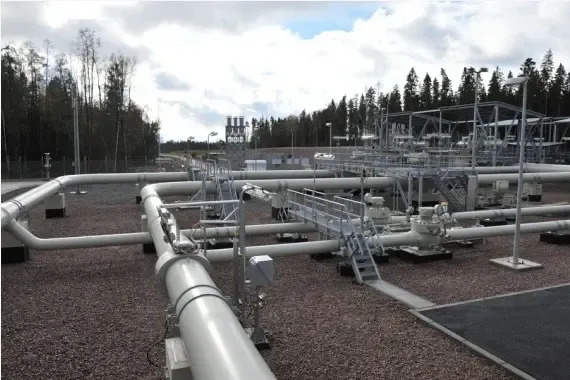
The Nord Stream pipelines were a critical energy artery between Russia and Europe, carrying natural gas beneath the Baltic Sea. Their destruction in September 2022 — just months after Russia's full-scale invasion of Ukraine — triggered one of the most consequential infrastructure attacks in recent European history and set off years of competing investigations and allegations. Multiple countries, including Russia, the United States, and Ukraine, have at various points been named in speculative accounts, though Germany's prosecution is the first to reach a formal courtroom stage.
This is the first war-crimes trial in Germany directly tied to the pipeline attack, and the proceedings are expected to shed new light on the chain of command behind the operation. Notably, prosecutors' framing — that Kuznietsov acted 'on behalf of Ukrainian state authorities' — carries significant diplomatic weight, as it directly implicates a state actor. Kyiv has not publicly commented on the charges.
What Comes Next
The trial at the Hanseatic Higher Regional Court is expected to be lengthy given the complexity of the evidence, which involves underwater forensics, explosives analysis, and alleged command-structure documentation. A verdict could take months. Meanwhile, the proceedings against Volodymyr Z. are running in parallel, and German investigators have indicated that their inquiry into other potential accomplices remains open.
Point of View
Or whether key figures remain shielded by diplomatic complexity, will define how far Western judicial systems are willing to go in adjudicating the war's shadow operations.
NationPress
14 Oct 2026
Frequently Asked Questions
What is the Nord Stream sabotage trial in Hamburg about?
It is the first criminal trial over the September 2022 underwater explosions that destroyed the Nord Stream 1 and 2 natural gas pipelines in the Baltic Sea. The defendant, Ukrainian national Serhii Kuznietsov, is charged with committing a war crime by attacking civilian infrastructure, allegedly on behalf of Ukrainian state authorities.
Who is Serhii Kuznietsov and what is he accused of?
Serhii Kuznietsov is a former Ukrainian army officer accused of leading a sabotage team that planted and detonated explosives on the Nord Stream pipelines on 26 September 2022. German prosecutors allege he acted on behalf of Ukrainian state authorities and commanded a group of professional divers, a skipper, and an explosives expert.
When and where was Kuznietsov arrested?
Kuznietsov was arrested in Italy in August 2025 and transferred to Germany in November 2025. He was formally indicted by German prosecutors in June 2026 before the trial opened on 14 October 2026.
Is there a second suspect in the Nord Stream case?
Yes. On 19 August 2026, Germany announced the arrest of a second Ukrainian suspect, identified as Volodymyr Z., in the Croatian city of Pula under a European arrest warrant. Prosecutors allege he was a trained diver who was part of the same team that attacked the pipelines.
Why does this trial matter beyond the courtroom?
It is the first instance of a state-linked actor being prosecuted for the Nord Stream attack, which devastated a critical Europe-Russia energy corridor. Prosecutors' allegation that the defendant acted on behalf of Ukrainian state authorities carries major diplomatic implications at a time when Europe is actively supporting Ukraine in its war against Russia.