North Korea declares it is not bound by NPT under any circumstances
Synopsis
North Korea has doubled down on its nuclear defiance — not just rhetorically, but constitutionally. By anchoring its nuclear status in a newly revised constitution that explicitly grants Kim Jong-un command authority over nuclear forces, Pyongyang is no longer just rejecting the NPT; it is building a domestic legal architecture to make that rejection permanent.
Key Takeaways
North Korea's UN envoy Kim Song declared on 6 May 2025 that the DPRK is not bound by the NPT under any circumstances.
North Korea announced NPT withdrawal in 1993 and formally withdrew in 2003 , according to Yonhap .
North Korea's revised constitution, amended in March , codifies Kim Jong-un's authority to command nuclear forces for the first time.
Kim Song accused the US of neglecting its own disarmament obligations by providing extended deterrence and nuclear submarine technology to non-nuclear states.
The statement coincides with the 11th NPT Review Conference at UN headquarters and expectations of a Trump-Xi summit in Beijing where North Korea may feature.
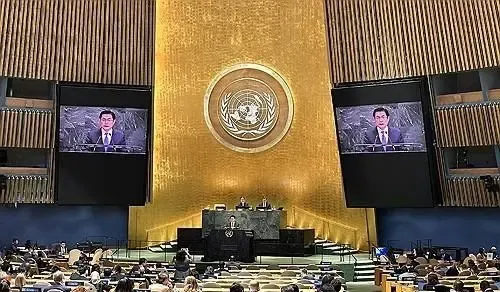
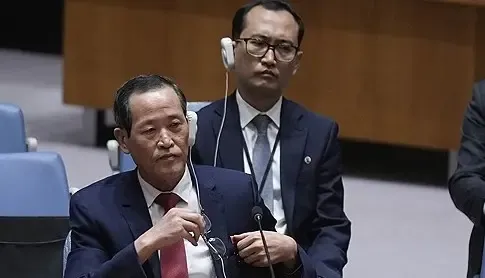
North Korea has declared that it is not bound under any circumstances by the Nuclear Non-Proliferation Treaty (NPT), with its permanent representative to the United Nations, Kim Song, calling any attempt to force Pyongyang to fulfil treaty obligations a "wanton violation" of international law. The statement, dated 6 May and carried by the North's official Korean Central News Agency (KCNA), was released on Thursday as the 11th Review Conference of the NPT was under way at UN headquarters.
North Korea's Position on the NPT
Kim Song, Pyongyang's permanent representative to the UN, argued that the country's nuclear programme reflects its "obligations under the law on nuclear forces policy and the constitution, which enshrined the country's legal status as a nuclear-armed state." He further declared: "The position of the DPRK as a nuclear weapons state does not change in accordance with rhetorical assertion or unilateral desire of outsiders."
The Democratic People's Republic of Korea (DPRK) — North Korea's official name — announced its withdrawal from the NPT in 1993 and formally completed that withdrawal in 2003, according to Yonhap news agency. Despite this, the country's latest statement marks a notable shift in how it frames its nuclear legitimacy, now anchoring it explicitly within its revised constitution.
Constitutional Codification of Nuclear Authority
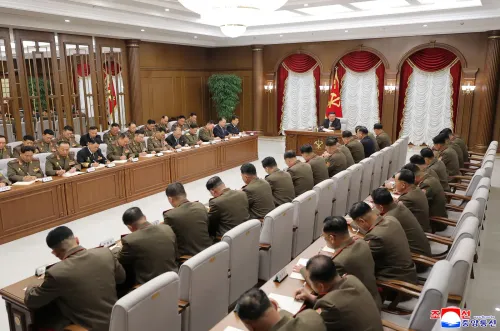
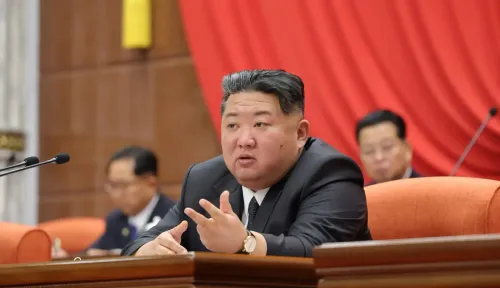
North Korea's revised constitution, amended in March, stipulated for the first time that the president of the state affairs commission holds the right to command the country's nuclear forces — effectively codifying leader Kim Jong-un's authority to order the use of nuclear weapons. South Korea's unification ministry noted this as a marked shift in framing.
"This time, it underscores its status as a nuclear-armed state based on its constitution and laws," a ministry official told reporters, adding that while Pyongyang's stance on the NPT had "largely remained unchanged," the constitutional anchoring represented a new layer of legal legitimacy that Pyongyang was seeking to project internationally.
Accusations Against the United States
Kim Song also levelled accusations against Washington, charging the US with "neglecting" its own nuclear disarmament commitments. He specifically cited Washington's provision of "extended deterrence" and the transfer of nuclear submarine technology to non-nuclear states as evidence of what he described as double standards in the enforcement of NPT obligations.
"I denounce and reject in the strongest tone the brigandish and shameless acts of the specific countries, including the US, which are taking issue with the DPRK's realistic and just access to nuclear weapons through the legal route and exercise of its inherent defensive rights as a sovereign state," he said.
Broader Geopolitical Context
The statement arrived amid expectations that North Korea could feature prominently on the agenda at a planned summit between US President Donald Trump and Chinese President Xi Jinping in Beijing next week. The timing of Pyongyang's declaration — coinciding with the NPT Review Conference, which convenes signatory states every five years to evaluate adherence to the treaty adopted in 1968 — appears deliberately calibrated to assert its nuclear status on a global stage.
This is not the first time North Korea has used multilateral disarmament forums to reinforce its position as a self-declared nuclear power. However, the explicit grounding of that claim in a revised constitution marks a qualitative shift in how Pyongyang seeks to institutionalise and legitimise its arsenal ahead of any potential diplomatic engagement with Washington.
Point of View
Coinciding with the NPT Review Conference and a potential Trump-Xi summit, is unlikely to be accidental. What mainstream coverage misses is the constitutional dimension: this is not just rhetoric, it is institution-building around nuclear permanence, making any future rollback politically and legally costly within the North Korean system itself.
NationPress
22 Sept 2026
Frequently Asked Questions
What did North Korea's UN envoy say about the NPT?
North Korea's permanent representative to the UN, Kim Song, declared in a statement dated 6 May 2025 that the DPRK is not bound by the Nuclear Non-Proliferation Treaty (NPT) under any circumstances. He called any attempt to force Pyongyang to fulfil treaty obligations a "wanton violation" of international law.
When did North Korea withdraw from the NPT?
North Korea announced its withdrawal from the NPT in 1993 and formally completed the withdrawal in 2003, according to Yonhap news agency.
What is the significance of North Korea's revised constitution?
North Korea's constitution, revised in March 2025, explicitly codified leader Kim Jong-un's authority to command the country's nuclear forces for the first time. South Korea's unification ministry noted this as a significant shift, anchoring the country's nuclear legitimacy in domestic law rather than rhetoric alone.
Why did North Korea make this statement now?
The statement coincided with the 11th Review Conference of the NPT under way at UN headquarters, where signatory states convene every five years to assess treaty compliance. It also came amid expectations that North Korea could be on the agenda at a planned summit between US President Donald Trump and Chinese President Xi Jinping in Beijing.
What accusations did North Korea make against the United States?
Kim Song accused Washington of neglecting its own nuclear disarmament commitments by providing other countries with "extended deterrence" and transferring nuclear submarine technology to non-nuclear states, arguing this amounted to a double standard in NPT enforcement.