Kim Jong-un Designates South Korea as Most Hostile Nation
Synopsis
In a stark declaration, Kim Jong-un has labeled South Korea the 'most hostile state,' warning of serious repercussions if provoked. This statement underscores North Korea's nuclear ambitions and its commitment to a confrontational stance against its southern neighbor.
Key Takeaways
Kim Jong-un designates South Korea as the 'most hostile nation.' Warning of 'merciless' repercussions if provoked.
North Korea reaffirms its nuclear status amid ongoing tensions.
Constitutional revisions may reflect new inter-Korean definitions.
Experts suggest strategic ambiguity in North Korea's approach.
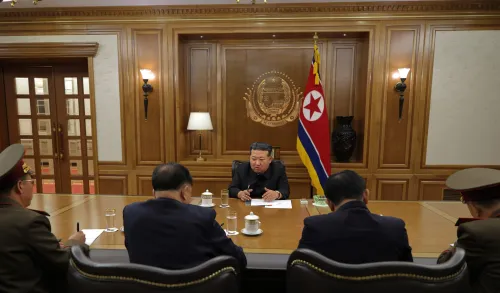
Seoul, March 24 (NationPress) In a significant move, North Korean leader Kim Jong-un has officially designated South Korea as the "most hostile nation," issuing a stern warning of severe repercussions if provoked. This declaration reaffirms North Korea's position as a nuclear-armed state, according to the latest reports from Pyongyang's state media.
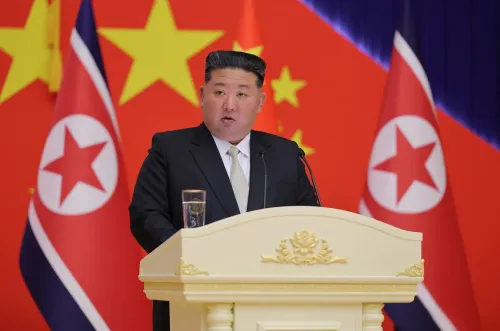
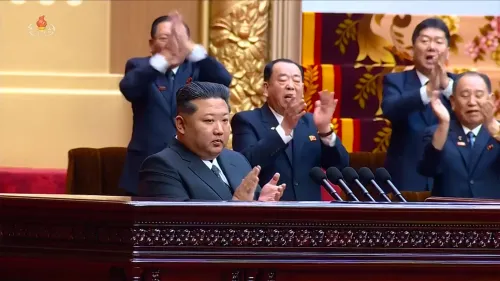
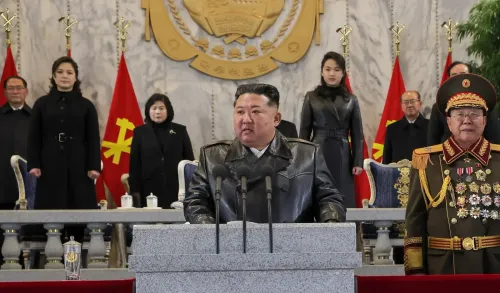
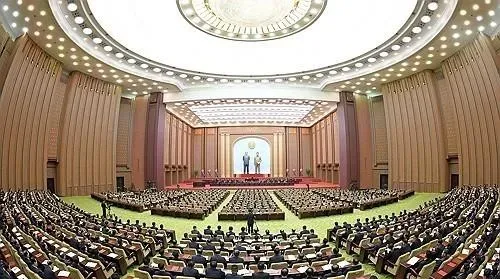
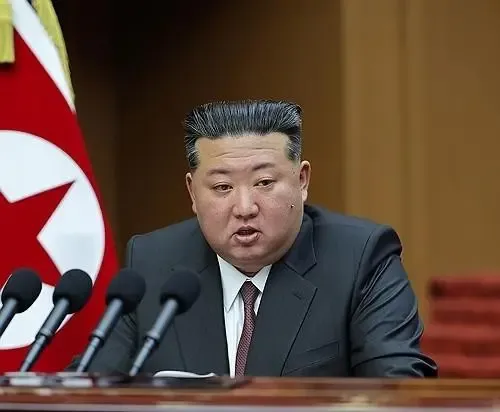
In a speech delivered on Monday during the concluding day of the inaugural session of the newly elected 15th Supreme People's Assembly (SPA), Kim stated that the North's constitution has been amended to meet the evolving demands of national progress, as reported by the Korean Central News Agency (KCNA).
Kim emphasized that North Korea has "officially recognized" South Korea as its most hostile counterpart and plans to completely disregard it through explicit statements and actions. He cautioned of "merciless" consequences should South Korea provoke the North.
The KCNA noted discussions around constitutional revisions in North Korea, though it remains unclear if these changes formally classify South Korea as a hostile state.
Historically, North Korea's constitution advocates for the peaceful reunification of the two Koreas, yet it has been anticipated that amendments would be made following Kim's directive to redefine Seoul as the "number one hostile entity" by 2024.
Since then, North Korea has adopted a confrontational posture towards Seoul, consistently dismissing the likelihood of inter-Korean dialogue.
In parallel, Kim accused the United States of engaging in acts of terrorism and military interventions worldwide, seemingly referencing its ongoing conflicts, although he did not mention U.S. President Donald Trump directly.
According to Kim, "The dignity, interests, and ultimate triumph of a nation can only be assured through the most formidable strength,” as reported by the KCNA. He added, "Whether adversaries opt for confrontation or peaceful coexistence is their choice; we stand ready to respond accordingly."
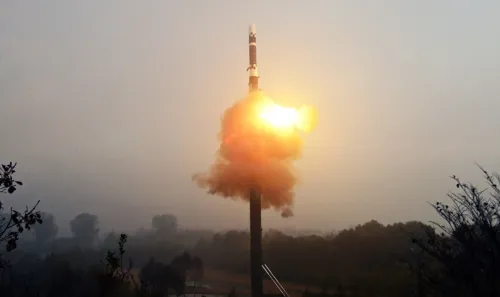
Kim also pledged to further enhance North Korea's "defensive nuclear deterrence" and maintain a swift and accurate response capability regarding its nuclear arsenal to counter "strategic threats" to both national and regional security.
He stressed that North Korea will persist in solidifying its status as a nuclear weapons state while actively conducting initiatives to thwart any provocations from hostile entities, stating, "North Korea will continue to reinforce its nuclear status... while aggressively countering provocations by adversarial forces."
In a parliamentary session in 2022, North Korea enacted a novel nuclear law permitting the preemptive deployment of nuclear weapons, asserting that its nuclear status is "irreversible."
Experts speculate that North Korea, while not revealing specifics, may have formalized its new classification of Seoul in its constitutional amendments, with the absence of details possibly serving to maintain "strategic ambiguity" amid changing security dynamics.
Lim Eul-chul, a professor at Kyungnam University's Institute for Far Eastern Studies, interpreted Kim's declaration of "official recognition" of Seoul as the most hostile nation as indicative of a revision in fundamental norms.
Kim In-tae, a researcher at the Institute for National Security Strategy, also noted that Kim's statement seems to suggest a constitutional change reflecting the new dynamics in inter-Korean relations, as reported by Yonhap news agency.
During the Monday parliamentary meeting, the SPA approved a 5.8% increase in this year's state budget compared to the previous year, marking the largest budget rise in recent times.
Kim vowed to "financially ensure the smooth functioning of the nation and the execution of policies aimed at the people by boosting state revenues."
An official from Seoul's unification ministry acknowledged Kim's remarks about being prepared for both confrontation and peaceful coexistence, observing that while he continued to criticize Washington, the intensity of the criticism seemed moderated.
The official reiterated the government's commitment to improving relations with North Korea, promising to persist in efforts towards that goal.
Point of View
It is evident that Kim's designation of South Korea as the most hostile state marks a significant shift in rhetoric and policy, reflecting heightened tensions on the Korean Peninsula. This move raises questions about future diplomatic engagements and the security dynamics in the region.
NationPress
24 Sept 2026
Frequently Asked Questions
What did Kim Jong-un declare about South Korea?
Kim Jong-un officially recognized South Korea as the 'most hostile nation' and warned of severe consequences if provoked.
What changes were made to North Korea's constitution?
The constitution was revised to reflect national development needs, potentially including the classification of South Korea as hostile.
How does North Korea view its nuclear status?
North Korea reaffirms its status as a nuclear weapons state and plans to strengthen its nuclear deterrence.
What is the response of South Korea to these declarations?
South Korea's unification ministry has acknowledged Kim's remarks and reaffirmed its commitment to improving inter-Korean relations.
What potential impact could this have on regional security?
Kim's statements may escalate tensions and complicate future diplomatic efforts between North and South Korea.