North Korea to Launch First Session of New Supreme People's Assembly
Synopsis
As North Korea gears up for its inaugural Supreme People's Assembly session on Sunday, all eyes are on whether the regime will officially embed its hostile policy toward South Korea in its constitution. This pivotal meeting follows the recent congress of the ruling Workers' Party.
Key Takeaways
Inaugural Session: North Korea's new Supreme People's Assembly is convening for the first time.
Hostile Policy: Attention is focused on whether the regime will codify its adversarial stance towards South Korea.
Leadership Elections: Key elections for state leadership will take place during the session.
Kim's Re-election: Kim Jong-un is expected to maintain his leadership position.
Constitutional Revisions: Discussions will include potential amendments to the Socialist Constitution.
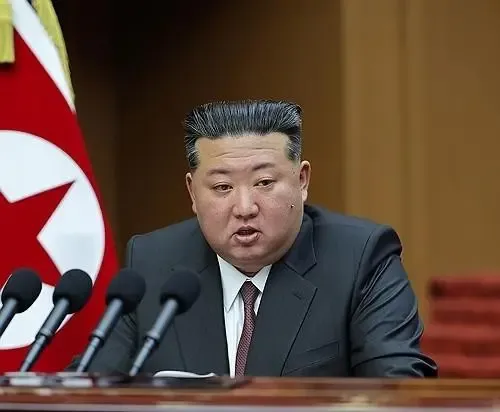
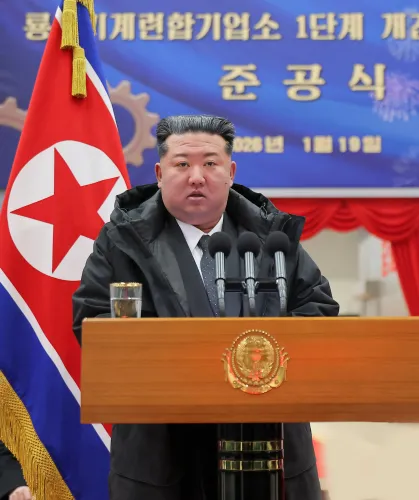
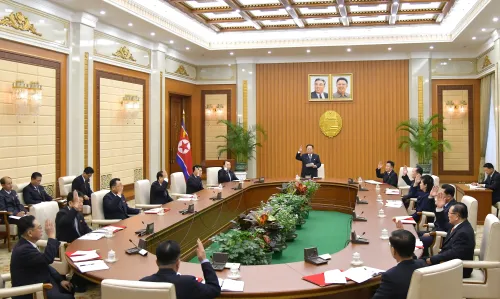
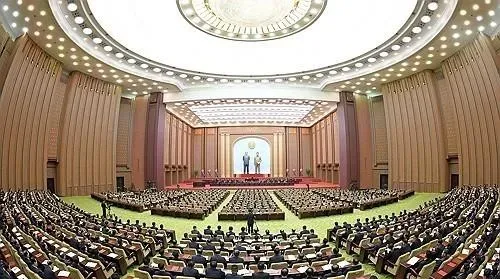
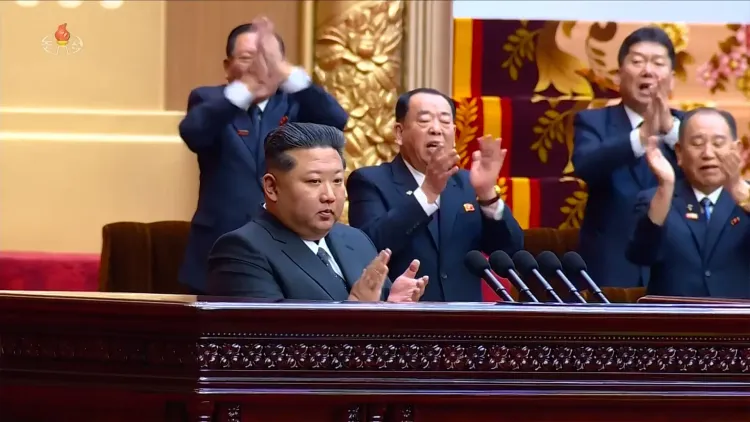
Seoul, March 22 (NationPress) North Korea is preparing to conduct the inaugural session of its newly established Supreme People's Assembly (SPA) on Sunday, drawing attention to whether the regime will formalize its antagonistic stance toward South Korea in its constitution.
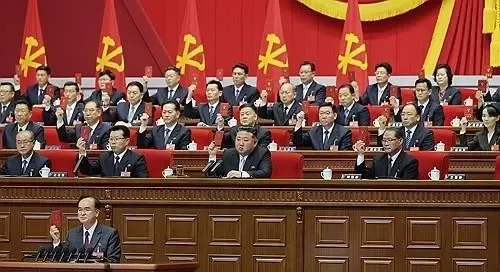
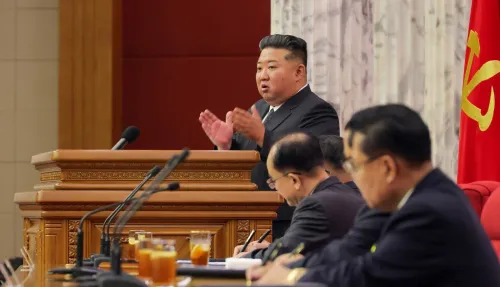
This legislative assembly follows the selection of new deputies after last month's Ninth Congress of the ruling Workers' Party of Korea.
According to the Korean Central News Agency (KCNA) on Tuesday, the gathering will take place in Pyongyang to discuss the election of the president of the State Affairs of the Democratic People's Republic of Korea, the appointments of state leadership and sub-committees of the SPA, as well as the revision and addition to the Socialist Constitution.
North Korean leader Kim Jong-un has characterized the two Koreas as "two nations at odds with each other," and there is significant interest in whether this policy will be enshrined in the constitution, as noted by analysts and officials in South Korea and other regional stakeholders, as reported by Yonhap News Agency.
Additionally, observers are keen to know if Kim will address the state of North Korea's relations with South Korea, the United States, and other nations during his speech.
The KCNA disclosed that the agenda will encompass the five-year national economic development strategy adopted at the congress and the state budget for 2026.
It is anticipated that Kim will be re-elected as the nation's supreme leader, retaining the title of chief of the State Affairs Commission.
Party secretary Jo Yong-won, known as one of Kim's closest confidants, is widely expected to assume the role of chairman of the SPA standing committee, likely succeeding Choe Ryong-hae, who was removed from the position during the congress and is not part of the new parliament.
North Korea generally convenes an SPA session following a party congress to enact laws necessary for implementing decisions ratified at the congress.
However, the parliament is largely perceived as a body that ratifies decisions made by the ruling party.
Point of View
The upcoming session of North Korea's Supreme People's Assembly represents a significant moment in regional politics. Analysts are closely monitoring whether the regime will formalize its adversarial stance towards South Korea, which could have far-reaching consequences for diplomatic relations in the area.
NationPress
23 Sept 2026
Frequently Asked Questions
What is the Supreme People's Assembly?
The Supreme People's Assembly is North Korea's highest organ of state power, functioning as its legislative body.
What will be discussed in the upcoming session?
The session will address the election of state leaders, the revision of the constitution, and the national economic development plan.
Why is this session significant?
It is significant because it may officially codify North Korea's hostile policy towards South Korea in the constitution.
Who is expected to lead North Korea after this session?
Kim Jong-un is expected to be re-elected as the country's top leader.
What is the perception of the Supreme People's Assembly?
The SPA is often viewed as a body that ratifies the decisions made by the ruling Workers' Party of Korea.