Kim Jong-un Reassumes Leadership Role in North Korea's State Affairs Commission
Synopsis
In a significant political move, North Korean leader Kim Jong-un has been reappointed as president of the state affairs commission during the first session of the Supreme People's Assembly, following the recent ruling party congress. This development marks a pivotal moment in North Korea's political landscape.
Key Takeaways
Kim Jong-un reappointed as president of the state affairs commission.
Jo Yong-won elected as chairman of the SPA standing committee.
New vice premier role created with Kim Tok-hun appointed.
Political analysts suggest potential constitutional changes.
SPA session marks the start of its 15th term.
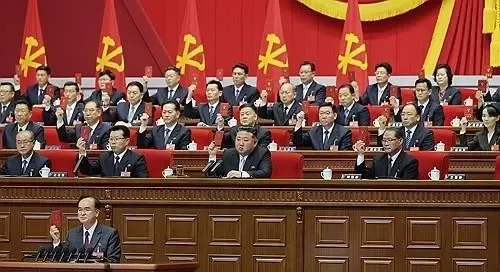
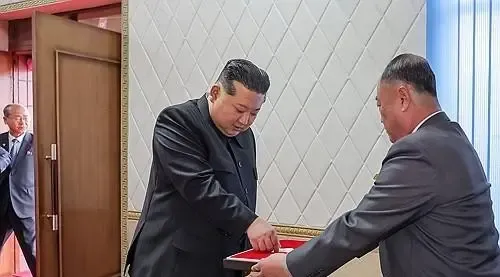
Seoul, March 23 (NationPress) North Korean leader Kim Jong-un has been reaffirmed as the head of the state affairs commission during the inaugural session of the Supreme People's Assembly (SPA) that followed last month's ruling party congress, as reported by state media on Monday.
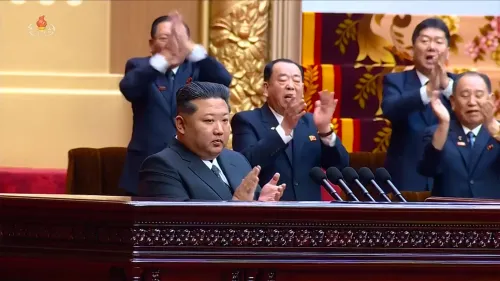
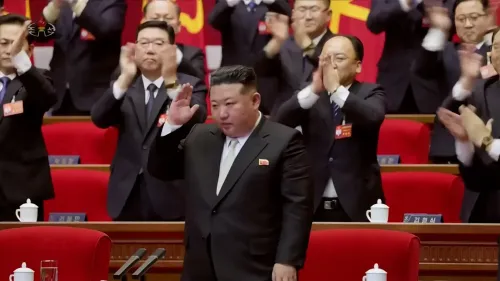
Kim's reappointment as president of the state affairs commission occurred on the opening day of the 15th SPA's first session, according to the Korean Central News Agency (KCNA).
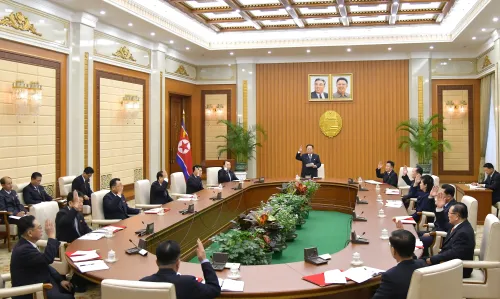
In this session, Jo Yong-won, regarded as one of Kim's closest advisors, was chosen as chairman of the SPA standing committee, the highest parliamentary office, succeeding Choe Ryong-hae, KCNA reported.
Typically, North Korea holds a session of its ceremonial parliament after a party congress to enact laws necessary for executing the decisions made during the congress, as reported by Yonhap news agency.
This reappointment took place during the first session of the SPA on Sunday, marking the initial state affairs undertaking of its 15th term.
Premier Pak Thae-song has maintained his position, while former Premier Kim Tok-hun has been appointed as the first vice premier, a new role established during this meeting.
Additionally, Jo has been designated as vice chief of the state affairs commission, while Kim's influential sister Kim Yo-jong was no longer listed as a member of the commission.
Notably, Kim Yo-jong was absent from the KCNA's announcement regarding the State Affairs Commission's membership, which she had been part of since 2021.
As the third-generation leader of North Korea, Kim has presided over the nuclear-capable nation since the death of his father in 2011. The state was founded in 1948 by his grandfather, Kim Il Sung.
Before the session, 687 delegates were elected for the Supreme People’s Assembly (SPA). In this system, North Korean citizens aged 17 and above are presented with a single, state-sanctioned candidate for their district, which they can either endorse or reject.
Prior reports from KCNA indicated that the new delegation was overwhelmingly accepted, achieving 99.93 percent approval against only 0.07 percent opposition, with voter turnout hitting 99 percent.
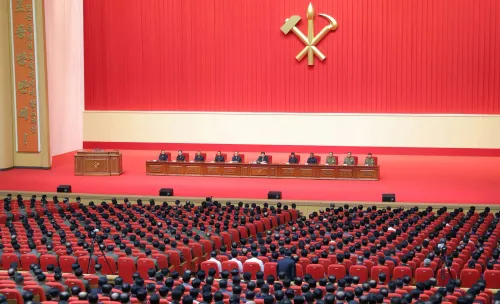
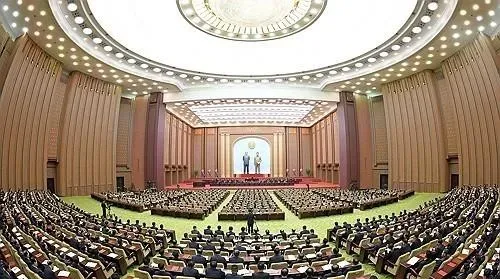
KCNA characterized the environment in the assembly hall in Pyongyang as charged with deep political commitment and revolutionary fervor among the newly inducted members.
Political analysts speculate that this assembly meeting may contemplate potential constitutional amendments, which could formally redefine the relationship between North and South Korea, codifying them as relations between 'two hostile states.'
Point of View
This reappointment of Kim Jong-un signals continuity in North Korea's leadership and policy direction. The assembly's activities, including potential constitutional amendments, could redefine inter-Korean relations and indicate the regime's strategic priorities moving forward.
NationPress
25 Sept 2026
Frequently Asked Questions
What is the Supreme People's Assembly?
The Supreme People's Assembly (SPA) is North Korea's top legislative body, primarily serving a ceremonial role in approving policies and decisions made by the ruling party.
Who was appointed as vice chief of the state affairs commission?
Jo Yong-won was appointed as vice chief of the state affairs commission during the recent session of the Supreme People's Assembly.
What does Kim Yo-jong's absence from the commission indicate?
Kim Yo-jong's absence from the State Affairs Commission suggests a potential shift in influence or roles within North Korea's leadership structure.
What was the voter turnout for the recent election of SPA deputies?
The voter turnout for the election of deputies to the Supreme People's Assembly was reported at an impressive 99 percent.
What might the assembly meeting address?
Analysts speculate that the assembly meeting could discuss possible constitutional changes that redefine North and South Korea's relationship as 'two hostile states.'