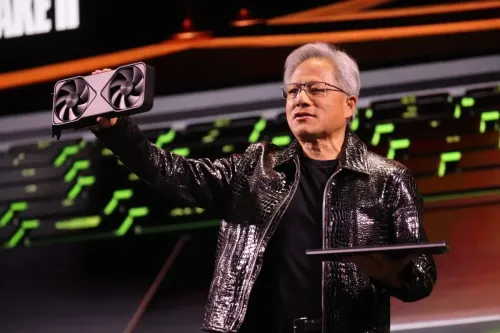
Nvidia CEO Jensen Huang resigns over China spy affair allegations
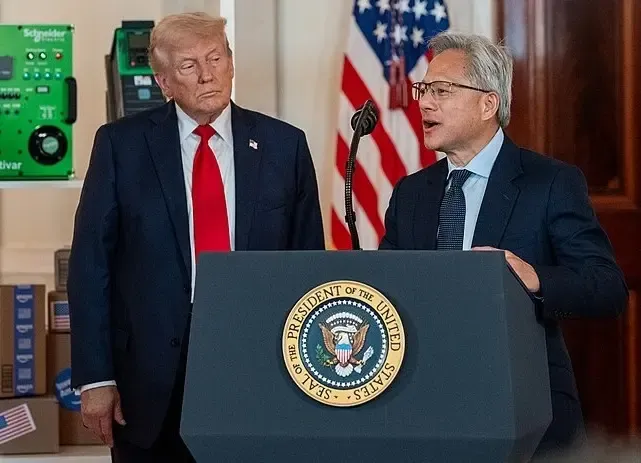
Synopsis
Nvidia's Jensen Huang — the architect of the AI chip revolution and once the sixth-richest person on earth — has resigned over a suspected Chinese honeypot operation. His departure hands an acting CEO a leaderless giant with no succession plan, a stock down 35% from its peak, and a congressional subpoena looming. The fallout stretches from Wall Street to the White House to the APEC summit in Beijing next week.
Key Takeaways
Jensen Huang resigned as Nvidia CEO on Thursday, 12 November 2026 , amid allegations his alleged extramarital partner, Alice Le Huang , is a suspected Chinese intelligence asset.
CFO Colette Kress has been named acting CEO following a board meeting that ran for hours on Wednesday .
Nvidia stock fell from a record high of $243.37 on 6 October to $160.98 on Thursday — a drop of nearly 35% .
Nvidia has ceded its position as America's most valuable company to Apple ; Huang's net worth dropped to approximately $148 billion , sliding him from 6th to 12th on the Forbes billionaire list.
The House Foreign Affairs Committee has called Huang for a closed-door briefing and threatened him with a subpoena .
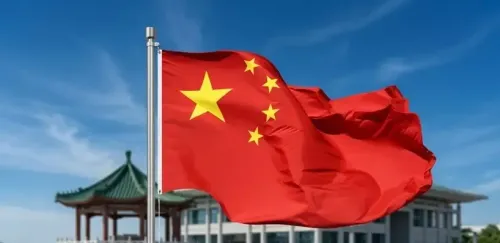
The scandal arrives days before President Trump departs for the APEC summit in China, where he is due to meet President Xi Jinping .
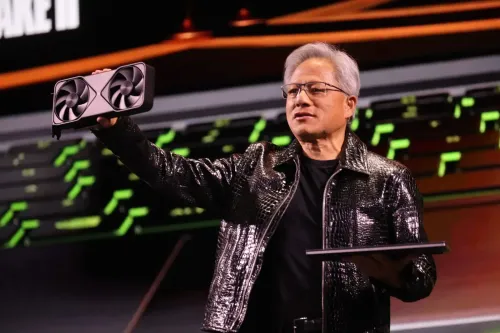
Nvidia chief executive Jensen Huang resigned on Thursday, 12 November 2026, after the company's board concluded a marathon session on Wednesday and named Chief Financial Officer Colette Kress as acting head of the AI chipmaker. The resignation follows mounting allegations that a woman with whom Huang reportedly had an extramarital affair, identified as Alice Le Huang (no relation to him), is suspected of being an asset of Chinese intelligence.
The Spy Allegations and the Affair
According to multiple independent reports, Alice Le Huang was an executive at Megaspeed, a Singapore-based company that is reportedly a shell entity used to procure advanced chips in circumvention of US export controls on China. US intelligence agencies reportedly raised concerns about her suspected links to China's Ministry of State Security several months ago, with Secretary of State Marco Rubio subsequently alerting President Donald Trump. Trump, however, has asserted he did not receive that warning ahead of his May visit to China.
Notably, Huang was not originally included in the roster of US business leaders accompanying Trump to China in May. Trump later arranged for Huang to board Air Force One during a refuelling stop in Alaska and join the delegation. China has denied any intelligence connection to Alice Le Huang.
The New York Times separately reported that Huang allegedly had an affair with another company executive, Kimberly Powell, who serves as Vice President of Healthcare at Nvidia — a relationship that would be in violation of the company's code of conduct. Huang, who has been married to Lori Huang for approximately 40 years, issued a public apology to her regarding the affair with the Chinese national.
The Political Fault Line Inside the Trump Administration
The scandal has laid bare a significant divide within the Trump administration. On one side, Secretary of State Marco Rubio flagged the espionage suspicions and pushed for scrutiny; on the other, Commerce Secretary Howard Lutnick reportedly favoured monetising Nvidia's dominant position in AI chips through sales to China. Trump himself had given Huang a measure of political cover, telling reporters on Monday: 'I just know Jensen very well. I just think he's a very honourable man.'
Huang had long advocated against US restrictions on exporting advanced chips to China, arguing the bans were commercially counterproductive. Trump had previously allowed Nvidia to sell a second-tier chip to Beijing under a revenue-sharing arrangement with the US government. This now comes under sharper scrutiny in the wake of the scandal.
The timing is particularly fraught: Trump is preparing to travel to China next week for the Asia Pacific Economic Cooperation (APEC) summit, where he is expected to meet President Xi Jinping.
Congressional Fallout and Legal Exposure
The Republican Party's losses in the midterm elections have added a legislative dimension to Huang's crisis. The House of Representatives Foreign Affairs Committee has summoned him for a closed-door briefing and reportedly threatened a subpoena if he does not comply. When Democrats take control of Congress next year, Huang's domestic and international networks are expected to face even deeper scrutiny.
Market and Financial Impact
Nvidia's stock has fallen sharply since the news of the resignation, dropping from a record peak of $243.37 on 6 October to $160.98 on Thursday — a decline of nearly 35% from its all-time high. As the sell-off deepened over the weeks, Nvidia ceded its position as America's most valuable company by market capitalisation to Apple. Huang himself slipped from sixth to twelfth on the Forbes billionaire rankings, with his net worth estimated at approximately $148 billion as of Wednesday.
The fallout extends across the broader AI ecosystem. Anthropic, one of the most prominent AI developers reliant on Nvidia chips and reportedly valued at as much as $1.46 trillion ahead of a planned public offering, is among the companies exposed to any supply or confidence disruption. Analysts note that because of Nvidia's centrality to the AI sector — which has been a primary engine of Wall Street's recent bull run — the turbulence could ripple into the retirement portfolios of millions of Americans.
Kress Takes the Helm at a Defining Moment
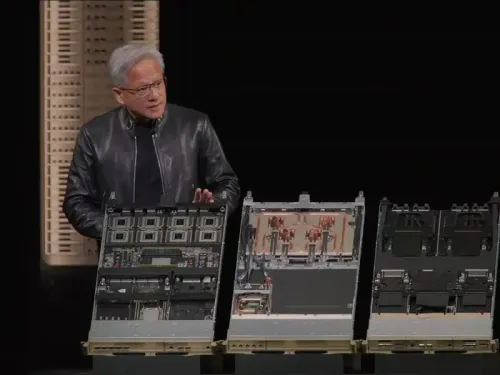
Acting CEO Colette Kress inherits an unusually challenging leadership vacuum. Huang reportedly maintained near-total operational control over Nvidia, with roughly 60 department heads reporting directly to him and no formal line of succession in place. As CFO, Kress had broad visibility across all divisions, though analysts note that replicating Huang's technical authority and strategic grip will be a formidable undertaking for whoever assumes the permanent role. The company's ability to retain its pioneering edge in AI chips while navigating geopolitical and legal headwinds will define Nvidia's next chapter.
Point of View
His backdoor boarding of Air Force One on the China trip, and his alleged ties to a suspected shell company procuring restricted chips all point to a pattern that lawmakers will be unable to ignore. The more troubling signal for markets is structural: Nvidia was built around one man, with roughly 60 direct reports and no articulated succession. The AI economy's dependence on a single supplier whose CEO operated without redundancy is a systemic risk that the board only now appears forced to address. Even if no trade secrets changed hands, the geopolitical fallout from the mere perception of Chinese access at the apex of US AI infrastructure may prove more damaging than the affair itself.
NationPress
12 Nov 2026
Frequently Asked Questions
Why did Jensen Huang resign from Nvidia?
Jensen Huang resigned on 12 November 2026 after allegations emerged that a woman with whom he allegedly had an affair, Alice Le Huang, is suspected of being a Chinese intelligence asset. The Nvidia board met for hours on Wednesday before naming CFO Colette Kress as acting CEO.
Who is Alice Le Huang and what is her alleged connection to China?
Alice Le Huang (no relation to Jensen Huang) is described as an executive at Megaspeed, a Singapore-based company reportedly identified as a shell entity used to procure advanced Nvidia chips in circumvention of US export controls on China. US intelligence agencies reportedly flagged her suspected links to China's Ministry of State Security months before the resignation, though China has denied any intelligence connection.
Who is now running Nvidia after Jensen Huang's resignation?
Chief Financial Officer Colette Kress has been appointed acting CEO by the board. As CFO, she had visibility across all of Nvidia's divisions, though the company has no formal line of succession and roughly 60 department heads previously reported directly to Huang.
How has Nvidia's stock been affected by the scandal?
Nvidia's share price fell from a record high of $243.37 on 6 October to $160.98 on Thursday — a decline of nearly 35% from its peak. As a result, Nvidia ceded its position as America's most valuable company by market capitalisation to Apple.
What are the political consequences of the Nvidia scandal?
The House of Representatives Foreign Affairs Committee has summoned Jensen Huang for a closed-door briefing and threatened him with a subpoena. The scandal has also exposed a split within the Trump administration between Secretary of State Marco Rubio, who reportedly flagged the spy allegations, and Commerce Secretary Howard Lutnick, who favoured expanding chip sales to China. The timing is sensitive as President Trump is due to attend the APEC summit in China next week to meet President Xi Jinping.