CM Sai Extends Krishak Unnati Aid to Farmers Selling Below 21-Quintal Mark
Synopsis
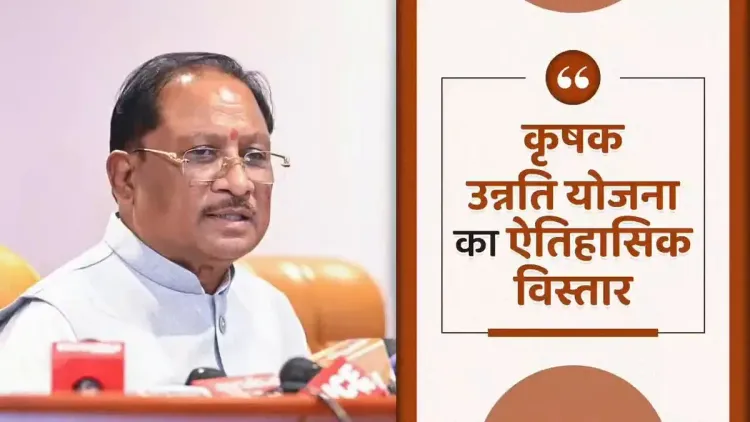
Chhattisgarh CM Vishnu Deo Sai expanded the Krishak Unnati Yojana on 12 November 2026, guaranteeing ₹13,839 per acre to paddy farmers even if they sell only 15 quintals — covering the 6-quintal shortfall from the original 21-quintal target. Bastar and Surguja divisions stand to benefit most.
Key Takeaways
Chhattisgarh CM Vishnu Deo Sai announced a revision to the Krishak Unnati Yojana on 12 November 2026 .
Farmers who sell as few as 15 quintals per acre — instead of the committed 21 quintals — will now receive full compensation for the remaining 6-quintal shortfall.
The guaranteed input support amount is fixed at ₹13,839 per acre for every enrolled paddy farmer across Chhattisgarh .
Farmers in Bastar and Surguja divisions — home to tribal and marginal farming communities — are specifically cited as key beneficiaries.
The revision effectively decouples the full per-acre payout from the volume of paddy actually sold at procurement centres.
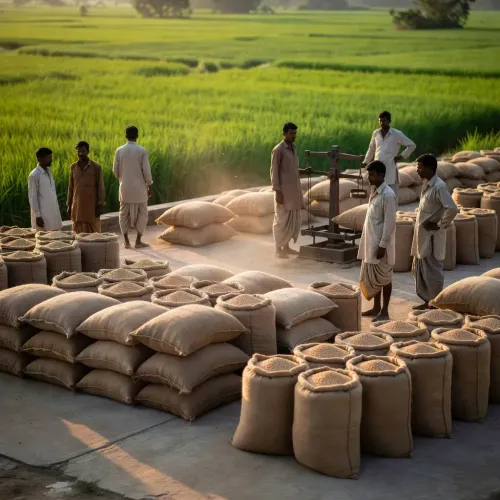
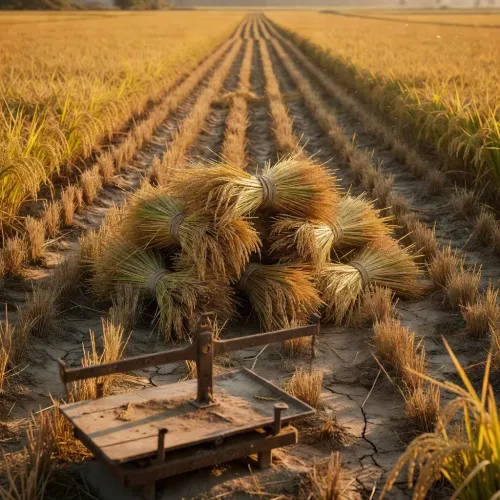
A paddy farmer in Bastar who could only sell 15 quintals per acre — not the promised 21 — now gets paid as if they sold all 21. That is the blunt, practical promise Chhattisgarh Chief Minister Vishnu Deo Sai made on Thursday, 12 November 2026, announcing a significant expansion of the state's farmer welfare guarantee.
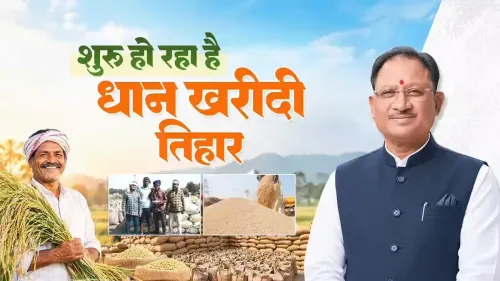
Posting on X, CM Sai said his government had taken 'a major decision in the interest of the state's farmers.' Under the Krishak Unnati Yojana, the administration had already committed to procuring 21 quintals of paddy per acre. The new order goes further: if a farmer sells even 15 quintals, the government will compensate the shortfall — the remaining 6 quintals — in full as an input support payment. The net result is a guaranteed ₹13,839 per acre in aadan sahayata rashi (input assistance) for every enrolled farmer.
What the Revised Guarantee Means in Practice
The original scheme tied the full benefit to actually selling 21 quintals — a threshold many small and marginal farmers struggle to reach in a single season. By decoupling the payout from the volume delivered, the government effectively turns the ceiling into a floor. A farmer gets the full per-acre amount regardless of how much paddy reaches the procurement centre.
Chhattisgarh is one of India's major rice-producing states, and successive governments — including the current BJP administration led by Sai since December 2023 — have kept paddy procurement and farmer-support schemes at the centre of rural politics. State-level input subsidies linked to procurement are a well-established tool across Indian rice-growing states to cushion farmers against yield volatility and market shocks.
Why Bastar and Surguja Are Named Specifically
CM Sai specifically called out Bastar and Surguja divisions as expected beneficiaries. Both regions carry political and humanitarian significance: Bastar in the south has a predominantly tribal farming population, while Surguja in the north is home to dense farming communities that have historically had lower market access. Smaller landholdings in these divisions make the 21-quintal target harder to meet — which is precisely why the revised guarantee matters most here.
The announcement sets up a clear test: how quickly will the ₹13,839 per-acre disbursements reach farmers' accounts in the ongoing procurement season, and will the upcoming state budget formalise the revised norms? For now, the pledge is in writing — and in the hands of the state machinery to deliver.
Point of View
839 per acre even when farmers fall short of the 21-quintal benchmark, the Sai government is converting a procurement target into an unconditional income floor — a structurally significant shift. The specific mention of Bastar and Surguja signals an attempt to extend the BJP's rural welfare reach into tribal-majority regions where the party has historically faced stiffer competition. The move also pre-empts opposition criticism that procurement-linked benefits exclude the smallest landholders. Whether the disbursement machinery can match the political promise will determine the scheme's real electoral and welfare impact.
NationPress
12 Nov 2026
Frequently Asked Questions
What is the Krishak Unnati Yojana in Chhattisgarh?
The Krishak Unnati Yojana is a state government scheme in Chhattisgarh designed to support paddy farmers through procurement guarantees and input assistance payments linked to per-acre paddy sales.
How much will Chhattisgarh farmers get per acre under the new decision?
CM Vishnu Deo Sai announced that every paddy farmer will receive ₹13,839 per acre as input support under the Krishak Unnati Yojana, regardless of whether they sell 15 or 21 quintals.
What if a Chhattisgarh farmer sells less than 21 quintals of paddy?
Under the revised rule announced on 12 November 2026, if a farmer sells only 15 quintals instead of 21, the state government will pay the equivalent of the remaining 6 quintals as a compensatory input assistance amount.
Which regions of Chhattisgarh benefit most from this paddy scheme?
CM Sai specifically named Bastar and Surguja divisions as primary beneficiaries, as these regions have large tribal and marginal farming populations with smaller landholdings and lower market access.
When did Vishnu Deo Sai become Chief Minister of Chhattisgarh?
Vishnu Deo Sai took charge as Chief Minister of Chhattisgarh in December 2023 after the BJP won the state assembly elections.