Oxford University Launches Korean Studies Centre by October 2025
Synopsis
Oxford University will officially launch the Oxford Centre for Korean Studies by October 2025 — becoming the latest major academic institution to formalise Korean scholarship, following centres on Japanese and Chinese studies, as global demand for Korean cultural and political research reaches an all-time high.
Key Takeaways
Oxford University will launch the Oxford Centre for Korean Studies by October 2025 , announced at the Schwarzman Centre for the Humanities opening.
The centre is led by Professor Jieun Kiaer , Professor James Lewis , and Chi Young-hae , and received faculty approval last month.
It will promote research in modern Korean politics, economy, literature, language, and culture , with a focus on English-language scholarship.
Oxford previously established centres for Japanese studies (1981) and Chinese studies (2008) ; the Korean centre is the newest addition.
Professor Lewis stated that Europe's broader academic community is expected to be inspired by the centre's long-term research agenda.
The University of Oxford, with educational records dating to 1096 , is the oldest university in the English-speaking world and the second-oldest globally still in operation.
Oxford University is set to establish the Oxford Centre for Korean Studies as early as October 2025, making it one of the most significant institutional commitments to Korean scholarship in the English-speaking world. The announcement will be made during the official public opening of Oxford's Stephen A. Schwarzman Centre for the Humanities on Saturday, April 26. The initiative is designed to advance rigorous academic research into Korean culture, language, history, politics, economy, and literature.
How the Centre Was Established
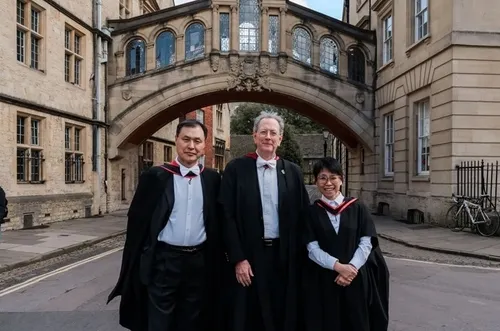
The centre's creation was spearheaded by three leading academics within Oxford's Korean studies programme: Professor Jieun Kiaer (Korean linguistics), Professor James Lewis (Korean history), and Chi Young-hae. The proposal received final approval at a faculty meeting held last month, according to Yonhap News Agency.
A separate senior faculty meeting also formally recognised the growing importance of Korea as a subject of academic inquiry, citing both scholarly merit and rising student interest in Korean soft power — particularly its globally influential popular culture, commonly known as the Korean Wave or Hallyu.
What the Oxford Centre for Korean Studies Will Do
The new centre will serve as an institutional hub overseeing all Korea-related research and lectures at Oxford. It will actively promote deeper academic engagement with modern Korean politics, economics, and literature, areas that have seen surging global interest over the past decade.
Professor Kiaer emphasised the strategic importance of producing English-language scholarship on Korean culture, arguing that academic work published in English ensures greater longevity and international reach for Korean studies as a discipline.
Professor Lewis told Yonhap News Agency that the centre's long-term research agenda is expected to inspire similar academic initiatives across Europe, positioning Oxford as the continental anchor for Korean studies scholarship.
Historical Context and Significance
The establishment of the Oxford Centre for Korean Studies follows a well-established pattern at the university. Oxford launched its Centre for Japanese Studies in 1981 and its Centre for Chinese Studies in 2008. The Korean centre arrives roughly 17 years after the Chinese studies centre, a timeline that itself reflects how Korea's global cultural and economic footprint has grown to demand comparable academic infrastructure.
The University of Oxford, founded with records of educational activity dating back to 1096, is the oldest university in the English-speaking world and the second-oldest continuously operating university globally. Its endorsement of Korean studies carries enormous symbolic and practical weight for the field worldwide.
Why This Matters: Korea's Rising Global Influence
This development comes amid an extraordinary decade of Korean cultural diplomacy. K-pop, Korean cinema (including Oscar-winning films like Parasite), Korean television dramas, and Korean cuisine have collectively generated billions in global economic value and shifted perceptions of South Korea as a cultural superpower.
Academic institutions globally have struggled to keep pace with this surge in public interest. Oxford's move to formalise a dedicated centre signals that Korean studies has matured from a niche regional interest into a mainstream global academic discipline. For Indian students and scholars, this also opens new avenues for Indo-Korean comparative research, given the deepening economic and cultural ties between India and South Korea.
Critics and scholars have long argued that the absence of robust English-language academic infrastructure around Korean studies has limited the field's global influence. The new Oxford centre directly addresses this gap, potentially unlocking new funding streams, collaborative research projects, and academic exchange programmes across the world.
What Comes Next
The formal launch of the Oxford Centre for Korean Studies is expected by October 2025, coinciding with the start of Oxford's new academic term. As the centre becomes operational, it is anticipated to attract international researchers, post-doctoral fellows, and funding from both public bodies and private Korean cultural institutions. Europe's broader academic community will be watching closely, with several universities likely to follow Oxford's lead in formalising their own Korean studies programmes.
Point of View
The world's most prestigious universities are scrambling to build intellectual infrastructure around it. What is striking, however, is the 17-year gap between Oxford's Chinese and Korean centres — a lag that reflects how long it took Western academia to take Korean civilisation as seriously as its neighbours. For India, which shares a rapidly growing economic and cultural relationship with South Korea, this moment should prompt serious introspection: where is India's own institutional investment in Korean studies, and are we missing a strategic opportunity?
NationPress
19 Sept 2026
Frequently Asked Questions
When will Oxford University launch its Korean Studies Centre?
Oxford University plans to launch the Oxford Centre for Korean Studies as early as October 2025 . The official announcement will be made during the opening of the Stephen A. Schwarzman Centre for the Humanities on April 26, 2025.
Who is leading the Oxford Centre for Korean Studies?
The centre is being led by Professor Jieun Kiaer (Korean linguistics), Professor James Lewis (Korean history), and Chi Young-hae , all from Oxford's Korean studies programme. The project received final faculty approval last month.
What will the Oxford Centre for Korean Studies focus on?
The centre will oversee Korea-related research and lectures, with a focus on modern Korean politics, economy, literature, culture, and language . It will also serve as a hub for English-language scholarship on Korean culture to ensure its global reach and longevity.
How does this compare to Oxford's other regional studies centres?
Oxford previously established a Centre for Japanese Studies in 1981 and a Centre for Chinese Studies in 2008 . The Korean centre is the latest addition, reflecting Korea's growing importance as a subject of global academic and cultural interest.
Why is Korean studies becoming important at Western universities?
The global rise of Korean soft power — including K-pop, Korean cinema, television dramas, and cuisine — has driven unprecedented student interest in Korean language and culture. Academic institutions are now building formal research infrastructure to match this demand.