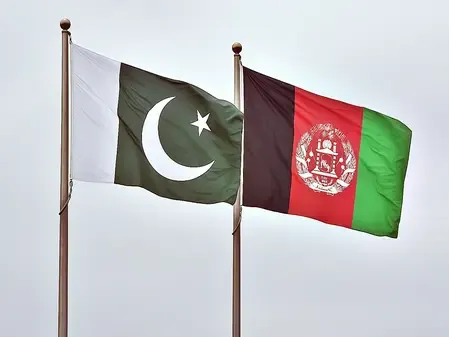
Pakistan-Afghan Border War Fuels India-Central Asia Connectivity Risks
Synopsis
Pakistan's military strikes inside Afghanistan have shattered a fragile ceasefire, pushing both nations toward open warfare. A Jerusalem Institute report reveals the shocking truth: Islamabad's anti-Taliban aggression is driven less by security concerns and more by alarm over deepening Kabul-New Delhi ties — with India's billion-dollar Afghan investments now caught in the crossfire.
Key Takeaways
Pakistani airstrikes inside Afghan territory ended a ceasefire brokered through regional mediation in October 2025 , triggering the most serious Pakistan-Afghanistan military escalation since 2021 .
The Tehrik-e-Taliban Pakistan (TTP) killed over 2,400 Pakistani security personnel in 2025 — a decade-high record — exposing the catastrophic failure of Islamabad's Taliban strategy.
Pakistan's Defence Minister claimed the Taliban has turned Afghanistan into an "Indian colony" , reflecting deep alarm over the growing Kabul-New Delhi strategic alignment .
The Jerusalem Institute for Strategy and Security (JISS) warned the conflict threatens Indian development projects in Afghanistan and disrupts India's Central Asia connectivity corridor .
Both nations are trapped in a cycle of mutual blame — Pakistan accuses Kabul of sheltering TTP and Baloch separatists , while Afghanistan accuses Pakistan of backing ISIS-K operatives attacking Afghan territory.
The escalation comes amid already heightened India-Pakistan tensions following the Pahalgam terror attack in April 2025 , raising fears of a broader regional crisis.
Jerusalem, April 25 — Pakistan's aggressive policy toward the Afghan Taliban is increasingly being viewed as a strategic move to undermine the deepening ties between Kabul and New Delhi, with Pakistan's Defence Minister going so far as to claim that the Taliban has transformed Afghanistan into an "Indian colony". A detailed report by the Jerusalem Institute for Strategy and Security (JISS), published on Saturday, April 25, warns that the spiralling instability along the Pakistan-Afghanistan border poses grave risks to regional security, Indian infrastructure investments, and connectivity corridors linking India with Central Asia.
Escalating Armed Conflict: What's Happening on the Ground
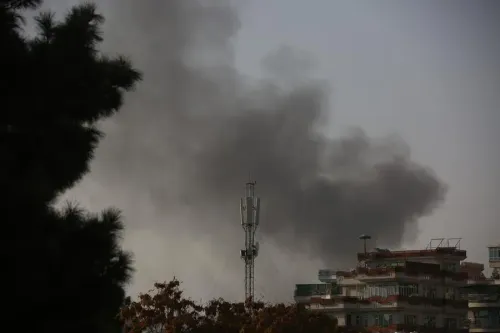
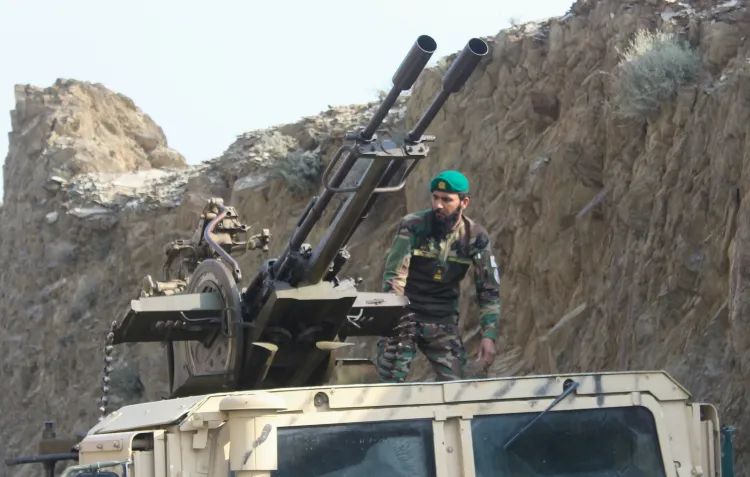
The JISS report describes the current Pakistan-Afghanistan armed conflict as the most serious escalation between the two nations since the Taliban's return to power in August 2021. Fighting has been ongoing since late February, with both sides trading threats and launching cross-border strikes.
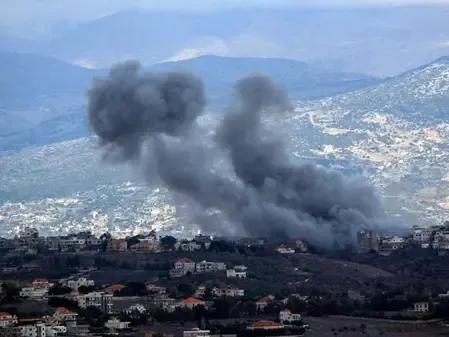
Pakistani airstrikes inside Afghan territory dealt the final blow to a fragile ceasefire that had been brokered through regional mediation in October 2025, effectively pushing both countries toward what analysts are now calling "open warfare". Official casualty figures from both sides remain unverified and disputed.
The report states: "The collapse of mediation efforts and the shift toward open warfare attest to the depth of the rift and the failure of diplomatic mechanisms to stabilise the shared border."
Pakistan's Miscalculated Taliban Strategy
When the Taliban recaptured Kabul in 2021, Islamabad had anticipated a significant "strategic dividend" — expecting the new Afghan government to rein in the Tehrik-e-Taliban Pakistan (TTP), a militant group that has waged a brutal insurgency inside Pakistan for over two decades.
That expectation collapsed spectacularly. Instead of curbing the TTP, the Taliban provided the group with operational space, and TTP attacks surged to a decade-high record — with over 2,400 fatalities among Pakistani security forces in 2025 alone. This represents one of the deadliest years for Pakistan's military and paramilitary personnel in recent history.
The JISS report notes that Islamabad's long-standing leverage over the Taliban — built over decades of ISI support and sanctuary — has now been almost completely eroded, leaving Pakistani policymakers with few diplomatic tools and an increasingly militarised response.
The India Factor: Kabul-New Delhi Ties Alarm Islamabad
A critical dimension of this conflict, largely underreported in mainstream coverage, is the India-Afghanistan strategic alignment that has been quietly deepening since the Taliban consolidated power. Pakistan's Defence Minister's claim that Afghanistan has become an "Indian colony" — while hyperbolic — reflects genuine alarm in Rawalpindi and Islamabad over New Delhi's growing footprint in Kabul.
India has historically invested heavily in Afghan infrastructure, including the Salma Dam, the Afghan Parliament building, road networks connecting Afghanistan to Iran's Chabahar Port, and multiple educational and health facilities. These projects give India both soft power influence and a strategic stake in Afghan stability.
If Afghanistan descends into deeper chaos, Indian development projects worth hundreds of millions of dollars face direct threats — and so does India's broader vision of a trade and connectivity corridor bypassing Pakistan to reach Central Asia via Afghanistan and Iran.
The Mutual Blame Cycle: TTP, Baloch Separatists, and ISIS
Both Pakistan and Afghanistan are locked in a toxic cycle of mutual accusation that shows no sign of breaking. Islamabad insists that the Taliban is sheltering TTP militants — a group originally formed two decades ago to support the Afghan jihad against U.S. forces but now turned against the Pakistani state — as well as Baloch separatist fighters seeking independence from Pakistan's southwestern province.
Kabul, in turn, accuses Pakistan's intelligence apparatus of providing sanctuary and support to ISIS-Khorasan (ISIS-K) operatives who carry out deadly attacks inside Afghanistan, directly undermining the Taliban's claim to have restored order and security.
This accusation-counteraccusation dynamic has made third-party mediation nearly impossible, as neither side trusts the other's stated intentions or is willing to make verifiable concessions.
Regional and Global Implications
The JISS report underscores that the Pakistan-Afghanistan conflict is not a bilateral issue — it has profound consequences for the entire region. A destabilised Afghanistan risks becoming a global jihadist hub once again, with militant groups exploiting the power vacuum to radicalise and recruit across South Asia and Central Asia.
For India, the stakes are particularly high. Beyond the immediate threat to its Afghan investments, the conflict disrupts New Delhi's International North-South Transport Corridor (INSTC) ambitions and its efforts to reduce strategic dependence on Pakistan-controlled overland routes. A stable, India-friendly Afghanistan is central to India's Central Asia policy.
Notably, this escalation comes at a time when India-Pakistan tensions remain at a historic high following the Pahalgam terror attack in April 2025, adding yet another layer of geopolitical complexity to an already volatile regional environment. As both the Pakistan-Afghanistan conflict and India-Pakistan standoff evolve simultaneously, the risk of a broader regional conflagration — drawing in China, Iran, Russia, and Central Asian states — cannot be dismissed. Observers will be watching closely for any renewed mediation attempts and whether Washington or Beijing steps in to prevent further escalation.
Point of View
And is now reaping a whirlwind of TTP violence, diplomatic isolation, and an Afghanistan that is actively tilting toward New Delhi. The irony is stark: by pushing the Taliban into India's arms through military pressure and accusations, Pakistan is accelerating the very strategic encirclement it fears most. What mainstream coverage misses is that this conflict is as much about India's rising regional influence as it is about border security — and New Delhi's quiet diplomatic foothold in Kabul may prove to be one of its most consequential foreign policy achievements in decades.
NationPress
24 Sept 2026
Frequently Asked Questions
Why is Pakistan fighting with Afghanistan in 2025?
Pakistan launched airstrikes inside Afghan territory in 2025, escalating a conflict that has been ongoing since late February over the Taliban's alleged sheltering of TTP militants who have killed over 2,400 Pakistani security personnel. The strikes destroyed a fragile ceasefire brokered through regional mediation in October 2025, pushing both nations toward open warfare.
What is the TTP and why does Pakistan blame Afghanistan for TTP attacks?
The Tehrik-e-Taliban Pakistan (TTP) is a militant group formed two decades ago to support the Afghan jihad against U.S. forces but now wages an insurgency against the Pakistani state. Pakistan accuses the Afghan Taliban of providing TTP fighters with safe haven inside Afghanistan, which Kabul denies.
How does the Pakistan-Afghanistan conflict affect India?
India has invested hundreds of millions of dollars in Afghan infrastructure projects and depends on Afghanistan for its Central Asia connectivity corridor that bypasses Pakistan. A destabilised Afghanistan threatens these investments and disrupts India's broader trade and geopolitical strategy in the region.
Why did Pakistan call Afghanistan an Indian colony?
Pakistan's Defence Minister made the 'Indian colony' claim in response to the deepening strategic and diplomatic alignment between Kabul and New Delhi, which Islamabad views as a direct threat to its regional influence. The statement reflects Pakistan's alarm over India's growing soft power footprint in Afghanistan through development projects and diplomacy.
What did the Jerusalem Institute for Strategy and Security report say about Pakistan-Afghanistan relations?
The JISS report described the current conflict as the most significant escalation between Pakistan and Afghanistan since the Taliban's return to power in 2021, warning that the collapse of mediation and shift to open warfare reflects a deep, structural rift. It also cautioned that Afghan instability risks militant radicalisation, threats to Indian projects, and disruption of regional connectivity plans.