Several Pakistani soldiers killed as military convoys attacked in Balochistan
Synopsis
In a single day, Pakistani military convoys were hit in at least three separate Balochistan districts — Kech, Kharan, and Mastung — with fighters also torching a vehicle on the Quetta–Taftan highway. This follows the BLF's claim of killing over 129 security personnel across 25 operations in October, including 'Operation Almas' in Gwadar. The scale and simultaneity signal a sharp escalation in Balochistan's insurgency.
Key Takeaways
Pakistani military convoys were attacked in Kech, Kharan, and Mastung districts of Balochistan on 4 November 2026 , causing multiple casualties.
Armed fighters also blocked the Quetta–Taftan highway in Dalbandin , torching a vehicle.
Earlier this week, clashes in Kharan's Lijay area reportedly left eight Pakistani military personnel killed or wounded, and a quadcopter was shot down.
The Balochistan Liberation Front (BLF) claimed killing over 129 Pakistani military and intelligence personnel across 25 operations in October 2026 .
The BLF's 'Operation Almas' in Gwadar alone reportedly killed over 80 military and intelligence personnel, per the group's unverified claims.
No group has claimed responsibility for the 4 November attacks; official Pakistani casualty figures have not been released.
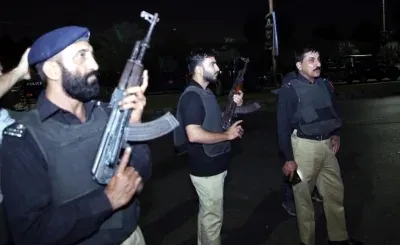
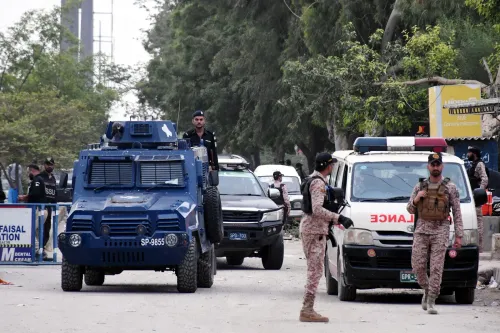
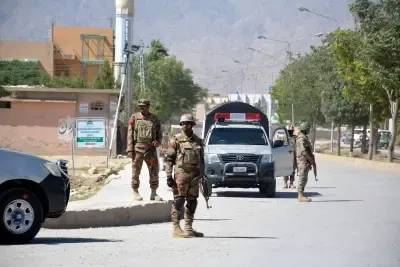
Multiple Pakistani military convoys came under coordinated armed attack across Balochistan's Kech, Kharan, and Mastung districts on Wednesday, 4 November 2026, resulting in multiple casualties, according to local media reports citing sources. Armed fighters also blocked the Quetta–Taftan highway in the Dalbandin area, intercepting and torching a vehicle.
Key Attacks Across Three Districts
In the Noduz area of Kech district, unidentified armed men ambushed a two-vehicle convoy of Pakistani security forces, with initial reports indicating casualties and material losses. The exact toll had not been confirmed by official sources at the time of reporting.
Separately, armed fighters ambushed a Pakistani army convoy near Madina Hotel along the Quetta–Karachi highway in Mastung, according to reports. The number of personnel killed or injured in that incident was not immediately available.
A further convoy of Pakistani forces was attacked on the same day at Nauroz Kalat, near the Zomi area of Kharan district, local media reported. In Dalbandin, fighters reportedly set up a roadblock in the Pashuk area along the Quetta–Taftan highway, intercepted a vehicle, and set it ablaze, according to The Balochistan Post.
No group has claimed responsibility for the latest wave of attacks.
Earlier Incidents This Week
The fresh attacks follow a series of similar incidents earlier in the week. Armed fighters targeted Pakistani security personnel travelling on foot and in vehicles in Nushki's Ahmad Wal area, while an explosion struck a military vehicle in Kharan district, causing what local sources described as severe casualties. Local sources also claimed that mines laid across parts of the area had been restricting movement of security forces.
A day before those incidents, intense clashes in Kharan's Lijay area reportedly left eight Pakistani military personnel killed or wounded after a military vehicle was struck by a blast, followed by sustained fighting. A quadcopter was also reportedly shot down during those clashes.
BLF Claims 129 Killed in October Operations
The escalating violence comes in the context of a broader militant campaign. The Balochistan Liberation Front (BLF) claimed in its monthly report released on Sunday that it killed more than 129 Pakistani military and intelligence personnel and seriously injured over 30 others during 25 operations across Balochistan in October alone.
BLF spokesperson Major Gwahram Baloch said the October operations included 'Operation Almas' in Gwadar district, during which the group claimed to have killed over 80 military and intelligence personnel and injured dozens more. These claims have not been independently verified.
Pattern of Escalation in Balochistan
The string of attacks underscores a persistent and intensifying pattern of militant activity in Balochistan, Pakistan's largest province by area. The province has long been a theatre for an insurgency driven by armed separatist groups, though the Pakistani military has historically characterised the violence as the work of foreign-backed elements. Crucially, Wednesday's attacks targeted multiple locations simultaneously — a tactical pattern analysts associate with organised, coordinated operations rather than isolated incidents.
With no group claiming responsibility for the latest attacks and official Pakistani casualty figures unavailable, the full scope of the losses remains unclear. The situation is likely to draw renewed scrutiny over the security conditions along strategic corridors, including routes connected to the China-Pakistan Economic Corridor (CPEC).
Point of View
Multi-district nature of Wednesday's attacks points to something beyond opportunistic militancy — it suggests operational depth and tactical coordination that Pakistan's official framing of a 'foreign-backed fringe' has repeatedly struggled to explain. The BLF's claimed October toll of 129 personnel, if even partially accurate, would represent a significant security failure in a province that hosts the strategically vital CPEC corridors. What is consistently missing from the official Pakistani narrative is a credible, independently verifiable casualty account — the absence of which allows both sides to shape the information space unchecked. For India and regional observers, the sustained instability in Balochistan is not merely a Pakistani internal matter; it has direct implications for the security calculus around CPEC and broader South Asian geopolitics.
NationPress
4 Nov 2026
Frequently Asked Questions
Where did the Pakistani military convoy attacks take place on 4 November 2026?
The attacks occurred in three districts of Balochistan — Kech, Kharan, and Mastung — with a separate highway blockade and vehicle torching reported in the Dalbandin area along the Quetta–Taftan highway. No group has claimed responsibility for the 4 November attacks.
What did the Balochistan Liberation Front claim for October 2026?
The BLF claimed in a monthly report released on Sunday that it killed over 129 Pakistani military and intelligence personnel and seriously injured more than 30 others across 25 operations in October 2026. Its 'Operation Almas' in Gwadar alone purportedly killed over 80 personnel, though these claims have not been independently verified.
How many Pakistani personnel were reportedly killed in the Kharan clashes earlier this week?
Eight Pakistani military personnel were reportedly killed or wounded after a military vehicle was struck by a blast in Kharan's Lijay area, followed by further fighting. A quadcopter was also shot down during those clashes, according to local media reports citing sources.
Why is the security situation in Balochistan significant beyond Pakistan's borders?
Balochistan is home to key routes of the China-Pakistan Economic Corridor (CPEC), making sustained militant activity in the province a matter of regional strategic concern. Repeated attacks on security convoys and infrastructure corridors draw attention from India, China, and other stakeholders with interests tied to South Asian stability.
Has Pakistan officially confirmed the casualties from these attacks?
Official Pakistani casualty figures from the 4 November attacks had not been released at the time of reporting. Local media reports, citing unnamed sources, indicate multiple casualties, but the exact toll remains unverified by state authorities.