Pakistan Fuelling Khalistan Push by Targeting Sikh Pilgrims: Report
Synopsis
Pakistan is weaponising Sikh religious pilgrimages to push the Khalistan agenda, with Pakistani leader Gopal Singh Chawla openly advocating separatism before Indian devotees. Combined with weapons and drug smuggling across the Punjab border, the Khalsa Vox report exposes a calculated, multi-layered strategy to destabilise India — echoing the darkest chapter of Punjab's history.
Key Takeaways
Gopal Singh Chawla , a Pakistani Sikh leader , was caught openly advocating for Khalistan before visiting Indian Sikh pilgrims , according to a Khalsa Vox report published in April 2025 .
Weapons and narcotics are being smuggled from Pakistan into India , with Sikh separatists residing in Pakistan allegedly involved alongside state agencies.
The strategy mirrors Pakistan's 1980s playbook of supporting Khalistani militancy , now updated to exploit religious pilgrimages and social media .
The report calls for strict diplomatic and legal action against separatist enablers and demands that Sikh pilgrimages be kept free of all political agendas.
The development comes days after the Pahalgam terror attack of April 2025 , in which 26 civilians were killed, suggesting Pakistan is escalating pressure on multiple fronts simultaneously.
India's security agencies are expected to intensify monitoring of returning pilgrim groups and push for stronger international pressure on Islamabad .
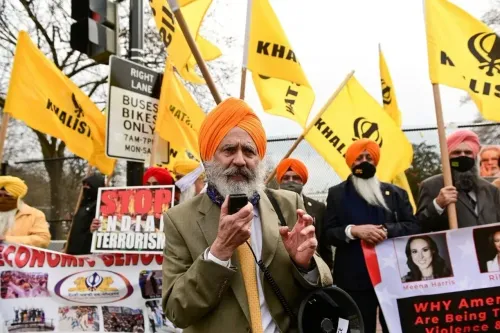
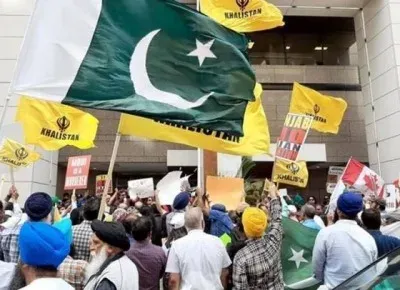
New Delhi/Islamabad, April 25: Pakistan is systematically exploiting Sikh religious pilgrimages to advance the Khalistan separatist agenda, according to a detailed report by Khalsa Vox, which reveals that innocent devotees visiting sacred shrines across the border are being deliberately exposed to provocative political messaging. The report, citing firsthand accounts from recent pilgrim groups, identifies this as a calculated strategy of provocation designed to destabilise Punjab and challenge India's sovereignty.
Gopal Singh Chawla's Role in Khalistan Advocacy
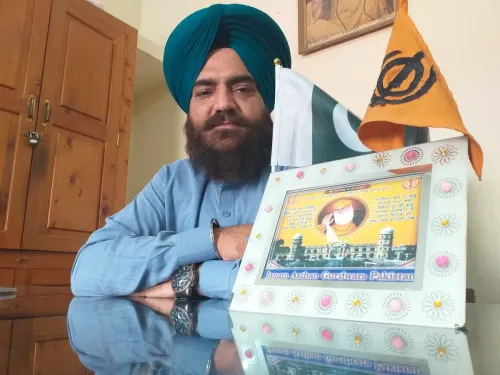
At the centre of the controversy is Gopal Singh Chawla, a Pakistani Sikh leader with a well-documented history of pro-Khalistan activities. According to the Khalsa Vox report, Chawla was directly observed advocating for Khalistan during interactions with visiting Indian Sikh pilgrims, turning what should be a sacred spiritual journey into a political recruitment exercise.
This is not an isolated incident. Chawla has previously been flagged by Indian intelligence agencies for his alleged ties to anti-India networks operating from Pakistani soil. His repeated access to Indian pilgrim groups raises serious questions about the complicity — or at minimum, the tacit approval — of Pakistani state actors in facilitating such encounters.
Weapons, Drugs, and the Separatist Network
The report goes beyond political rhetoric, pointing to a dangerous operational dimension: weapons and narcotics are being smuggled from Pakistan into India, with the possibility that certain Sikh separatists residing in Pakistan are actively involved in facilitating these networks alongside state agencies.
This dual-track strategy — ideological radicalisation through pilgrimages combined with arms and drug trafficking — mirrors the playbook used during Punjab's insurgency period of the 1980s and early 1990s. Security analysts have long warned that Pakistan's ISI continues to view the Khalistan movement as a low-cost tool to bleed India without direct military confrontation.
The Punjab-Pakistan border remains one of the most active corridors for drone-based weapons drops, a trend that has sharply escalated since 2020, with the Border Security Force (BSF) intercepting dozens of such consignments annually.
Turning Sacred Pilgrimages Into Political Platforms
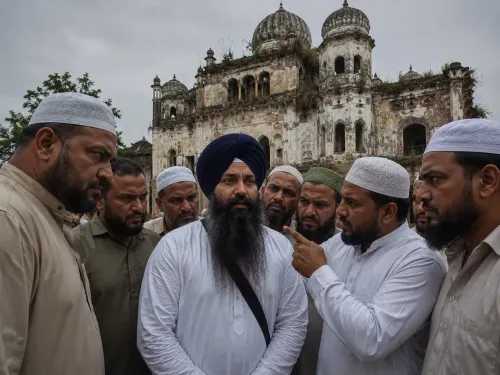
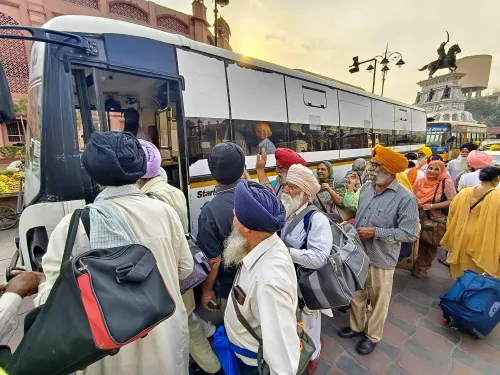
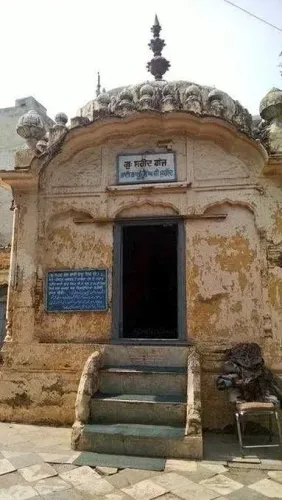
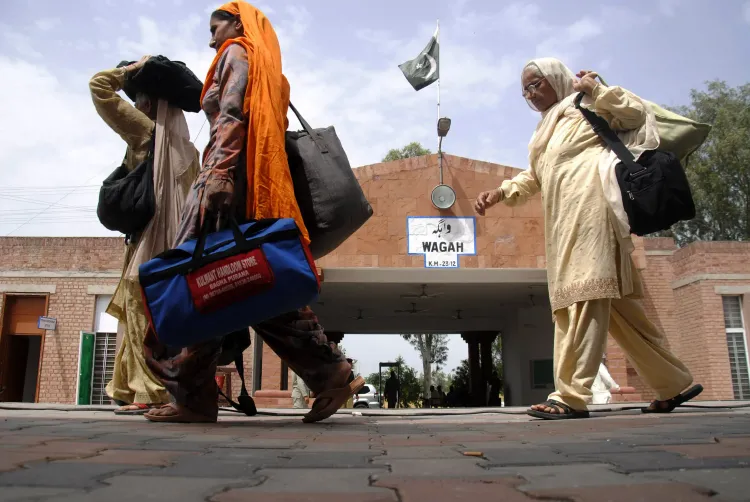
What makes this strategy particularly insidious is its exploitation of religious faith. Pilgrims travelling to shrines in Pakistan — including Nankana Sahib, the birthplace of Guru Nanak Dev Ji — do so with deep devotion and peaceful intent. Exposing them to separatist propaganda in such a spiritually vulnerable setting is a deliberate psychological tactic.
The Khalsa Vox report warns that these efforts are not merely ideological but may specifically target Punjabi youth, attempting to mislead and radicalise the next generation at a time when Punjab has painstakingly rebuilt its social fabric after decades of violence.
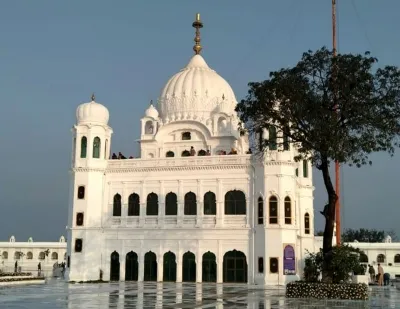
Notably, India has previously suspended or restricted the Kartarpur Corridor and other cross-border religious arrangements when security concerns escalated, underscoring how Pakistan's misuse of these platforms has real diplomatic consequences.
Strategic Context: Pakistan's Long Game Against Punjab
Punjab endured one of the most devastating internal security crises in post-independence Indian history between the 1980s and mid-1990s, when Khalistani militancy claimed thousands of lives. The state's recovery — economic, social, and psychological — has been hard-won over three decades.
Critics argue that Pakistan has never genuinely abandoned its ambition to reignite separatism in Punjab, instead adapting its methods to changing times: from direct support for armed groups in the 1980s, to funding diaspora-based activism in the UK, Canada, and Australia in the 2000s, and now leveraging social media and pilgrim networks in the 2020s.
The Khalsa Vox report calls for strict diplomatic and legal action against individuals like Chawla and their enablers, while demanding that religious pilgrimages be kept entirely free from political interference — a demand that India has consistently raised in bilateral forums with Islamabad with limited success.
India's Response and the Road Ahead
The report underscores the urgent need for vigilance, national unity, and firm policy in countering agendas driven from across the border. India's Ministry of External Affairs and security establishment have repeatedly raised the issue of Pakistan-sponsored Khalistan activities in diplomatic channels, including at the United Nations.
With India-Pakistan relations already at a historic low following the Pahalgam terror attack of April 2025 — in which 26 civilians were killed — any fresh evidence of Pakistan's continued support for separatist networks is likely to further harden New Delhi's diplomatic posture and may accelerate calls for reviewing existing bilateral agreements, including those governing Sikh pilgrimage arrangements.
As the situation develops, Indian security agencies are expected to intensify monitoring of returning pilgrim groups while pushing for stronger international pressure on Islamabad to rein in actors like Gopal Singh Chawla.
Point of View
Islamabad has never truly abandoned its Khalistan project; it has merely repackaged it. What the Khalsa Vox report exposes is the convergence of ideological warfare and physical smuggling networks — a one-two punch that demands India move beyond diplomatic protests and impose real costs on enablers like Gopal Singh Chawla. The timing, coming days after the Pahalgam massacre, suggests Pakistan is escalating on multiple fronts simultaneously, and India's response must be equally multi-dimensional.
NationPress
16 Sept 2026
Frequently Asked Questions
How is Pakistan using Sikh pilgrimages to promote Khalistan?
According to a Khalsa Vox report, Pakistani Sikh leader Gopal Singh Chawla has been openly advocating for Khalistan during interactions with Indian Sikh pilgrims visiting shrines in Pakistan. This turns sacred religious journeys into political recruitment platforms, exposing devotees to separatist propaganda in a spiritually vulnerable setting.
Who is Gopal Singh Chawla and why is he controversial?
Gopal Singh Chawla is a Pakistani Sikh leader with a documented history of pro-Khalistan activism who has previously been flagged by Indian intelligence agencies for alleged ties to anti-India networks. He has repeatedly used his access to visiting Indian pilgrims to promote Khalistan separatism on Pakistani soil.
Is Pakistan smuggling weapons into India through the Punjab border?
Yes, the Khalsa Vox report indicates that weapons and narcotics are being smuggled from Pakistan into India, with Sikh separatists residing in Pakistan possibly involved alongside state agencies. The Punjab-Pakistan border has seen a sharp rise in drone-based weapons drops since 2020, with the BSF intercepting dozens of consignments annually.
What action is India expected to take against Pakistan's Khalistan activities?
The Khalsa Vox report calls for strict diplomatic and legal action against individuals like Chawla and their supporters, while demanding that religious pilgrimages remain free of political agendas. With India-Pakistan relations already strained after the April 2025 Pahalgam attack, New Delhi is likely to intensify pressure on Islamabad through diplomatic channels and may review existing pilgrimage arrangements.
What is the historical background of the Khalistan movement in Punjab?
The Khalistan movement was a Sikh separatist insurgency that gripped Punjab from the 1980s to the mid-1990s, claiming thousands of lives before being suppressed by Indian security forces. Pakistan has historically supported Khalistani groups, and security analysts warn it continues to view the movement as a tool to destabilise India without direct military confrontation.