Rising School Costs and Textbook Shortages Spark Concerns Among Pakistani Families
Synopsis
As the academic year begins in Pakistan, families are grappling with soaring school expenses and a significant shortage of textbooks. Reports indicate that the rising costs are limiting access to education, particularly for low-income families and girls.
Key Takeaways
Soaring Costs: Enrolling a child in school can cost up to **PKR 30,000**.
Textbook Shortage: A **40% shortage** of new textbooks is reported.
Disparities: **34% of girls** are out of school compared to **22% of boys**.
Literacy Rates: Overall literacy in Pakistan is **63%**.
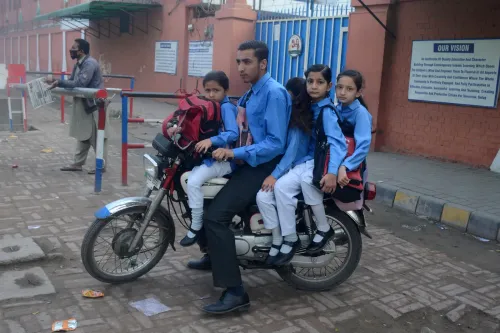
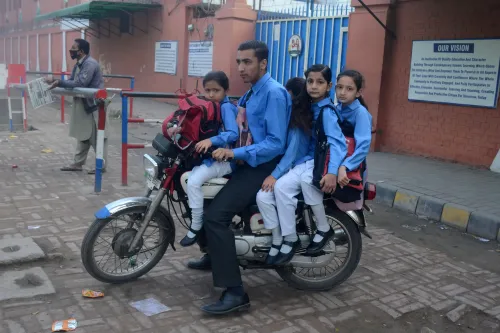
Rural Challenges: Children face significant barriers to education, especially in rural areas.
Islamabad, April 17 (NationPress) With the onset of the new academic year in Pakistan, parents are purchasing educational materials for their children, facing escalating costs related to education. Reports indicate that the enrollment of a single child in school now ranges between Pakistani Rupees (PKR) 20,000 to PKR 30,000, encompassing initial fees, textbooks, notebooks, uniforms, shoes, and bags, as stated by local media.
In response to rising costs, many citizens have voiced their concerns. This year, there is a reported 40% shortage of new textbooks available in the market. School-related expenses have surged, with uniforms priced at approximately PKR 3,000, school shoes ranging from PKR 2,500 to PKR 5,000, and basic quality school bags starting at PKR 1,500, according to The Express Tribune.
The cost of applying a plastic cover to each book is between PKR 75 and PKR 100. Larger notebooks and registers are priced between PKR 120 to PKR 130. The increasing costs of paper have impacted the prices of all types of notebooks, registers, textbooks, drawing books, practical copies, and other stationery items.
Parents have expressed concerns that these soaring costs may be a calculated effort to make education unaffordable for low-income families, thus limiting access to basic education. Families argue that while education and healthcare are free in many regions worldwide, access to education in Pakistan has become increasingly difficult for the impoverished.
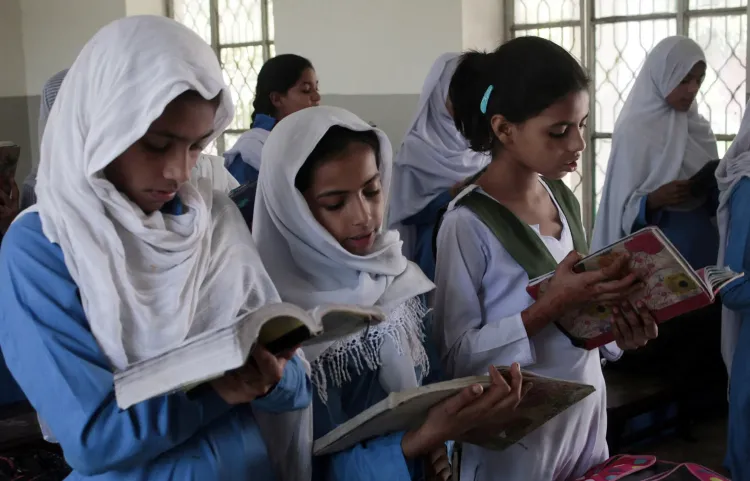
A recent report highlighted that nearly 28% of children aged 5 to 16 in Pakistan are currently out of school, with girls disproportionately affected—34% of girls are not enrolled compared to 22% of boys. This disparity is particularly evident in rural areas, where girls face even greater obstacles to education due to geographical and gender-based factors.
According to a survey by Gallup Pakistan, two-thirds of Pakistanis aged 10 and above have attended school at some point, yet access to education remains highly unequal. The national literacy rate is 63%, with male literacy at 73% and female literacy at 52%.
Literate urban populations stand at 77%, compared to 56% in rural regions. While 68% of children are enrolled in primary education, the figures drop significantly at higher educational levels, with only 40% continuing in middle school and around 30% in matriculation. This dramatic decline in student retention highlights the challenges they face, especially in rural and underprivileged areas, where obstacles such as safety concerns, distance to schools, and increasing opportunity costs—particularly for girls—are prevalent. Financial pressures, household responsibilities, and limited options for post-primary education further inhibit children's continuation in school, with girls facing additional social expectations and risks of early marriage.
Point of View
It is crucial to highlight the alarming trend of rising school expenses and the significant shortage of textbooks. This situation underscores the urgent need for educational reforms to ensure equitable access to education for all children in Pakistan, especially those from underprivileged backgrounds.
NationPress
19 Sept 2026
Frequently Asked Questions
What is the average cost for enrolling a child in school in Pakistan?
Enrolling a child in school in Pakistan costs between **PKR 20,000 to PKR 30,000**, which includes various expenses like fees, textbooks, and uniforms.
What percentage of children are out of school in Pakistan?
Nearly **28% of children** aged 5 to 16 are currently out of school in Pakistan, with girls being disproportionately affected.
How has the shortage of textbooks impacted families?
A **40% shortage of new textbooks** this year has created challenges for families, making it difficult for children to access necessary educational materials.
What is the literacy rate in Pakistan?
Pakistan's national literacy rate stands at **63%**, with male literacy at **73%** and female literacy at **52%**.
What challenges do children in rural areas face regarding education?
In rural areas, children face challenges such as safety concerns, school distance, and financial pressures that hinder their access to education.