Pakistan tops global hepatitis C burden as banned syringes fuel crisis: WHO 2026
Synopsis
The WHO's Global Hepatitis Report 2026 names Pakistan the world's single largest source of hepatitis C cases — and field investigations explain why: banned reusable syringes remain openly available, unqualified practitioners reuse blood-contaminated vials, and only 20% of those infected have received treatment since 2015.
Key Takeaways
Pakistan is the world's single largest contributor to the global hepatitis C burden, per the WHO Global Hepatitis Report 2026 .
Pakistan is among 10 nations accounting for 58% of global hepatitis C-linked deaths in 2024 .
Globally, 1.34 million people died of hepatitis B and C combined, with elimination progress described as slow.
Banned reusable syringes and fake auto-disable syringes remain available in Pakistani markets despite official prohibitions.
A BBC Eye Investigations documentary found nurses injecting patients through clothes and reusing blood-contaminated vials at a Punjab government hospital.
Only 20% of hepatitis C patients have received treatment since 2015 , despite a curative therapy with a 95%+ success rate.
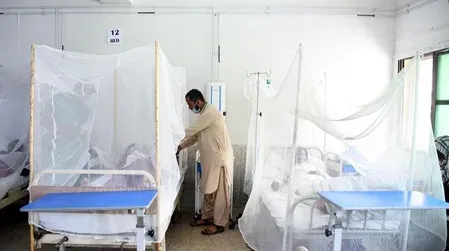
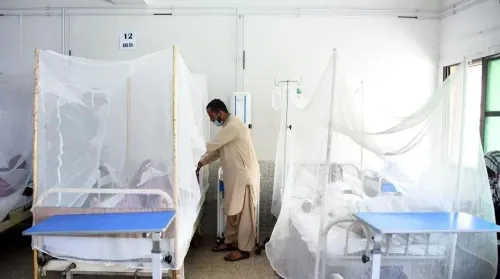
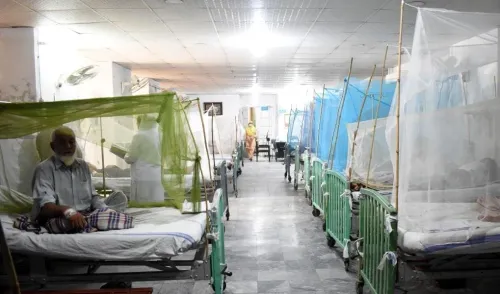
Pakistan has been identified as the world's single largest contributor to the global hepatitis C burden, according to the WHO Global Hepatitis Report 2026, even as field investigations from across the country continue to document the open availability of banned reusable syringes and counterfeit auto-disable syringes in local markets. Health experts warn that repeated use of such equipment by unqualified practitioners is actively fuelling transmission of hepatitis B, hepatitis C, and HIV.
Pakistan's Place in the Global Hepatitis Crisis
Pakistan is among the 10 nations that together accounted for 58 per cent of the world's hepatitis C-linked deaths in 2024. The WHO report notes that global progress on eliminating hepatitis remains dangerously slow, with 1.34 million people losing their lives to hepatitis B and C combined in a single year. The report attributes the global burden to historical transmission, unsafe medical practices, and injecting drug use — a combination that, critics argue, describes Pakistan's healthcare landscape with troubling precision.
An editorial in Pakistani daily The News International stated:
Point of View
Tolerated quackery, and enforcement that collapses under political pressure. The Punjab hospital case is instructive: authorities announced a crackdown, suspended a superintendent, and declared the problem addressed, only for secret BBC filming weeks later to find the same violations continuing. That gap between announcement and action is the real public health emergency. With a curative therapy available that works in over 95% of cases, the fact that only 20% of patients have been treated since 2015 is not a medical failure — it is a governance one.
NationPress
16 Sept 2026
Frequently Asked Questions
Why is Pakistan the world's largest contributor to hepatitis C cases?
Pakistan tops the global hepatitis C burden due to a combination of unsafe medical practices, widespread use of banned reusable syringes, unqualified practitioners, and poor infection control enforcement in both formal and informal healthcare settings, as identified by the WHO Global Hepatitis Report 2026.
What did the BBC investigation find at the Punjab government hospital?
A secret BBC Eye Investigations documentary found nurses injecting patients through their clothes, reusing dirty syringes, and unqualified workers injecting multiple children from a single blood-contaminated vial of liquid medicine at a Tehsil Headquarters Hospital in Punjab, Pakistan.
What is the treatment situation for hepatitis C in Pakistan?
Despite a short-course curative therapy that can cure more than 95% of hepatitis C infections, the WHO reports that only 20% of people with the disease globally have been treated since 2015. In Pakistan, only 25–30% of those infected are even aware of their status, compounding the treatment gap.
What action did Pakistani authorities take after the Taunsa HIV outbreak?
After the 2025 HIV outbreak among children linked to Tehsil Headquarters Hospital in Taunsa, Punjab provincial authorities announced a crackdown and suspended the hospital's Medical Superintendent. However, subsequent BBC filming found serious infection control violations continuing at the same facility.
What are auto-disable syringes and why does their counterfeiting matter?
Auto-disable syringes are designed to be used only once, locking automatically after a single injection to prevent reuse. Counterfeit versions that mimic this design but can be reused pose a serious public health risk, as they can transmit hepatitis B, hepatitis C, and HIV when used repeatedly on different patients.