Pakistan polio cases rise to 3 in 2025 as KP reports two new infections
Synopsis
Pakistan's polio tally for 2025 has climbed to three, with two new wild poliovirus cases confirmed in KP's conflict-prone Bannu and North Waziristan districts. With 233,000 children still unreached, vaccine refusals at record highs in Karachi, and polio workers facing armed attacks, the country's eradication programme is under severe strain — and WHO travel restrictions imposed in 2014 show no sign of being lifted.
Key Takeaways
Two new wild poliovirus cases confirmed in Bannu and North Waziristan , KP, on 1 May 2025 .
Pakistan's total polio cases in 2025 now stand at three ; the first was reported in Sujawal, Sindh .
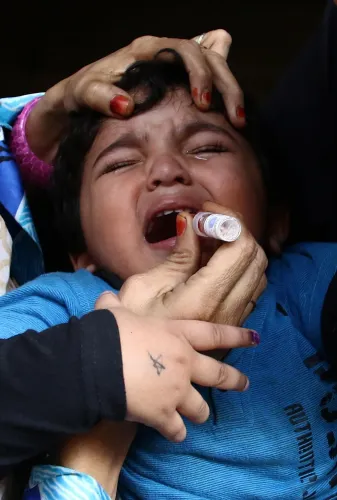
Approximately 233,000 children remain unvaccinated due to security threats, boycotts, and inaccessible terrain.
Karachi alone recorded around 31,000 vaccine refusals — nearly 58% of Pakistan's national total.
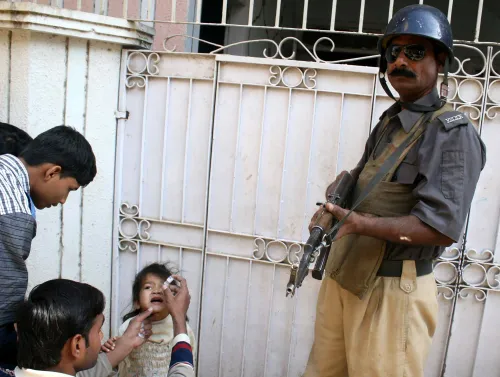
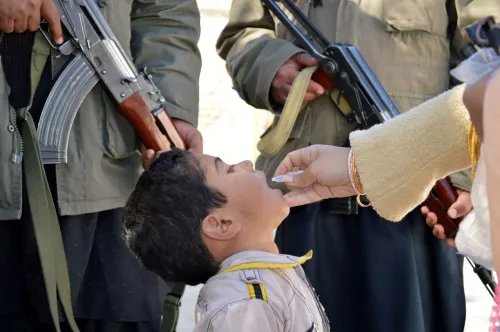
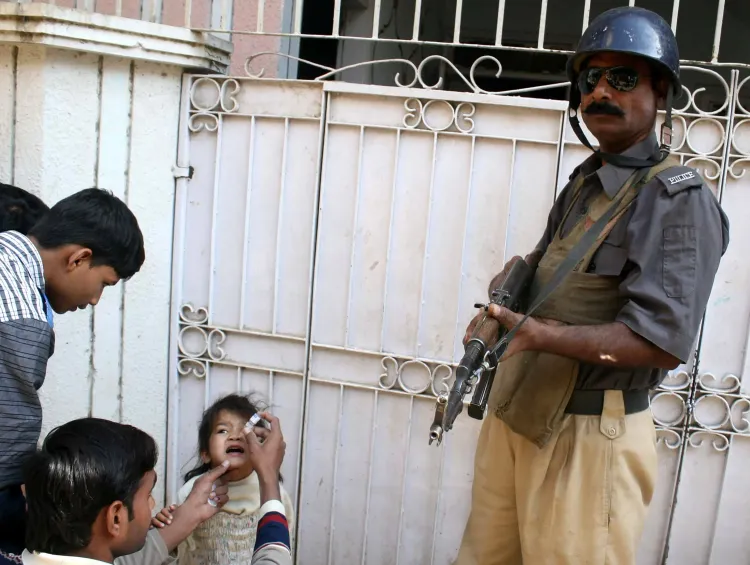
Police escorts have been killed and polio workers abducted during vaccination drives in KP and Balochistan .
WHO travel restrictions on Pakistan have been in force since 2014 and remain active.
Two new wild poliovirus cases have been confirmed in Pakistan's Khyber Pakhtunkhwa (KP) province, raising the country's total reported polio cases in 2025 to three, according to local media reports on Friday, 1 May. The confirmations, made by the National Emergency Operations Centre for Polio Eradication (NEOC), underscore the mounting challenges facing Pakistan's decades-long effort to eliminate the disease.
New Cases Confirmed
According to an official of the Pakistan Polio Eradication Programme, speaking on condition of anonymity to leading Pakistani daily Dawn, one case was detected in Bannu and another in North Waziristan. Both were identified through the poliovirus surveillance network and confirmed by the WHO-accredited Regional Reference Laboratory for Polio Eradication at the National Institute of Health (NIH).
The first case of the year had been confirmed earlier in Sujawal district of Sindh province, bringing the cumulative 2025 tally to three. Pakistan and Afghanistan remain the only two countries in the world where wild poliovirus cases are still being reported.
Security Threats Hampering Vaccination Drives
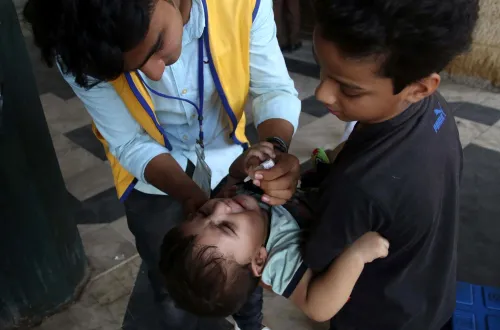
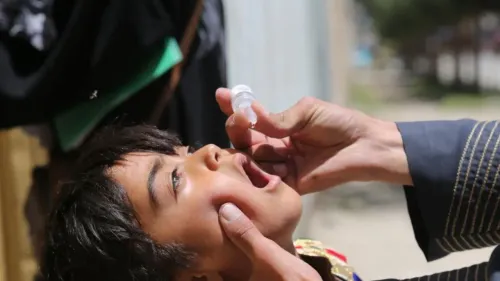
Dawn reported last month that police escorts have been killed and polio workers abducted during attacks in KP's Hangu and Bannu districts, as well as parts of Balochistan. These attacks took place during a nationwide immunisation drive to administer polio drops, severely disrupting outreach efforts on the ground.
This is not an isolated pattern — armed resistance to vaccination campaigns in KP and tribal belt areas has persisted for years, making the region one of the most difficult to cover in any national immunisation drive.
Over 2 Lakh Children Unreached
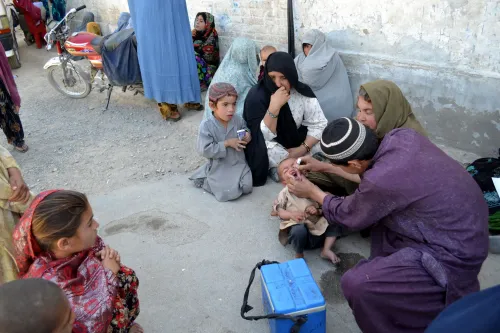
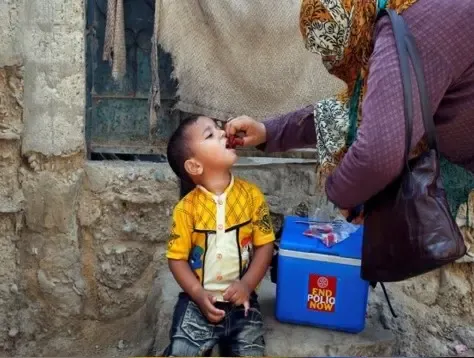
As of March 2025, as many as 233,000 children were reported as 'leftovers' — children who did not receive the polio vaccine — due to a combination of security constraints, community boycotts, and inaccessible snow-bound areas. Of these, approximately 184,000 were from Khyber Pakhtunkhwa, while around 50,000 children remained unreachable in Pakistan-occupied Jammu and Kashmir (PoJK) and Pakistan-occupied Gilgit Baltistan (PoGB) owing to snow-bound regions and non-conduct of campaigns.
Vaccine refusals by parents remain another significant obstacle. Karachi alone accounted for approximately 31,000 refusals, representing nearly 58% of the national total — raising serious questions about the role of misinformation, weak planning, poor local governance, and insufficient political will in Pakistan's largest city.
WHO Travel Restrictions Still in Force
The World Health Organisation (WHO) has maintained polio-related travel restrictions on Pakistan since 2014, requiring all international travellers departing the country to carry a valid polio vaccination certificate. More than a decade on, those restrictions remain in place — a signal of how far Pakistan still is from achieving eradication.
With fresh cases emerging in conflict-affected districts and hundreds of thousands of children still unreached, Pakistan's polio programme faces a critical test of governance, security coordination, and public trust in the months ahead.
Point of View
Year after year, reflects the state's inability to enforce safe passage for vaccination teams in its own territory. Karachi's 31,000 vaccine refusals — 58% of the national total — point to a parallel failure: an urban misinformation epidemic that no immunisation drive has meaningfully addressed. With Afghanistan as the only other country still reporting wild polio, the two nations effectively form a single epidemiological zone. Until Pakistan resolves the security vacuum in KP and the trust deficit in its cities, the WHO's 2014 travel restrictions will remain a permanent feature — not a temporary inconvenience.
NationPress
16 Sept 2026
Frequently Asked Questions
How many polio cases has Pakistan reported in 2025?
Pakistan has reported three wild poliovirus cases in 2025 so far. Two were confirmed in Bannu and North Waziristan in Khyber Pakhtunkhwa, and the first was detected in Sujawal district of Sindh province.
Why is polio eradication so difficult in Pakistan?
Polio eradication in Pakistan faces multiple challenges including armed attacks on vaccination teams, security constraints in KP and Balochistan, community boycotts, vaccine refusals driven by misinformation, and snow-bound inaccessible areas in PoJK and PoGB. Over 233,000 children remain unvaccinated as a result.
Which countries still report wild poliovirus cases?
Pakistan and Afghanistan are the only two countries in the world where wild poliovirus cases are still being reported, making them the last remaining reservoirs of the disease globally.
What are the WHO travel restrictions on Pakistan?
The World Health Organisation has imposed polio-related travel restrictions on Pakistan since 2014, requiring all international travellers departing the country to carry a valid polio vaccination certificate. These restrictions remain in force.
How many children in Pakistan are missing polio vaccinations?
As of March 2025, approximately 233,000 children were classified as 'leftovers' who did not receive the polio vaccine — 184,000 from Khyber Pakhtunkhwa and around 50,000 from Pakistan-occupied Jammu and Kashmir and Pakistan-occupied Gilgit Baltistan.