Pakistan's Punjab defers Lahore road renaming plan amid extremist backlash
Synopsis
Pakistan's Punjab government quietly backed away from a plan to restore Lahore's pre-Partition road names — approved by both Maryam Nawaz and Nawaz Sharif — after extremists framed the heritage initiative as a religious threat. The deputy commissioner then contradicted official records by claiming no decision had been taken, revealing how easily hardline pressure can erase even symbolic reform in Pakistan.
Key Takeaways
Punjab provincial government has reportedly deferred its plan to restore original historical names of roads and streets in Lahore .
The initiative was approved in March by the Lahore Heritage Areas Revival (LHAR) , chaired by Chief Minister Maryam Nawaz and PML-N President Nawaz Sharif .
Extremist elements, including vloggers, attacked the plan on religious grounds, triggering the apparent climbdown.
Deputy Commissioner Muhammad Ali Ijaz contradicted official records, claiming 'no decision had been taken' despite a formal CM office handout.
Dozens of Lahore streets had been renamed over the decades, replacing British-era or Hindu-associated names with Islamic or Pakistani ones — including Jain Mandir Road becoming Babri Masjid Chowk .
The Voice of Pakistan Minority (VOPM) separately warned that religious minority persecution in Pakistan has reached a level of 'national failure and global indifference.'
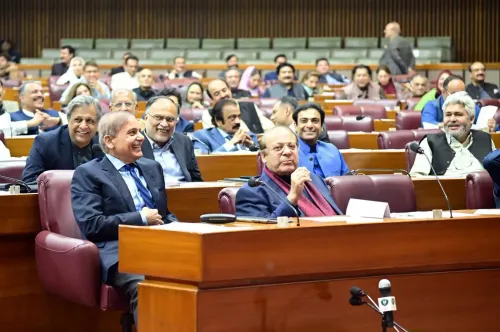
The Punjab provincial government in Pakistan has reportedly deferred its plan to restore the original historical names of roads and streets in Lahore, apparently after facing sharp backlash from extremist elements, according to local media reports on Tuesday, 26 May. The retreat marks a significant setback for a heritage initiative personally championed by Chief Minister Maryam Nawaz and Pakistan Muslim League-Nawaz (PML-N) President Nawaz Sharif.
Background: The Heritage Revival Plan
In March, the Lahore Heritage Areas Revival (LHAR) — presided over by Maryam Nawaz and Nawaz Sharif — had formally decided to restore pre-Partition and historically original names to roads and streets across Lahore and its surrounding areas. The initiative was seen as a cultural reclamation effort, acknowledging the city's layered history before and after the 1947 Partition.
How Extremists Forced a Climbdown
According to reports in Pakistani daily Dawn, certain extremist elements — including vloggers — attacked the plan by framing it in religious terms, triggering a wave of online and public criticism directed at Maryam Nawaz. The backlash appears to have been sufficient to stall the government's stated intentions. When Dawn questioned Lahore's Deputy Commissioner Muhammad Ali Ijaz about the approved plan — noting that both Nawaz Sharif and Maryam Nawaz had signed off on it and the Chief Minister's office had issued a formal handout — he stated that 'no decision had been taken and the matter was still being discussed', contradicting earlier official communications.
Roads That Were Renamed — and What Was Lost
Over the decades, Lahore has seen systematic renaming of streets that carried British-era or Hindu-associated names. Among the changes: Queen's Road became Fatima Jinnah Road, Krishan Nagar was renamed Islampura, Santnagar became Sunnat Nagar, Temple Street was replaced with Hameed Nizami, Laxmi Chowk became Maulana Zafar Ali Khan Chowk, Dharampura was changed to Mustafabad, Jain Mandir Road was renamed Babri Masjid Chowk, and Ram Gali became Rehman Gali, among others. The LHAR plan had sought to reverse or acknowledge these erasures.
Wider Context: Minority Rights Under Pressure
This development comes amid a broader deterioration in conditions for religious minorities in Pakistan. A leading minority rights organisation, the Voice of Pakistan Minority (VOPM), warned this month that the escalating persecution of religious minorities is no longer a 'quiet crisis' but a 'glaring indictment of both national failure and global indifference.' Citing the latest findings from the US Commission on International Religious Freedom, VOPM noted that Pakistan's continued designation as a Country of Particular Concern (CPC) reflects 'lived fear, shattered families, and silenced voices.' The group also flagged the normalisation of mob violence, warning that 'accusations — often unverified — can ignite collective fury within hours.'
What This Signals
The Punjab government's apparent reversal underscores the limits of reform in Pakistan's current political climate, where even symbolic heritage gestures can be weaponised by hardline voices. With the LHAR initiative now in limbo, the prospects for a broader cultural reclamation of Lahore's pre-Partition identity appear uncertain. Whether Maryam Nawaz revives the plan — or quietly shelves it — will be a telling indicator of how far elected governments in Pakistan can push back against religious pressure.
Point of View
But through manufactured outrage that elected governments dare not confront. What is striking here is not just the policy reversal, but the official denial: a deputy commissioner contradicting a formal Chief Minister's handout is an institutional retreat, not merely a political one. Maryam Nawaz staked personal capital on the LHAR initiative, and its quiet burial signals that even the ruling family's political cover is insufficient against religious pressure. For Pakistan's minorities, the message is familiar and grim: the state will not hold the line when the mob pushes back.
NationPress
21 Oct 2026
Frequently Asked Questions
What was the Lahore road renaming plan about?
The plan, approved in March 2025 under the Lahore Heritage Areas Revival (LHAR), aimed to restore original pre-Partition historical names to roads and streets in Lahore that had been renamed over the decades. It was chaired by Chief Minister Maryam Nawaz and PML-N President Nawaz Sharif.
Why did Pakistan's Punjab government defer the Lahore renaming plan?
The government reportedly deferred the plan after facing backlash from extremist elements, including vloggers, who criticised the initiative on religious grounds. According to Dawn, the opposition framed the restoration of historical names as religiously objectionable, prompting an apparent climbdown.
What did Lahore's Deputy Commissioner say about the plan?
Deputy Commissioner Muhammad Ali Ijaz told Dawn that 'no decision had been taken and the matter was still being discussed' — directly contradicting earlier official communications, including a formal handout issued by the Chief Minister's office confirming the plan's approval.
Which Lahore roads had been renamed and were targeted for restoration?
Several streets had been renamed over the decades, replacing British-era or Hindu-associated names. Examples include Krishan Nagar renamed Islampura, Laxmi Chowk renamed Maulana Zafar Ali Khan Chowk, Jain Mandir Road renamed Babri Masjid Chowk, and Ram Gali renamed Rehman Gali, among others.
How does this relate to the broader situation of minorities in Pakistan?
The Voice of Pakistan Minority (VOPM) warned this month that persecution of religious minorities in Pakistan is escalating, citing the US Commission on International Religious Freedom's designation of Pakistan as a Country of Particular Concern (CPC). The group flagged mob violence, systemic discrimination, and a justice system that frequently fails minority communities.