Taxila reconstruction: India says UNESCO heritage belongs to entire world
Synopsis
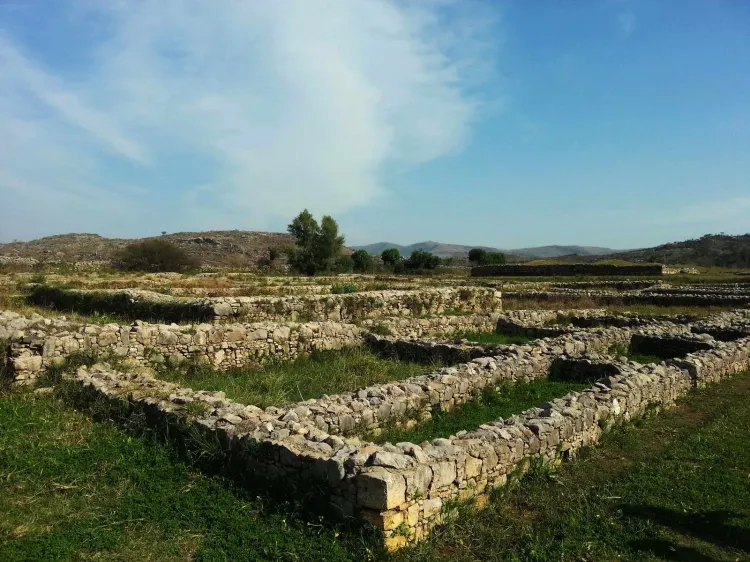
UNESCO has threatened to delist Taxila — one of South Asia's most storied World Heritage Sites — after Pakistan's Punjab archaeology department used cement to reconstruct walls at Mohra Moradu and Sirkap. India's MEA has weighed in, invoking the principle that UNESCO heritage belongs to all of humanity. The stakes are high: Pakistan has been seeking UNESCO listing for 24 more sites since 1997.
Key Takeaways
India's MEA reacted on Friday to reports of reconstruction at Taxila , asserting UNESCO heritage is a global collective responsibility.
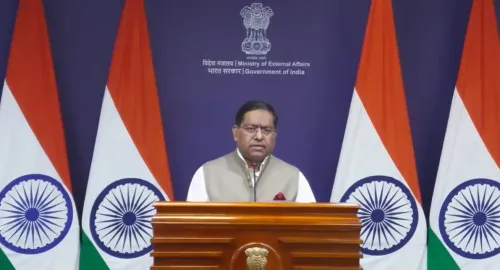
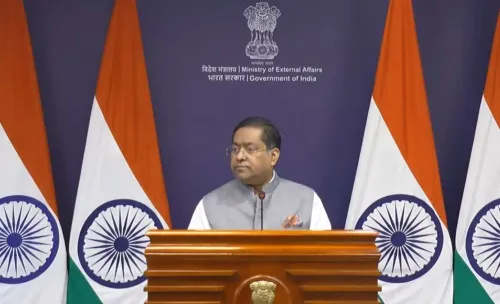
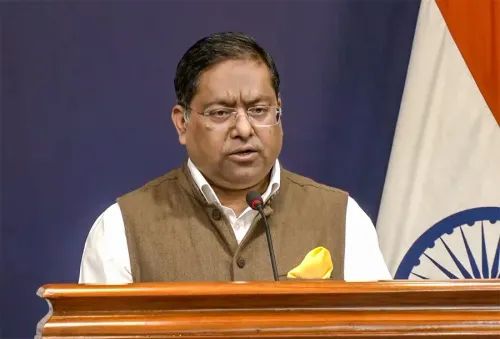
MEA spokesperson Randhir Jaiswal stated that cultural heritage 'belongs to the entire world' and not to any individual or country.
UNESCO has warned Pakistan it may place Taxila on its 'danger list' and threatened to 'delist' the site over 'unnecessary interventions'.
Reconstruction works by Punjab archaeology department at Mohra Moradu and Sirkap used cement on walls — a violation of UNESCO conservation rules.
A joint UNESCO technical visit to Taxila Museum was conducted on 12 June ; documentation including heritage impact assessments has been sought.
Pakistan has been seeking UNESCO listing for 24 additional sites since 1997 — a bid the controversy now reportedly jeopardises.
India on Friday, 4 July 2025, issued a pointed response to reports of unauthorised reconstruction at two historical sites in Taxila, Pakistan, asserting that cultural heritage — particularly sites recognised by UNESCO — is the collective property of humanity and not of any single nation. The statement came during a weekly media briefing by the Ministry of External Affairs (MEA) in New Delhi.
What India Said
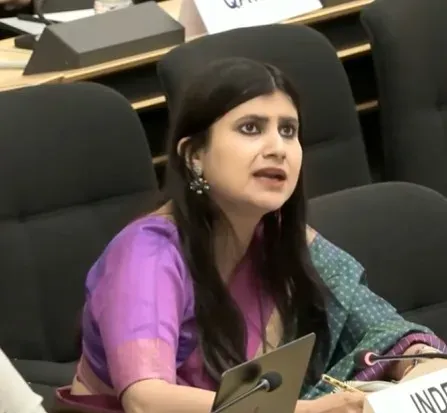
MEA spokesperson Randhir Jaiswal made India's position unambiguous: 'Cultural heritage, especially sites recognised by UNESCO, does not belong to any particular individual or country. It belongs to the entire world. Therefore, it is our collective responsibility to protect, preserve, and carry forward our heritage.'
Jaiswal was responding to a direct question about Pakistan's alleged violation of internationally accepted conservation rules for archaeological monuments of historical value at Taxila.
The UNESCO Warning to Pakistan
UNESCO — the United Nations Educational, Scientific and Cultural Organisation — has formally asked the Pakistani government to reverse 'reconstruction' work carried out at two historical sites in Taxila, according to reports citing Pakistan's leading daily Dawn. The global body warned that it would place the sites on its 'danger list' if corrective action is not taken.
More critically, UNESCO reportedly told senior Pakistani government officials that it would not hesitate to 'delist' Taxila entirely over what it described as 'unnecessary interventions' that have compromised the integrity and authenticity of these sites, according to sources in Pakistan's Ministry of National Heritage and Culture.
How the Issue Came to Light
The controversy surfaced after a third party shared information and photographs with Pakistan's Permanent Delegate to UNESCO in Paris, revealing reconstruction works carried out by the Punjab archaeology department at Mohra Moradu and Sirkap — two significant sites within the Taxila complex.
A joint technical visit was subsequently conducted on 12 June by UNESCO, the Department of Archaeology and Museums (DOAM), and Pakistan's Ministry of National Heritage and Cultural Division to the Taxila Museum. UNESCO has since sought specific documentation, including heritage impact assessment reports, photographs of the structures before and after restoration, and laboratory test reports of materials used — along with compatibility studies comparing new materials with the original fabric of the sites.
Why the Reconstruction Is Problematic
According to an official quoted by Dawn, 'Restoration and using cement to erect walls of World Heritage sites is a serious violation of UNESCO rules for conservation of archaeological monuments of historical value.' The official further noted that the development weakens Pakistan's standing as it has been endeavouring since 1997 to have 24 more sites of historical importance included in UNESCO's World Heritage list.
The use of modern cement and the structural alterations at Mohra Moradu and Sirkap are seen as undermining the authenticity criteria that UNESCO applies to World Heritage designations — a standard that, once breached, is difficult to reverse.
Broader Significance
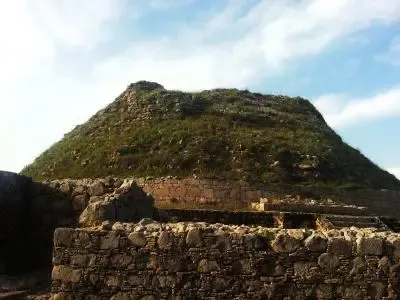
Taxila, located in present-day Punjab province, Pakistan, is one of South Asia's most significant archaeological sites, with roots tracing back to the Gandhara civilisation. It was inscribed on the UNESCO World Heritage List in 1980. India's intervention in the matter underscores the broader principle that heritage preservation transcends bilateral politics. Whether UNESCO follows through on its delisting threat will depend on the pace and credibility of Pakistan's corrective response in the coming weeks.
Point of View
Which gives it moral authority without bilateral escalation. The more consequential story, however, is UNESCO's own credibility: if it threatens delisting and then backs down, it signals to all member states that interventions carry no real cost. Pakistan's position is self-inflicted — compromising its own World Heritage standing while simultaneously lobbying for 24 new listings is a contradiction that will not be lost on UNESCO's World Heritage Committee. The Taxila episode is a reminder that heritage governance is as political as any other multilateral arena.
NationPress
2 Oct 2026
Frequently Asked Questions
What reconstruction did Pakistan carry out at Taxila?
Pakistan's Punjab archaeology department carried out reconstruction works at Mohra Moradu and Sirkap — two sites within the Taxila World Heritage complex — reportedly using cement to erect walls, which violates UNESCO conservation standards for archaeological monuments.
What action has UNESCO taken against Pakistan over Taxila?
UNESCO has formally asked Pakistan to reverse the reconstruction and warned it will place Taxila on its 'danger list' if corrective steps are not taken. It has also threatened to 'delist' the site entirely over what it called 'unnecessary interventions' that compromise the site's integrity and authenticity.
What did India's MEA say about the Taxila controversy?
MEA spokesperson Randhir Jaiswal said that cultural heritage recognised by UNESCO 'belongs to the entire world' and that it is a collective responsibility to protect and preserve it. The statement came during a weekly media briefing in New Delhi in response to questions about Pakistan's alleged conservation violations.
Why does the Taxila controversy matter beyond India and Pakistan?
Taxila has been a UNESCO World Heritage Site since 1980 and is one of South Asia's most significant Gandhara-era archaeological complexes. UNESCO's potential delisting would set a precedent for how it enforces conservation rules globally, and it puts at risk Pakistan's ongoing bid to have 24 additional sites inscribed on the World Heritage List.
What documentation has UNESCO sought from Pakistan?
UNESCO has requested heritage impact assessment reports, photographs of the structures before and after restoration, laboratory test reports of materials used, and compatibility studies comparing new materials with the original fabric of the sites at Mohra Moradu and Sirkap.