Pakistan Must Fix Internal Crisis Before Mediating Global Wars
Synopsis
A Pakistani analyst warns that Islamabad's bid to mediate the Middle East conflict is dangerously overambitious given its fragile economy, domestic militancy, and impossible balancing act between the US, China, Iran, and Saudi Arabia. The real priority, he argues, must be fixing Pakistan from within.
Key Takeaways
Pakistan and China jointly announced a Five-Point Initiative in March to restore peace in the Gulf and Middle East , tied to Belt and Road Initiative interests.
Islamabad hosted quadrilateral talks with Saudi Arabia , Egypt , and Turkey as part of its Middle East mediation push.
Pakistan's CPEC involves a $62 billion Chinese investment and an 80 per cent arms dependency on Beijing , complicating its neutral mediator stance.
Columnist Samee Ullah warns that Pakistan's domestic challenges — militancy, political polarisation, and a fragile economy — undermine its credibility as a global peace broker.
Remittances from Gulf-based Pakistani workers are under direct threat from regional instability, adding economic urgency to the domestic stabilisation argument.
Analysts recommend Pakistan prioritise counterterrorism reforms , IMF-backed economic recovery , and infrastructure development to build genuine international credibility.
Islamabad, April 26 — As Pakistan positions itself as a peace broker in the Middle East conflict, a sharp opinion piece in the Pakistan Observer argues that Islamabad would be far better served by redirecting its diplomatic energy toward fixing its own fractured house before attempting to mediate distant wars. The commentary, authored by Islamabad-based columnist Samee Ullah, raises critical questions about whether a country grappling with economic fragility, domestic militancy, and political polarisation has the credibility — or the bandwidth — to play global peacemaker.
Pakistan's Middle East Mediation Ambitions
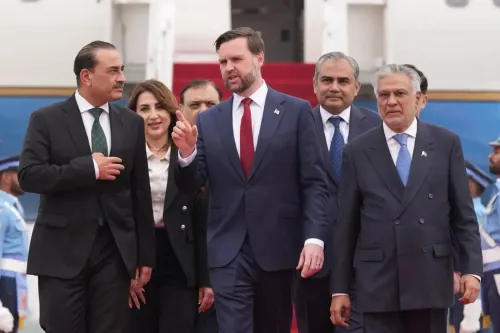
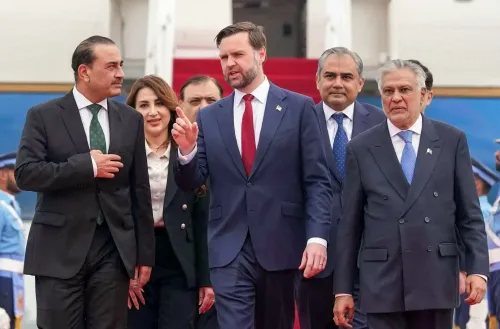
Pakistan has been actively attempting to carve out a mediator role amid the ongoing West Asia conflict, including efforts to bridge gaps between the United States and Iran. In March, Pakistan and China jointly announced a Five-Point Initiative aimed at restoring peace and stability across the Gulf region and the broader Middle East. The initiative was framed as a joint commitment to dialogue, regional cooperation, and long-term security.
Beyond this, Islamabad hosted quadrilateral diplomatic talks involving Saudi Arabia, Egypt, and Turkey, further signalling its ambitions as a neutral facilitator in one of the world's most volatile regions.
The Strategic Tightrope Pakistan Walks
Columnist Samee Ullah argues that Pakistan's diplomatic ambitions place it in an increasingly precarious position. The country must balance its deep partnership with China — which views Pakistan's mediation as a practical extension of the Belt and Road Initiative (BRI) — while also maintaining ties with Iran, managing its mutual defence pact with Saudi Arabia, and engaging constructively with the United States under President Donald Trump.
For Beijing, Pakistan's involvement is closely tied to keeping the Strait of Hormuz open, a critical chokepoint for global energy supplies and a lifeline for the China-Pakistan Economic Corridor (CPEC), which has seen a $62 billion infusion into Pakistan's infrastructure. Any disruption to energy flows through the strait would directly threaten CPEC's economic viability.
However, Samee Ullah warns that yielding too much to US demands risks undermining China's vision of a multipolar world order. Meanwhile, Iran's push to position Beijing as a primary guarantor in any peace framework could effectively sideline Islamabad altogether, rendering its mediation efforts redundant.
Pakistan's Domestic Vulnerabilities Undercut Its Global Role
The columnist draws attention to Pakistan's significant internal fault lines that complicate its external ambitions. Pakistan's domestic Shia minority, shared border vulnerabilities with Iran, and deep economic interdependence via CPEC create a complex web of competing loyalties and pressures that make a clean, neutral mediating posture nearly impossible to sustain.
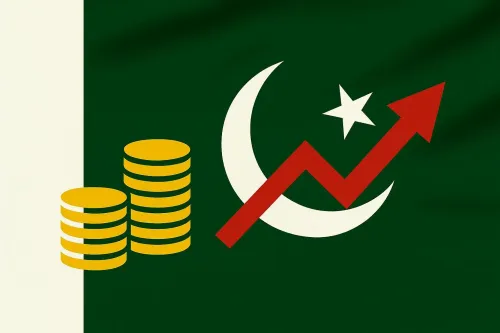
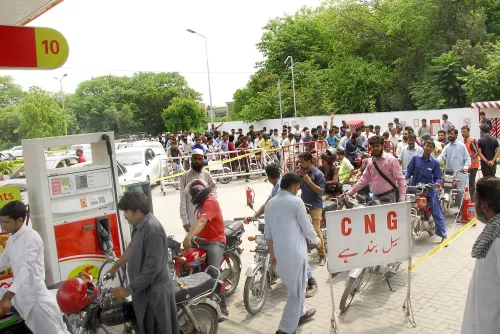
Economically, the picture is equally concerning. Pakistan's economy remains fragile, heavily dependent on IMF-backed stabilisation measures and remittances sent home by millions of Gulf-based Pakistani workers. Regional instability directly threatens these remittance flows, which are a critical lifeline for millions of Pakistani families. Internally, the country continues to battle militancy and deep political polarisation — challenges that demand immediate attention and resources.
Historical Context: A Nation Caught Between Superpowers
This is not the first time Pakistan has found itself at a geopolitical crossroads. During the Cold War, Islamabad served as a key US ally in the campaign against the Soviets in Afghanistan. After the 9/11 attacks, it pivoted dramatically, deepening ties with China — a shift institutionalised through CPEC and an 80 per cent arms dependency on Beijing — while carefully maintaining diplomatic relations with Iran despite persistent sectarian tensions.
Today, as Pakistan attempts a so-called 'no camps' or non-aligned approach, Samee Ullah notes that this posture is becoming increasingly untenable. Renewed engagement with Washington under President Trump has amplified competing pressures from both Tehran and Beijing, making every diplomatic move a high-stakes gamble.
The Path Forward: Domestic Resilience Over Diplomatic Overreach
The columnist's core argument is unambiguous: Pakistan must prioritise building domestic resilience before projecting itself as a global peace broker. Specifically, Samee Ullah advocates for accelerating counterterrorism reforms, pushing forward economic recovery through IMF-backed measures, and investing in infrastructural development as the most credible path to enhancing Pakistan's standing in international peace initiatives.
The argument carries significant weight: a country that cannot stabilise its own economy, secure its own borders, or resolve its internal political crises has limited moral or strategic authority to broker peace between others. As the Middle East conflict evolves and global power alignments shift, Pakistan's real test will be whether it can resist the temptation of diplomatic overreach and instead build the internal foundations that would make it a genuinely credible voice on the world stage.
With IMF negotiations ongoing and Gulf remittances under mounting pressure, the decisions Islamabad makes in the coming months will have profound consequences — not just for its foreign policy ambitions, but for the millions of ordinary Pakistanis whose livelihoods hang in the balance.
Point of View
Where militancy, IMF dependency, and Gulf remittance vulnerability pose existential threats. What this episode truly exposes is Pakistan's chronic tendency to seek external relevance as a substitute for internal reform — a pattern that has repeatedly left it as a pawn rather than a player in the great power game.
NationPress
16 Sept 2026
Frequently Asked Questions
Why is Pakistan trying to mediate in the Middle East conflict?
Pakistan is attempting to leverage its relationships with China, Iran, Saudi Arabia, and the US to position itself as a neutral peace broker in the West Asia conflict. Its joint Five-Point Initiative with China in March was partly driven by the need to keep the Strait of Hormuz open to protect CPEC energy supply chains.
What is the Pakistan-China Five-Point Initiative for the Middle East?
The Five-Point Initiative, announced jointly by Pakistan and China in March, is a framework aimed at restoring peace and stability in the Gulf and broader Middle East through dialogue and regional cooperation. It is closely linked to China's Belt and Road Initiative and the need to secure energy corridors.
Why is Pakistan's Middle East mediation role considered risky?
Pakistan faces competing pressures from China, Iran, Saudi Arabia, and the US, making a genuinely neutral stance nearly impossible. Analysts warn that conceding to US demands betrays China's interests, while Iran's push for Beijing as guarantor could sideline Pakistan entirely.
How does Pakistan's economy affect its foreign policy ambitions?
Pakistan's fragile economy, reliant on IMF bailouts and Gulf worker remittances, is directly threatened by regional instability in the Middle East. Analysts argue that domestic economic recovery must take priority over expensive diplomatic initiatives abroad.
What should Pakistan prioritise over Middle East mediation?
According to analyst Samee Ullah, Pakistan should focus on counterterrorism reforms, IMF-backed economic recovery, and infrastructural development to build domestic resilience. Strengthening internal stability would ultimately enhance Pakistan's credibility in any future international peace efforts.