Economic Challenges in Pakistan: The Impact of Policy Uncertainty
Synopsis
As Pakistan prepares for its upcoming budget, Finance Minister Muhammad Aurangzeb's discussions reveal deep-rooted issues, particularly policy uncertainty, that threaten economic stability. This editorial explores the complexities hindering growth and the need for structural reform.
Key Takeaways
Policy uncertainty is a major impediment to economic growth in Pakistan.
The cost of doing business remains persistently high.
Tax policies are poorly designed and inconsistently implemented.
Governance deficits contribute significantly to economic malaise.
Structural reforms are essential for long-term stability and growth.
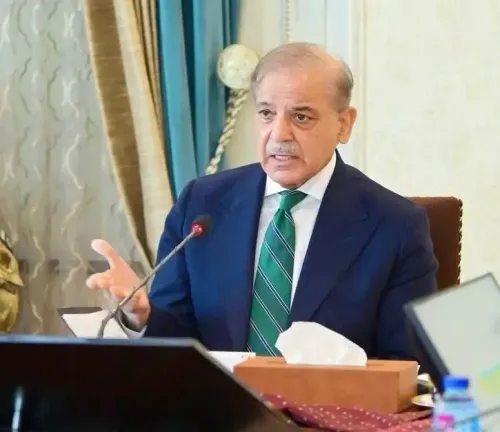
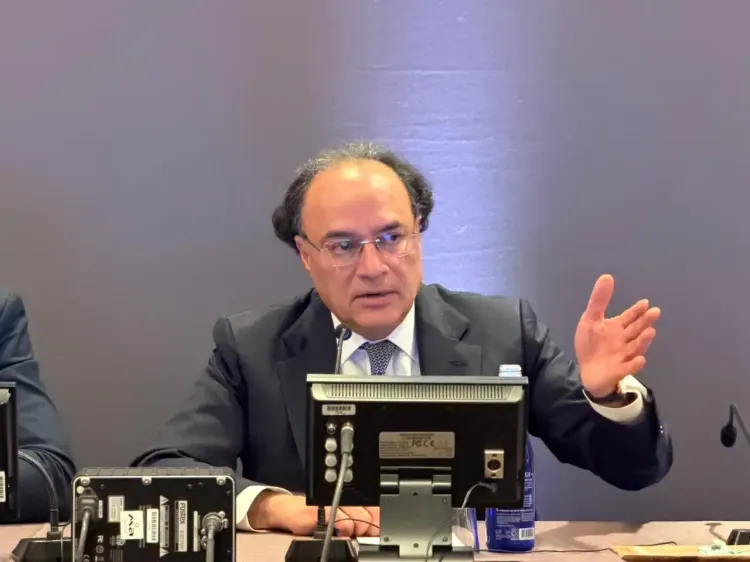
New Delhi, April 17 (NationPress) As discussions on the forthcoming budget intensify, Pakistan's Finance Minister Muhammad Aurangzeb has recently interacted with various trade organizations and the business sector, revealing a series of persistent issues that are obstructing economic progress, as noted in an editorial from the Karachi-based Business Recorder.
Participants in the discussions highlighted the enduring high cost of conducting business, tightening liquidity, chronic infrastructure deficiencies, and most critically, policy uncertainty, which has emerged as the most damaging impediment to the economy, according to the editorial.
While official narratives increasingly emphasize the destabilizing effects of a fluctuating geopolitical landscape on economic management—pressures that are undeniably real—the root issue appears to be domestic, the article asserts.
Long before recent global conflicts disrupted markets, businesses were already navigating through an unpredictable policy environment characterized by sudden tax policy shifts, an over-reliance on taxing presumptive incomes rather than actual incomes, a complex regulatory framework affecting both domestic and international investments, and unclear energy pricing among other inconsistencies. Thus, policymakers cannot merely attribute the resulting economic instability to external shocks, the article argues.
The editorial emphasizes that the heart of the economic malaise is a governance shortfall rooted in short-term thinking, inadequate institutional cooperation, and political expediency consistently undermining sound economic strategies, coupled with a failure to provide the policy clarity and continuity that is vital for restoring economic confidence.
The example of tax policy vividly illustrates this uncertainty. Despite years of expressed intentions to broaden the tax base and enhance revenues, the outcomes remain lackluster, with rules often poorly formulated, inconsistently enforced, or weakened mid-course. Compliance with the tax system has become excessively burdensome: along with sharply rising tax rates, businesses are faced with a convoluted array of procedures, fluctuating regulations, and a structurally complex system.
An overdependence on indirect taxes, a complex withholding regime, and minimum taxation on turnover regardless of profitability have collectively increased the costs associated with operating in the formal sector. Additionally, the tax base remains stubbornly narrow, with the Federal Board of Revenue (FBR) continuing to exert pressure on those already contributing, while under-taxed or untaxed sectors remain largely untouched, the article laments.
These segments are often protected by their political influence and the tendency of successive governments to shield established interests, whether in retail, agriculture, or real estate, prioritizing short-term revenue gains over the more challenging endeavor of structural reform, the editorial concludes.
Point of View
It's evident that Pakistan's economic challenges are largely self-inflicted, emanating from domestic policy uncertainty rather than external pressures. The need for coherent and consistent governance is paramount for fostering an environment conducive to business and economic growth.
NationPress
19 Sept 2026
Frequently Asked Questions
What are the main concerns affecting Pakistan's economy?
The primary concerns include high business costs, tightening liquidity, chronic infrastructure gaps, and significant policy uncertainty.
How has policy uncertainty impacted businesses in Pakistan?
Businesses face unpredictability due to abrupt changes in tax policy, a convoluted regulatory environment, and unclear energy pricing, all of which hinder economic confidence.
What role does taxation play in the current economic situation?
The tax policy is characterized by an overreliance on indirect taxes and a narrow tax base, which burdens compliant businesses while leaving many sectors under-taxed.
What is the root cause of Pakistan's economic challenges?
The core issue lies in governance deficits, short-term political strategies, and a lack of policy clarity that undermines economic stability.
What reforms are necessary to improve the economic situation?
Comprehensive structural reforms focusing on improving governance, tax policy clarity, and ensuring consistent regulatory practices are essential.