Is Pakistan Truly Committed to Human Rights as a UNHRC Member?
Synopsis
This article explores the ongoing human rights violations faced by minorities in Pakistan, questioning the nation’s commitment to human rights despite its election to the UNHRC. Shocking incidents, including the recent murder of a Christian leader, highlight the urgent need for reform.
Key Takeaways
Pakistan's constitution guarantees fundamental rights, yet minorities face serious challenges.
Human rights violations include systematic discrimination and violence against religious minorities.
The UNHRC's election of Pakistan raises questions about the country's commitment to human rights.
Recent violent incidents, such as Pastor Kamran’s murder, highlight the urgent need for reform.
International organizations continue to express concerns about the situation in Pakistan.
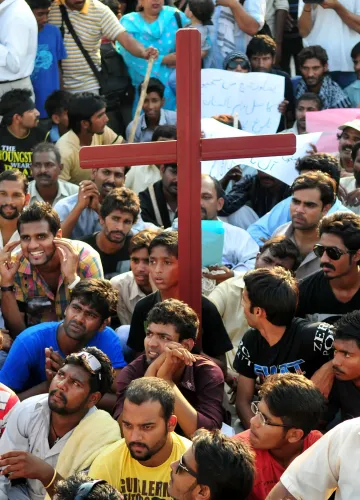
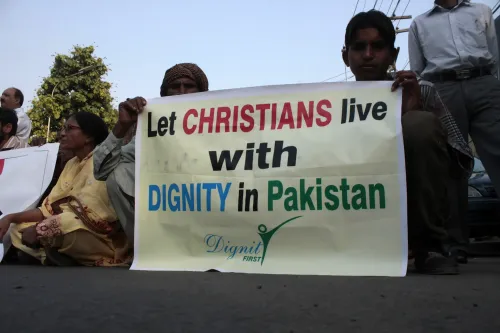
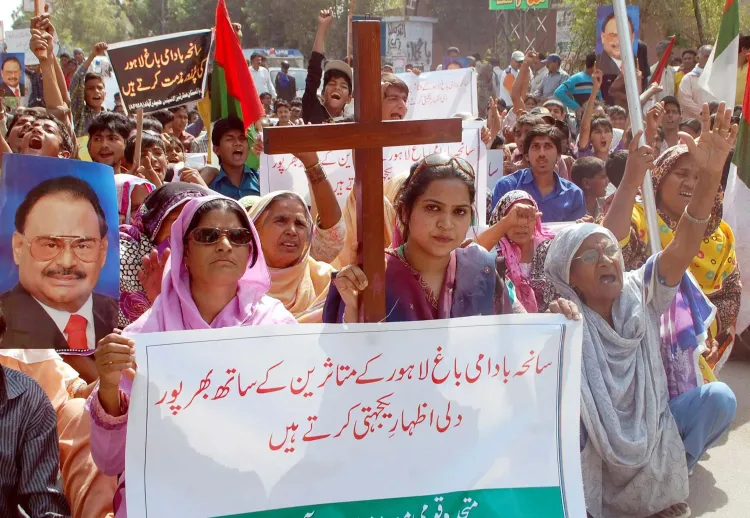
Islamabad, Dec 12 (NationPress) Although Pakistan's constitution includes clauses that ensure fundamental rights for all citizens, the country's minorities are still facing numerous hardships, such as discriminatory laws, economic obstacles, under-representation, sectarian violence, and biased educational materials that incite religious intolerance.
Despite being an active participant in the United Nations framework and recently securing a seat on the UN Human Rights Council (UNHRC) for the 2026-2028 term—marking its sixth tenure since 2006—serious questions linger regarding Pakistan's dedication to safeguarding human rights domestically.
According to Emanuel Adil Ghouri, writing for the Pakistan Christian Post, human rights violations against minorities in Pakistan manifest as systemic discrimination, coercive conversions, misuse of blasphemy laws, torture, extrajudicial killings, and marginalization, especially targeting religious minorities like Hindus, Sikhs, and Christians.
Data from the National Human Rights Commission of Pakistan up to July 2024 indicates that there are currently 767 individuals imprisoned on blasphemy charges, a stark increase from 213 in 2023, 621 in 2020, and 99 in 2019.
The same report reveals that between 1994 and 2024, at least 104 people have been extrajudicially killed due to blasphemy allegations, with 26% of these being Christians, alongside one Hindu and one Buddhist, while the religious identification of two victims remains unknown.
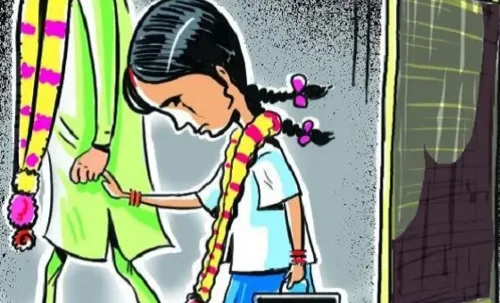
The Centre for Social Justice (CSJ), which studies the forced religious conversion of minority girls in Pakistan, has noted that over 46% of the victims are girls and women from the Hindu community, with 44% being Christians. Notably, more than 46% of the victims were minors, and around 33% were aged between 11 to 15 years.
The report further underscores the persistent issues of religious discrimination, lack of religious freedom, and political and social inequality faced by minorities. International human rights organizations such as the European Union and the United Nations have consistently voiced their concerns regarding these circumstances.
The Pakistan Christian Post report stated, "According to the UN Declaration, various institutions and international human rights organizations report that these safeguards are often inadequately enforced, allowing serious human rights violations to persist. UN experts and the Secretary-General have condemned the attacks on religious and ethnic minorities in Pakistan, calling for immediate action against the perpetrators. UN Special Rapporteurs have urged an end to widespread violence and discrimination."
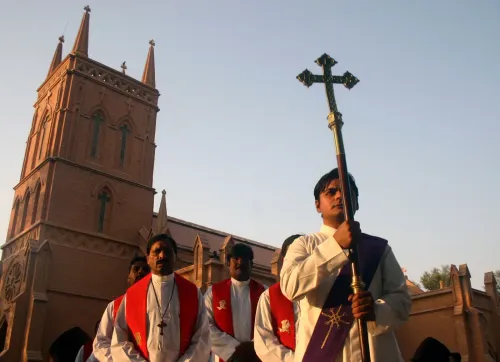
On December 9, a prominent minority rights organization highlighted the assassination of a Christian spiritual leader in Pakistan, who was gunned down outside his home in Punjab province, just two months after narrowly escaping a similar assassination attempt in Islamabad.
The Voice of Pakistan Minority (VOPM) reported that the incident occurred on the morning of December 5 when Pastor Kamran was leaving to take his daughter Numeer to college. As they approached their car, an assailant on a motorcycle ambushed them, opening fire at close range and hitting Kamran multiple times. He was transported to the Civil Hospital in Gujranwala, Punjab, where he ultimately succumbed to his injuries.
The human rights organization stressed that Kamran's death has sent shockwaves through the Christian community in Pakistan, leaving his wife, Salmina, and their three young children to confront this unimaginable tragedy.
According to VOPM, the tragedy is aggravated by the fact that Kamran had previously faced violence for his unwavering commitment to serving others. Just two months ago, he survived an attack by extremists in Islamabad, though he was left injured.
“The brutal murder has heightened fears among Christians in Pakistan, who already live under the constant threat of violence. Pastor Kamran’s death is not an isolated event but part of a troubling trend of attacks against those who stand firm in their faith within an increasingly hostile environment. The grief felt by his family resonates with many who knew him and the communities he served,” the VOPM stated.
Although local authorities have initiated an investigation, the reluctance to take significant action raises concerns over the quest for justice.
“Pastor Kamran’s killing is yet another reminder of the entrenched vulnerability of religious minorities in Pakistan and the impunity that often surrounds these atrocious acts,” it concluded.
Point of View
It is imperative to acknowledge the complexities of Pakistan’s human rights landscape. While the constitution offers protections, the glaring gaps in enforcement raise serious concerns. The nation’s role in international bodies must reflect a genuine commitment to reform and safeguarding the rights of all citizens, particularly vulnerable minorities.
NationPress
18 Sept 2026
Frequently Asked Questions
What are the main human rights issues in Pakistan?
Pakistan faces significant human rights challenges, particularly concerning minorities, including systemic discrimination, forced conversions, misuse of blasphemy laws, and extrajudicial killings.
How does the UN respond to human rights violations in Pakistan?
The UN has consistently condemned violence against religious and ethnic minorities in Pakistan and has called for accountability and protective measures.
What recent incidents highlight the plight of minorities in Pakistan?
The recent murder of Pastor Kamran and ongoing reports of forced conversions and discrimination underscore the precarious situation of religious minorities.
What is the role of the Centre for Social Justice?
The Centre for Social Justice conducts research on forced religious conversions and advocates for the rights of minority communities in Pakistan.
How can international communities assist Pakistani minorities?
International communities can play a crucial role by raising awareness, applying diplomatic pressure for reforms, and providing support to human rights organizations working on the ground.