Pakistan's Contradictory Role in Global Mediation Amid Cross-Border Terrorism
Synopsis
As the anniversary of the Pahalgam terror attack approaches, Pakistan's dual narrative faces scrutiny. An expert reveals how its role as a mediator conflicts with its internal issues regarding cross-border terrorism, highlighting a complex geopolitical landscape.
Key Takeaways
Pakistan's dual narrative complicates its role in global mediation.
Accusations of cross-border terrorism undermine credibility.
The military establishment significantly shapes foreign policy.
Stability in the region is vital for Pakistan's security .
Contradictions in diplomacy reflect internal dynamics .
Tel Aviv, April 18 (NationPress) As the one-year mark of the brutal Pahalgam terror attack nears, Pakistan is reportedly engaged in a well-known dual narrative. According to a recent article,
Sergio Restelli, a geopolitical expert and political advisor writing for the 'Times of Israel', highlights that on one hand, Pakistan positions itself as a responsible mediator in one of the Middle East’s most perilous crises, striving to promote dialogue between Iran and the United States. Conversely, it is entangled in the ongoing issue of cross-border terrorism in Kashmir, where India holds it accountable for the 2025 terror attack in Pahalgam, creating a stark contradiction.
The expert pointed out that Pakistan has historically utilized mediation as a strategy to maintain its diplomatic significance, particularly during periods of diminished regional influence.
“The reasoning is simple. By inserting itself into a crisis outside its immediate geography, Islamabad aims to reshape its global image from one of a security threat to that of a solution provider. However, this strategy consistently clashes with the internal contradictions of the country,” Restelli emphasized.
As the anniversary of the Pahalgam terror attack approaches, he noted that the core issue is credibility rather than attribution.
Restelli further argued that Pakistan, which has been repeatedly accused of enabling or tolerating non-state actors, lacks the moral authority to mediate conflicts elsewhere—this contradiction is too significant to overlook.
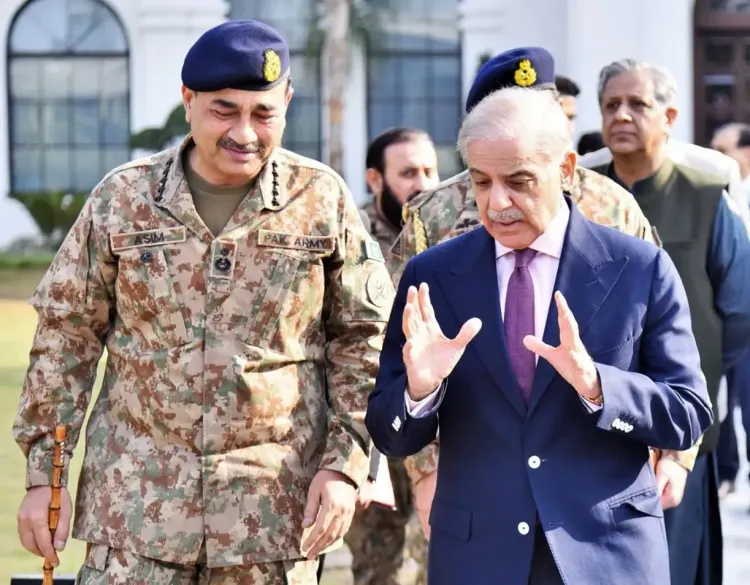
“This is where Pakistan’s internal dynamics become crucial. The nation’s foreign policy is not solely directed by its civilian leadership but is heavily influenced by its military establishment. The same institution that now presents itself as a peacemaker internationally has historically engaged in asymmetric strategies in its neighboring regions. This duality is not coincidental; it reflects a security doctrine that differentiates between operational theatres instead of adhering to a consistent principle,” he stated.
Focusing on the case of Iran, Restelli noted that Pakistan desires stability, as a broader regional conflict could jeopardize its borders, energy security, and already fragile economy. In contrast, instability in Kashmir is often viewed as a bargaining chip, leading to a foreign policy that is more situational than principled, adaptive, and coherent.
Critiquing Islamabad’s contradictory stance, he concluded, “Ultimately, Pakistan is not an unexpected peacemaker; it is a predictable one—a state that mediates when necessary and destabilizes when possible. This is not diplomacy; it is strategy constrained by circumstance.”
Point of View
The article underscores the contradictions in Pakistan's foreign policy, which oscillates between mediation and the reality of cross-border terrorism. It's a nuanced examination of how internal dynamics shape external actions, emphasizing the need for credibility in international relations.
NationPress
17 Sept 2026
Frequently Asked Questions
What is the significance of the Pahalgam terror attack?
The Pahalgam terror attack is a pivotal event in the context of cross-border terrorism, marking a significant point of contention between India and Pakistan, particularly as it relates to Kashmir.
How does Pakistan's military influence its foreign policy?
Pakistan's military plays a crucial role in shaping its foreign policy, often pursuing strategies that differ from civilian leadership, leading to contradictions in its diplomatic stance.
What challenges does Pakistan face in its mediation efforts?
Pakistan faces challenges in its mediation efforts due to accusations of supporting non-state actors, which undermines its credibility as a peace broker.
What does the term 'dual narrative' refer to in this context?
'Dual narrative' refers to Pakistan's conflicting portrayal as a mediator in international conflicts while being involved in cross-border terrorism issues, particularly in Kashmir.
Why is stability in the region important for Pakistan?
Stability is crucial for Pakistan as regional conflicts could threaten its borders, energy security, and economic stability, making it imperative for the nation to seek a peaceful resolution in its foreign policy.