Pakistan's fuel shock: Oil import bill triples to $800 million amid crisis

Synopsis
Pakistan's oil import bill has nearly tripled to $800 million — erasing two years of economic gains in weeks. With the IMF blocking subsidy expansion and Gulf remittances at risk from the West Asian conflict, Islamabad faces a simultaneous balance-of-payments and cost-of-living crisis that economists warn could tip the country toward collapse.
Key Takeaways
Pakistan's oil import bill has nearly tripled to $800 million from $300 million before the West Asian conflict, according to PM Shehbaz Sharif .
The State Bank of Pakistan raised its policy rate by 1 percentage point to 11.5% , citing heightened macroeconomic risks.
Economists warn the fuel shock will reduce purchasing power, raise unemployment, and worsen Pakistan's already severe cost-of-living crisis.
The government faces a choice between passing costs to consumers or widening the deficit through subsidies — both constrained by IMF lending conditions.
Remittances from Pakistani workers in Gulf states are also at risk from the ongoing West Asian conflict, adding a second front of economic pressure.
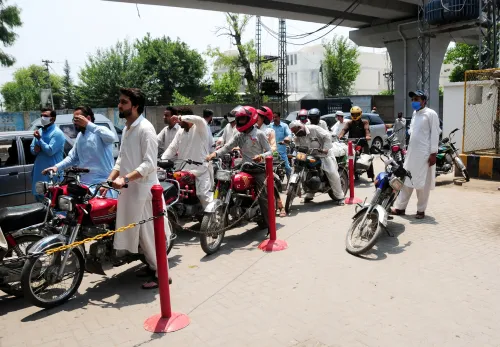
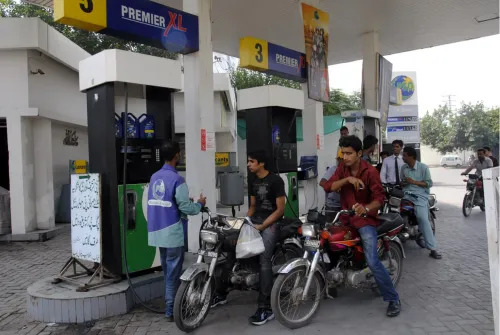
Pakistan is confronting its most serious fuel-price shock in over half a century, with the country's oil import bill nearly tripling to $800 million from $300 million before the ongoing West Asian conflict — a surge that threatens to unravel the fragile economic recovery under Prime Minister Shehbaz Sharif, according to a report by Al Jazeera. The crisis is compounding an already precarious balance-of-payments position, with cascading effects feared across agriculture, transport, food prices, and basic goods.
How the Fuel Shock Unfolded
Pakistan's vulnerability stems from its heavy dependence on imported energy and remittances from Gulf states. Soaring global oil costs have hit the country disproportionately hard, with the West Asian conflict threatening to punch a significant hole in remittances sent home by Pakistani labourers working in Gulf economies. Prime Minister Sharif acknowledged this week that the tripling of the oil import bill has effectively erased two years of economic progress.
The State Bank of Pakistan responded by raising its policy rate by one percentage point to 11.5%, explicitly citing heightened macroeconomic risks. In its statement, the central bank noted that "global energy prices, freight charges and insurance premiums continue to remain significantly above pre-conflict levels," adding that supply chain disruptions have contributed to the prevailing uncertainty.
Knock-On Effects Across the Economy
Analysts cited in the Al Jazeera report warned that the surge in fuel bills will have severe knock-on effects spanning every segment of Pakistan's economy. Economist Kamran Butt, speaking to the Dawn newspaper, said: "Conventional economics tells us that oil price hikes trigger a chain reaction across the economy." Butt warned the crisis will reduce purchasing power, increase poverty and unemployment, slow economic activity, and fuel public discontent against the government.
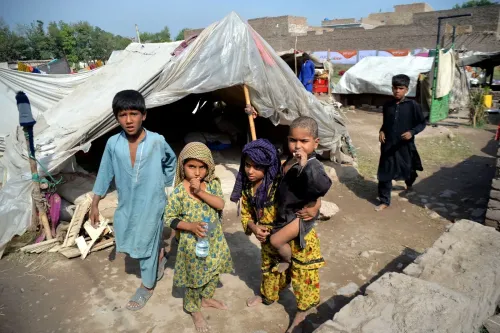
The cost-of-living crisis — already described as severe before the latest fuel shock — is expected to worsen significantly for ordinary Pakistanis, particularly those dependent on subsidised agriculture inputs and public transport.
The Subsidy Dilemma and IMF Constraints
The government now faces a stark policy choice: pass higher fuel costs directly to consumers, or absorb them through subsidies. Neither option is straightforward. Expanding fuel subsidies would widen Pakistan's budget deficit, but the country's borrowing programme with the International Monetary Fund (IMF) explicitly constrains such fiscal expansion as a condition of continued lending.
Economist Kaiser Bengali, a former adviser for planning and development to the Sindh chief minister, captured the severity of Pakistan's fiscal position in stark terms, as quoted in the report: "We are in a state of absolute dependency, where even a $1 billion tranche, which is a microscopic amount in global fiscal terms, can make the difference between survival and collapse."
What Comes Next
With the IMF acting as both lender and constraint, Islamabad has limited room to manoeuvre. Any escalation in the West Asian conflict risks a further spike in global energy prices, which would deepen Pakistan's import burden and potentially destabilise remittance flows simultaneously — a dual shock the country's foreign exchange reserves may struggle to absorb. How Sharif's government navigates the subsidy-versus-austerity dilemma in the coming weeks will be critical to Pakistan's near-term economic stability.
Point of View
Remittance exposure, and IMF conditionality all colliding at once. What is underreported is that the IMF's fiscal constraints, while necessary for long-term discipline, are actively limiting Islamabad's short-term crisis response. The tripling of the oil bill in weeks is not just an energy story; it is a sovereign risk story. With foreign exchange reserves already thin and Gulf remittances now uncertain, Pakistan is navigating a narrowing corridor where every policy option carries serious downside risk.
NationPress
19 Sept 2026
Frequently Asked Questions
Why is Pakistan facing a fuel price crisis in 2025?
Pakistan's fuel crisis stems from soaring global oil prices driven by the West Asian conflict, which has nearly tripled the country's oil import bill to $800 million from $300 million. The crisis is worsened by Pakistan's heavy dependence on imported energy and its fragile balance-of-payments position.
How has the State Bank of Pakistan responded to the economic shock?
The State Bank of Pakistan raised its policy rate by one percentage point to 11.5%, citing heightened macroeconomic risks including elevated global energy prices, higher freight charges, and supply chain disruptions linked to the West Asian conflict.
Why can't Pakistan simply subsidise fuel to protect citizens?
Expanding fuel subsidies would widen Pakistan's budget deficit, which the IMF has explicitly restricted as a condition of its lending programme to the country. This leaves the government with little fiscal room to shield consumers from rising fuel costs.
How does the West Asian conflict affect Pakistani remittances?
A large share of Pakistan's remittances comes from labourers working in Gulf states. The West Asian conflict threatens to disrupt these flows, compounding the pressure from higher oil import costs and further straining Pakistan's foreign exchange position.
What do economists say about the severity of Pakistan's economic crisis?
Economist Kaiser Bengali, a former adviser to the Sindh chief minister, described Pakistan as being in "a state of absolute dependency," saying even a $1 billion IMF tranche "can make the difference between survival and collapse." Economist Kamran Butt warned the oil shock will reduce purchasing power, raise poverty and unemployment, and fuel public discontent.