Pakistan's Role in Iran-US Talks: Peacemaker or Just a Channel?
Synopsis
A recent report questions Pakistan's portrayal as a central peacemaker in the Iran-US talks, revealing deeper issues with credibility in counterterrorism and national stability. Discover the complexities behind the narrative.
Key Takeaways
Pakistan's role in the Iran-US talks is more about facilitating communication than mediating outcomes.
Ongoing militancy issues and domestic instability undermine Pakistan's credibility as a peacemaker.
Geography alone does not grant Pakistan the status of a primary mediator.
Iran's historical tensions with Pakistan affect its trust in Islamabad's assurances.
International powers are seeking any available channels, diminishing Pakistan's perceived importance.
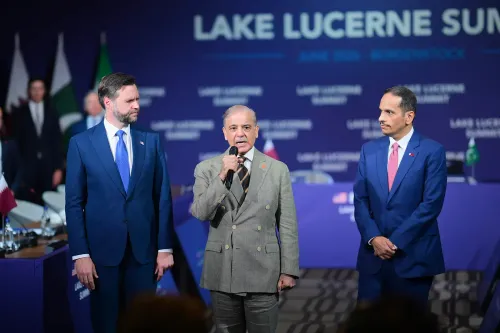
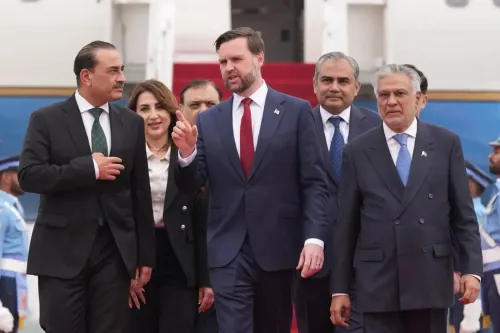
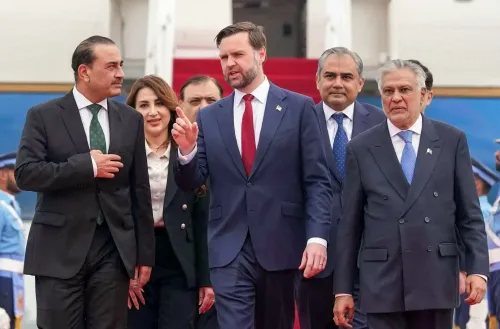
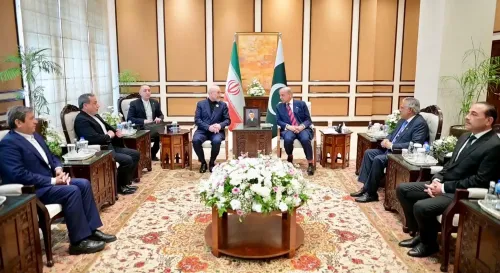
Stockholm, April 16 (NationPress) The assertion that Pakistan acted as a pivotal peace mediator in the recent Iran-US discussions in Islamabad is largely a matter of public relations rather than a reflection of geopolitical truth, as highlighted in a report released on Thursday.
In an article for the Italian Institute for International Political Studies (ISPI), Jagannath Panda, who leads the Stockholm Center for South Asian and Indo-Pacific Affairs (SCSA-IPA), noted that while Pakistan may have facilitated communication during the talks, it did not influence the strategic outcomes.
Panda stated, "Pakistan faces an ongoing dilemma: a nation cannot effectively present itself as a peace facilitator while grappling with unresolved issues surrounding militancy, selective security policies, and persistent internal instability. Until these foundational concerns are addressed, Pakistan's diplomatic achievements will appear more significant in headlines than they are in reality," he remarked.
He pointed out that the current ceasefire involving Iran, Israel, and the United States was fundamentally determined by considerations of hard power, deterrent capabilities, energy vulnerabilities, and the messaging of major powers.
"Pakistan's geographical position may have facilitated connections, but it did not inherently make it the designer of the ceasefire. In truth, larger powers were seeking any available avenues, and Pakistan happened to be one such avenue, not 'the avenue,'" commented Panda, who is also a Professor at the University of Warsaw's Department of Regional and Global Studies.
He emphasized that doubts about Islamabad's role as a peacemaker stem from its long-standing credibility issues regarding peace and counterterrorism.
"For years, Islamabad has been accused of differentiating between 'good' and 'bad' militant groups based on strategic benefit. Militant factions targeting India and operating in Afghanistan have consistently undermined Pakistan's global reputation, and when Pakistan itself has suffered from terrorism, international observers have remained skeptical of its selective enforcement," he explained.
Additionally, he noted that Pakistan's historical ties with Iran have often been inconsistent. Issues such as border conflicts, militant actions in Balochistan, sectarian tensions, and competition for regional influence have intermittently strained these relations. Consequently, Tehran is unlikely to depend solely on Islamabad's assurances when its core security interests are at stake, Panda analyzed.
Thus, he concluded that Pakistan's involvement in the ceasefire episode should be viewed less as the emergence of a reliable mediator and more as a temporary utility of a convenient channel.
"Islamabad found itself 'in the right place at the right time' due to its maintained communication lines with Iran, functional relationships with Gulf nations, and its relevance to both the United States and China. However, being a channel does not equate to being the channel. A true mediator drives outcomes through built trust and recognized neutrality; Pakistan, in contrast, was valuable primarily because greater powers were in search of any feasible path to de-escalation," he articulated in ISPI.
Point of View
It is crucial to approach the discussion around Pakistan's role in international diplomacy with an unbiased lens. The complexities of regional politics necessitate a focus on factual reporting, ensuring that narratives are grounded in reality rather than perception.
NationPress
19 Sept 2026
Frequently Asked Questions
What was Pakistan's role in the Iran-US talks?
Pakistan acted as a facilitator in communication but did not influence the strategic outcomes.
Why is there skepticism about Pakistan's peace broker status?
Concerns stem from its historical credibility issues regarding peace and counterterrorism.
How has Pakistan's geographical position affected its diplomatic role?
While its geography has opened channels for communication, it does not inherently make Pakistan the primary mediator.
What are the implications of Pakistan's internal issues on its international standing?
Ongoing issues with militancy and domestic instability hinder Pakistan's ability to be seen as a reliable peacemaker.
Why might Iran be cautious about relying on Pakistan?
Iran's relationship with Pakistan has fluctuated due to border tensions and sectarian issues, making it hesitant to rely solely on Islamabad.