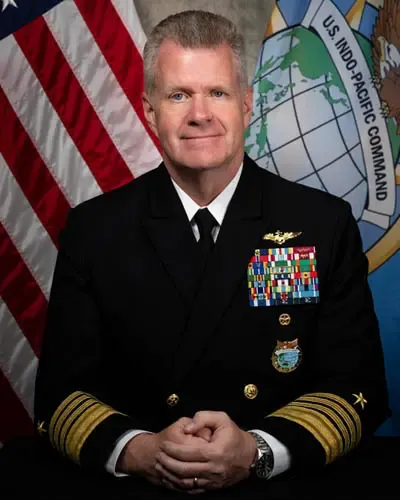
Admiral Paparo: Indo-Pacific Is 21st Century's Key Strategic Theatre
Synopsis
US Indo-Pacific Command chief Admiral Samuel Paparo told Congress the Indo-Pacific is the defining strategic theatre of the 21st century, flagged China's hybrid warfare tactics and its 90% semiconductor supply to Russia's war machine, and called for faster Taiwan arms deliveries — painting a picture of a region on the edge of a new great-power contest.
Key Takeaways
Admiral Samuel Paparo , head of US Indo-Pacific Command , called the Indo-Pacific "the defining strategic theatre in the 21st century" during a Congressional hearing in April 2025 .
India-US military ties are on "an upward trajectory," according to Paparo, who described the bilateral relationship as a priority engagement for Washington.
China supplies 90 per cent of semiconductors powering Russia's war machine , a connection Paparo called "deeply concerning" and a key contingency in US planning.
Admiral Paparo warned of China's hybrid tactics including information operations , coercion, and legal manoeuvres to reshape regional order without direct military conflict.
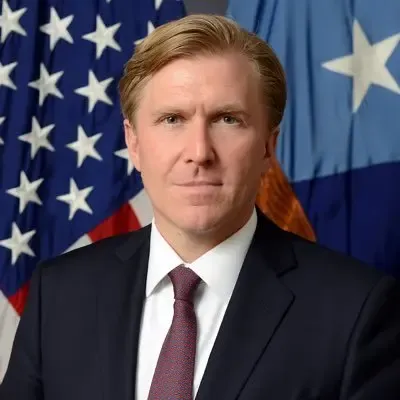
Lawmakers raised concerns about delayed arms deliveries to Taiwan ; Paparo called for shipments to arrive "not just on time, but early." Pentagon official John Noh stated US policy aims to "deter China through strength, not confrontation," defending vital national interests in the Indo-Pacific .
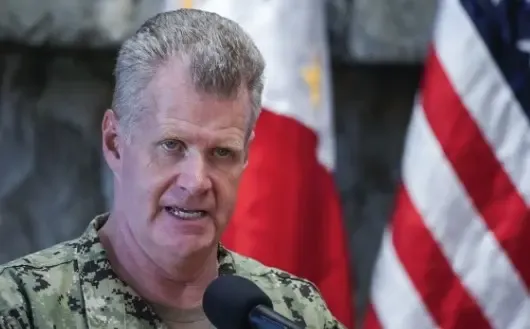
Washington, April 25: Admiral Samuel Paparo, Commander of the US Indo-Pacific Command (USINDOPACOM), told US lawmakers this week that the Indo-Pacific represents "the defining strategic theatre in the 21st century," urging the United States to reinforce deterrence through robust alliances, forward military deployment, and technological superiority to address escalating regional threats.
Deterrence as America's 'Highest Duty'
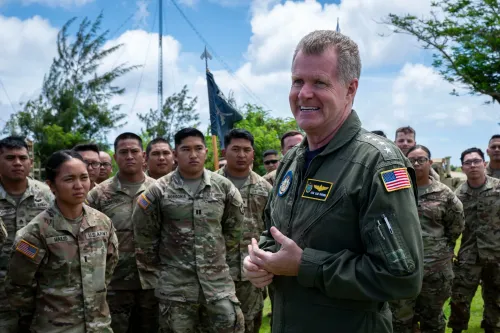
Testifying before Congress, Admiral Paparo outlined a comprehensive deterrence framework, calling sustained operations and allied coordination "our highest duty." He emphasised that deterrence is not a passive posture but an active, daily commitment.
"We deter with dynamic combat power, conducting operations every day across all domains," Paparo stated, highlighting expanded joint military exercises and deeper integration with partner nations across the region. His remarks signal a clear intent to keep the Indo-Pacific at the centre of US national security strategy — even as other global flashpoints compete for Washington's attention and resources.
India-US Military Ties on an Upward Trajectory
Admiral Paparo specifically spotlighted India as a cornerstone of Washington's regional strategy, noting that the bilateral military-to-military relationship with New Delhi "is on an upward trajectory" and remains a priority engagement. This reflects the broader momentum of the US-India defence partnership, which has accelerated through frameworks like iCET (Initiative on Critical and Emerging Technology) and expanded QUAD cooperation.
He reinforced that "our allies and partners increase our combat capability and capacity… and strengthen deterrence," making alliances not just diplomatic assets but operational force multipliers. This comes amid India's growing defence imports from the US and joint exercises such as Yudh Abhyas and Malabar, which have deepened interoperability between the two militaries.
China's Hybrid Tactics and Russia Connection Flagged
Paparo issued a pointed warning about China's non-conventional approach to reshaping regional order, citing "information operations," economic coercion, and legal manoeuvres designed to alter the status quo without triggering direct military conflict. "These are all contingencies that we plan very deeply," he said.
Critically, he raised alarm over Beijing's support for Russia's war effort, stating that China supplies 90 per cent of the semiconductors powering Russia's military machine, along with a majority of critical industrial components. He described this nexus as "deeply concerning," a signal that the Indo-Pacific and European security theatres are increasingly interlinked — a dimension often underreported in mainstream analysis.
The New Face of Warfare: Cheap, Precise, Distributed
Admiral Paparo underscored the rapid transformation of modern warfare, pointing to what he called "the commoditisation of cheap, distributed, precision kill" — a reference to drone warfare and low-cost precision munitions reshaping battlefield dynamics globally, as seen in Ukraine and the Middle East.
He called for a dual-track investment strategy: "While we need exquisite to take down exquisite things, we need cheap to take out less exquisite things," advocating for expanded unmanned systems and scalable weapons platforms. This doctrine directly informs US procurement priorities and has implications for defence industries in partner nations, including India.
Senior Pentagon official John Noh reinforced this stance, stating the United States seeks to "deter China through strength, not confrontation," while preventing any single power from dominating the Indo-Pacific. "This is not for the purpose of dominating or humiliating China. Rather, it is to defend our vital national interests," Noh said.
Lawmakers Warn of Stretched Resources and Taiwan Arms Delays
Representative Adam Smith cautioned that ongoing conflicts are straining US capacity, warning that "the war in the Middle East is causing enormous problems… in the Indo-Pacific as well." He stressed the importance of maintaining credibility with regional partners: "We need to let those folks know that we are there and they can depend on us."
Multiple lawmakers raised concerns about delays in arms deliveries to Taiwan, urging faster defence production timelines. Paparo agreed on the urgency, stating that deliveries should arrive "not just on time, but early" — a rare and direct acknowledgment of the gap between commitment and execution in US arms transfer policy.
Despite resource pressures, Paparo maintained that US forces remain fully postured to deter aggression, with mobility, logistics networks, and sustained forward presence serving as the strategic foundation. As China accelerates its military modernisation and Taiwan Strait tensions remain elevated, the coming months will test whether Washington's deterrence posture translates from rhetoric to readiness.
Point of View
The upward trajectory in military ties is significant, but New Delhi will be watching closely whether US deterrence posture is backed by real capability or just reassuring rhetoric. The revelation that China supplies 90% of semiconductors to Russia's war effort is a geopolitical bombshell that connects the Indo-Pacific and European theatres in ways that demand a unified allied response — something the current fragmented Western approach has yet to deliver.
NationPress
18 Sept 2026
Frequently Asked Questions
What did Admiral Paparo say about the Indo-Pacific in his Congressional testimony?
Admiral Samuel Paparo, head of US Indo-Pacific Command, told US lawmakers that the Indo-Pacific is 'the defining strategic theatre in the 21st century.' He called for sustained deterrence through alliances, forward military presence, and technological superiority to counter growing regional threats.
What did Admiral Paparo say about India-US military relations?
Admiral Paparo stated that the US military-to-military relationship with India 'is on an upward trajectory' and remains a priority engagement for Washington. This reflects deepening defence cooperation through frameworks like QUAD and joint exercises such as Malabar and Yudh Abhyas.
What did Paparo reveal about China's support for Russia?
Admiral Paparo revealed that China supplies 90 per cent of the semiconductors powering Russia's military war machine, along with a majority of critical industrial tools. He described this China-Russia connection as 'deeply concerning' and a key factor in US strategic planning.
What concerns were raised about Taiwan arms deliveries at the Congressional hearing?
Lawmakers raised concerns about delays in arms deliveries to Taiwan and urged faster defence production. Admiral Paparo agreed on the urgency, saying deliveries should be made 'not just on time, but early.'
What is the US strategy to deter China in the Indo-Pacific?
Senior Pentagon official John Noh stated that the US seeks to 'deter China through strength, not confrontation,' ensuring no single power dominates the Indo-Pacific. The strategy combines forward military presence, allied cooperation, and investments in unmanned systems and scalable weapons.