Pentagon Launches Most Comprehensive Afghanistan Withdrawal Review
Synopsis
The Pentagon has launched its most sweeping-ever review of the 2021 Afghanistan withdrawal, targeting decisions behind the Kabul collapse, Abbey Gate bombing, and global fallout. Defense Secretary Pete Hegseth called it 'disastrous' and warned of worldwide ripple effects. Findings expected by summer 2025 could reshape US military doctrine and reignite cross-party political accountability debates.
Key Takeaways
The Pentagon launched its most comprehensive-ever review of the US Afghanistan withdrawal on Friday, April 25, 2025 , covering decisions made before and during the August 2021 exit.
Defense Secretary Pete Hegseth called the withdrawal "disastrous" and stated no full institutional accounting had ever previously been completed.
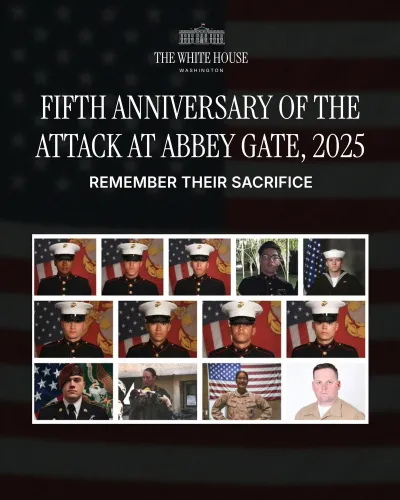
The review will specifically examine the Kabul evacuation , the Abbey Gate bombing (which killed 13 US service members ), and broader strategic decision-making failures.
Hegseth warned of a "cascading effect" on global perceptions of US resolve, linking the withdrawal to emboldened actions by adversaries including Russia and China .
The review will also ensure US Marines involved in the evacuation receive formal recognition for their heroism during the crisis.
Final findings are expected by late summer 2025 and could reshape US military doctrine on long-term engagements and exit strategies.
The Pentagon has initiated what officials are calling the most exhaustive review of the US military withdrawal from Afghanistan ever conducted, targeting the chain of decisions that culminated in the chaotic August 2021 exit from Kabul. The review, announced on Friday, April 25, 2025, is being led by senior Defense Department officials and is expected to deliver findings by late summer 2025.
Hegseth Calls 2021 Withdrawal 'Disastrous'
Secretary of Defense Pete Hegseth confirmed the review during a press briefing, stating that no full accounting of the withdrawal decisions had ever been completed. "There's never actually been a full accounting… of the decisions that were made," Hegseth said, underscoring the scale of the institutional failure the review aims to document.
He described the ongoing effort as "probably the most comprehensive review this department has ever done about a single series of events." Hegseth did not mince words about the nature of the withdrawal itself, calling it a "disastrous" episode that fundamentally altered how adversaries perceived American military resolve.
"The world looked at that disaster and made choices," he said — a pointed reference to the geopolitical ripple effects that analysts have linked to emboldened actions by Russia, China, and other state actors in the months and years following the Taliban's rapid takeover of Afghanistan.
Scope: Abbey Gate, Kabul Evacuation, and Strategic Failures
The review will examine both strategic-level decisions — including the timeline and conditions of the withdrawal — and operational failures on the ground. Among the key focal points is the Abbey Gate bombing on August 26, 2021, in which 13 US service members and at least 170 Afghan civilians were killed in a suicide attack carried out by ISIS-K.
Hegseth specifically acknowledged the role of US Marines during the evacuation, stating that one early priority of the review is ensuring they receive "due recognition for the heroism they showed." This signals that alongside accountability for failures, the review will also formally document acts of valor that may have gone unrecognized.
The Kabul evacuation ultimately airlifted approximately 124,000 civilians in roughly two weeks — a logistical feat, but one overshadowed by the deaths at Abbey Gate and the collapse of the Afghan National Defense and Security Forces (ANDSF), which the US had spent over $83 billion training and equipping over two decades.
Historical Context: A 20-Year War Ends in 11 Days of Collapse
The US military presence in Afghanistan spanned 20 years, beginning after the September 11, 2001 attacks and formally concluding with the last American troop departing Kabul airport on August 30, 2021. What shocked observers globally was not the withdrawal itself — the Doha Agreement signed under the Trump administration in February 2020 had set its framework — but the speed of the Afghan government's collapse.
The Taliban seized Kabul on August 15, 2021, just 11 days after taking their first provincial capital. US intelligence assessments had reportedly estimated the government could hold for months; it fell in days. This intelligence failure has been a central unanswered question that the new Pentagon review is expected to address.
This comes amid a broader pattern of post-withdrawal accountability gaps. Multiple congressional inquiries, including a House Foreign Affairs Committee investigation, produced reports critical of both the Biden administration's execution and the Trump administration's original negotiating framework — yet no unified, defense-department-led accounting had been completed until now.
Geopolitical Consequences and the 'Cascading Effect'
Hegseth framed the withdrawal not merely as a military failure but as a geopolitical inflection point. "The cascading effect… had ripple effects for our military, for our country, and for the world," he said. Critics and analysts have long argued that the optics of the Kabul collapse emboldened Russia's Vladimir Putin, who launched a full-scale invasion of Ukraine in February 2022 — just six months later.
Similarly, China moved swiftly to engage diplomatically with the Taliban, signaling a willingness to fill the vacuum left by American withdrawal. For US allies in the Indo-Pacific — including Taiwan, Japan, and South Korea — the Afghanistan exit raised uncomfortable questions about the reliability of American security commitments.
The Pentagon review, therefore, carries implications far beyond Afghanistan. Its findings could reshape US military doctrine on counterinsurgency, partner-force development, and the conditions under which the US commits to — and exits — long-term military engagements.
What Happens Next
Senior Pentagon officials have been tasked with leading the review, with a mandate to assess accountability at multiple levels of command and identify actionable lessons for future operations. The final report is anticipated by late summer 2025.
The review's release is likely to reignite political debate in Washington, particularly given its potential to assign institutional blame across two administrations. Whether its findings will lead to formal disciplinary actions, policy changes, or remain a historical document will be a key question when results are published.
For the families of the 13 service members killed at Abbey Gate — and for the broader veteran community — the review represents a long-awaited official reckoning with one of the most painful chapters in recent American military history.
Point of View
But the implicit acknowledgment that the chaotic 2021 exit had second and third-order consequences: a emboldened Putin, a more assertive China, and allies across the Indo-Pacific quietly recalibrating their trust in Washington. The deeper irony is that this review is being launched under an administration that inherited the Doha Agreement framework from its predecessor — meaning accountability, if honestly pursued, must be bipartisan. Whether the findings produce real institutional reform or become a political instrument will define whether America has truly learned anything from its longest war.
NationPress
19 Sept 2026
Frequently Asked Questions
What is the Pentagon's Afghanistan withdrawal review?
The Pentagon's Afghanistan withdrawal review is a comprehensive investigation launched in April 2025 to examine all strategic and operational decisions surrounding the US military's chaotic exit from Afghanistan in August 2021. It covers the Kabul evacuation, the Abbey Gate bombing, and broader accountability failures. Findings are expected by late summer 2025.
Who is leading the Afghanistan withdrawal review?
Defense Secretary Pete Hegseth announced the review and has tasked senior Pentagon officials with leading it. Hegseth described it as 'probably the most comprehensive review this department has ever done about a single series of events.'
What happened at Abbey Gate during the Afghanistan withdrawal?
Abbey Gate was the site of a suicide bombing on August 26, 2021, carried out by ISIS-K, which killed 13 US service members and approximately 170 Afghan civilians during the Kabul evacuation. It remains one of the deadliest single incidents for US forces in the final phase of the Afghanistan war.
Why does the Afghanistan withdrawal matter globally?
The rapid collapse of the Afghan government and the chaotic US exit are widely seen as having emboldened adversaries, with analysts linking it to Russia's invasion of Ukraine in February 2022 and China's accelerated diplomatic engagement with the Taliban. It raised serious questions about US credibility among allies in the Indo-Pacific and beyond.
When will the Pentagon Afghanistan review findings be released?
The Pentagon's Afghanistan withdrawal review findings are expected to be released by late summer 2025. The review aims to assess accountability at multiple command levels and identify lessons to inform future US military operations.