Poland Champions India-EU Partnership: Polish Envoy on FTA & Defence
Synopsis
Polish Ambassador Piotr Antoni Switalski reveals Poland's ambition to transform India ties — from a modest $6 billion trade relationship to a full-spectrum strategic partnership spanning defence manufacturing, EU trade, and diplomatic coordination on Ukraine and West Asia. New contracts and high-level visits are on the horizon.
Key Takeaways
Polish Ambassador Piotr Antoni Switalski called Poland a "staunch advocate" of the India-EU strategic partnership , citing the recently concluded India-EU Free Trade Agreement as a landmark development.
Poland spends nearly 5% of its GDP on defence — among NATO's highest — and is seeking joint defence manufacturing investments with India, going beyond simple arms sales.
The current India-Poland bilateral trade stands at $6 billion annually , which the ambassador described as far below the potential of two economies of this scale.
Poland has received over 2 million Ukrainian refugees , with more than 1 million still in the country, and has experienced direct terrorist acts linked to the Russia-Ukraine war on its own soil.
Ambassador Switalski praised PM Modi's diplomatic outreach on West Asia, saying India's efforts are contributing to the peaceful resolution of the conflict.
A visit by the Polish Prime Minister to India is being anticipated in the near future to further consolidate the bilateral strategic momentum.
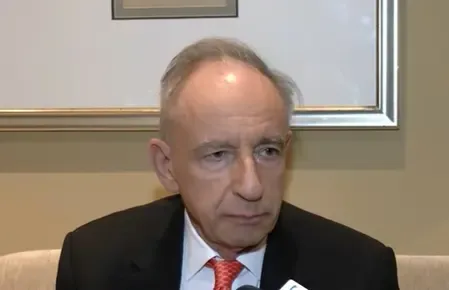
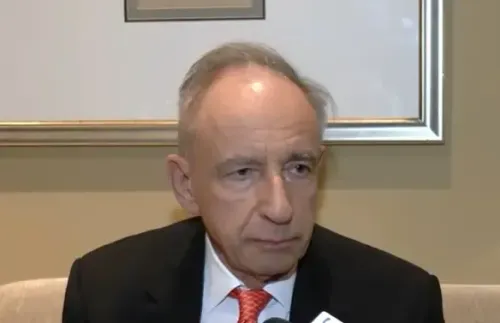
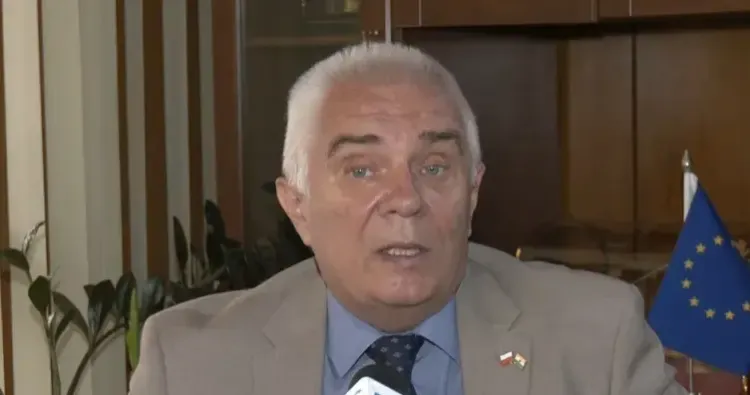
New Delhi, April 25: Poland has positioned itself as one of the strongest advocates for deepening the India-European Union partnership, with Polish Ambassador to India, Piotr Antoni Switalski, affirming that the recently concluded India-EU Free Trade Agreement (FTA) marks a historic turning point in bilateral and multilateral relations. Speaking exclusively to NationPress, the envoy outlined Poland's ambitions in defence cooperation, trade expansion, and diplomatic alignment with India on global conflicts.
A Strategic Partnership Gaining New Momentum
Ambassador Switalski described the current phase of India-Poland relations as transformative, pointing to Prime Minister Narendra Modi's landmark visit to Poland in 2024 as the catalyst for a renewed strategic partnership. "Poland and India are now pursuing a strategic partnership. The visit of Prime Minister Modi to Poland in 2024 opened a new page," he said.
The envoy underscored that Poland views its bilateral relationship with India not merely as a standalone engagement, but as a critical pillar within the broader India-EU strategic framework. He described the recently concluded India-EU Free Trade Agreement as a "reinforcing signal" that should be treated as "the floor, not the ceiling" of economic ambition.
This comes at a significant moment — the India-EU FTA, long delayed over disagreements on tariffs and market access, represents one of the most consequential trade deals either side has pursued in the past decade. Poland, as the 20th largest economy in the world and a $1 trillion economy, sees itself as a gateway for Indian businesses entering the European single market.
Defence Cooperation: Beyond Drones, Towards Deep Industrial Ties
India's order of Polish-made attack drones has drawn considerable attention, but Ambassador Switalski signalled that this is only the beginning of a far more expansive defence relationship. Poland is currently spending nearly 5 per cent of its GDP on defence — one of the highest ratios among NATO members — driven by security anxieties stemming from the ongoing Russia-Ukraine war.
"Polish companies are interested not only in selling their products to India but also in investing in India, building manufacturing facilities, and exporting products to third markets," Switalski noted, signalling a shift from a buyer-seller dynamic to a genuine industrial partnership. He added that major Indian defence companies have also expressed interest in investing in Poland — a two-way flow that could reshape the bilateral economic architecture.
Notably, this aligns with India's Atmanirbhar Bharat defence manufacturing push, which has attracted several European defence majors. Poland's willingness to co-produce and co-invest — rather than simply export — positions it as a strategically valuable partner for India's defence indigenisation goals. The ambassador hinted that new contracts and production facility inaugurations are imminent.
Trade Gap: $6 Billion Is Far Below Potential
Despite the optimism, Switalski was candid about the underperformance of the economic relationship. He described the current $6-billion annual bilateral trade volume as "far from our capacity and our expectations," acknowledging that both countries had been relatively disengaged from each other for several years.
He called on both sides to "rediscover" each other — urging India to view Poland through a fresh lens as a major European economy and a key EU member, while Polish businesses must engage more aggressively with the new India. The envoy also stressed that the India-EU FTA must be complemented by robust investment protection measures to unlock the full potential of the economic relationship.
The FTA is expected to come into force by the end of 2025, according to plans in Brussels, though Switalski expressed hope it could be operationalised even sooner. For context, India's trade with the EU as a whole stands at over $130 billion annually, making the bloc India's largest trading partner — a fact that amplifies Poland's strategic relevance as an EU insider advocating for deeper India ties.
India's Peacemaking Role: Poland Appreciates Modi's Diplomacy
On the West Asia conflict, Ambassador Switalski praised Prime Minister Modi's active diplomatic outreach to all stakeholders, including Gulf nations, the United States, and Israel. He acknowledged that India's engagement is driven by tangible national interests — millions of Indian workers in the Gulf and vessels locked in the Persian Gulf — but argued that Modi's efforts serve a broader global purpose.
"India's efforts are contributing to the peaceful resolution of this conflict," he said, adding that Poland looks forward to the stabilisation of the region and restoration of uninterrupted maritime navigation — a concern shared by both nations given the Red Sea shipping disruptions that have impacted global supply chains and driven up energy and commodity prices.
On Iran's nuclear programme, Switalski was unequivocal: Poland does not want a nuclear-armed Iran and supports diplomatic efforts to prevent it. He clarified that the primary driver of tensions in the region is not oil or regime change, but Iran's nuclear ambitions — a position that aligns closely with the US, EU, and Israel's stated red lines.
Ukraine War: Poland's Security Directly at Stake
Ambassador Switalski offered one of the most direct articulations of Poland's existential stakes in the Russia-Ukraine war. Poland has absorbed over 2 million Ukrainian refugees, with more than 1 million still residing in the country — predominantly women and children — placing significant strain on public services, healthcare, and schools.
He revealed that Polish civilians have been killed by Russian missiles, and that acts of terrorism — including bombs on railways, arson at storage facilities, and explosives in cargo parcels — have been carried out on Polish soil. "We are too close to the battlefield to be neutral," he stated bluntly.
Poland supports Ukraine's path to EU membership and welcomed the unblocking of the EU's large loan package to Ukraine following political changes in Hungary, which had previously vetoed both the loan and Ukraine's accession negotiations. With a new government in Budapest, Poland expects these processes to accelerate. The envoy echoed India's position that a swift, just, and lasting peace — one that does not reward the aggressor — is the shared goal.
As the India-EU FTA moves toward ratification and defence contracts near finalisation, the coming months will be critical in determining whether the India-Poland relationship can scale from strategic rhetoric to tangible economic and security outcomes. A potential visit by the Polish Prime Minister to India in the near future could provide the political momentum both sides are seeking.
Point of View
With its booming defence manufacturing ecosystem and vast consumer base, fits perfectly into Poland's playbook. What is striking is the candour about the $6 billion trade figure being an embarrassment — this is a rare admission from a diplomat that the relationship has punched well below its weight for years. The deeper question is whether India's foreign policy establishment will treat Poland as a serious EU power broker — one that could amplify India's interests in Brussels — or continue to view it as a peripheral partner. The India-EU FTA changes that calculus fundamentally, and Poland's role as an internal EU advocate for India deserves far more strategic attention from New Delhi than it has historically received.
NationPress
16 Sept 2026
Frequently Asked Questions
What is the current status of India-Poland relations?
India and Poland are currently pursuing a formal strategic partnership, elevated significantly after Prime Minister Modi's visit to Poland in 2024. The recently concluded India-EU Free Trade Agreement has further reinforced bilateral ties across trade, defence, and diplomacy.
What is Poland's role in the India-EU Free Trade Agreement?
Poland has been a consistent and vocal advocate for the India-EU FTA within the European Union. Polish Ambassador Switalski described the deal as the 'floor, not the ceiling' and expects it to come into force by end of 2025, boosting bilateral trade well beyond the current $6 billion annually.
What defence cooperation exists between India and Poland?
India has ordered Polish-made attack drones, and broader defence cooperation is expanding. Polish companies are looking to invest in India's defence manufacturing sector, while major Indian defence firms have expressed interest in investing in Poland — signalling a shift from a transactional to an industrial partnership.
What is Poland's position on PM Modi's diplomacy in West Asia and Ukraine?
Poland appreciates Prime Minister Modi's active engagement with all stakeholders in the West Asia conflict and supports India's peacemaking role. On Ukraine, Poland shares India's goal of a swift and just peace, though Warsaw is more directly affected, having absorbed over 2 million Ukrainian refugees.
Is a Polish Prime Minister visit to India planned?
Polish Ambassador Switalski expressed strong hope for a visit by the Polish Prime Minister to India in the near future, describing it as an important signal to deepen the strategic partnership. No official date has been confirmed yet, but both sides are working toward it.