Protests Erupt in Kathmandu Following Arrest of Former PM Oli
Synopsis
The arrest of K P Sharma Oli, former Prime Minister of Nepal, has triggered widespread protests in Kathmandu, raising concerns about political stability and the rule of law. As tensions escalate, the UML party condemns the actions as politically motivated.
Key Takeaways
K P Sharma Oli's arrest has led to significant protests in Kathmandu.
The UML party claims the arrests are politically motivated and unlawful.
Former President Bhandari warns of potential instability due to these actions.
Protests are organized in response to the government's decisions regarding the Gen-Z movement.
A call for an impartial investigation into the incidents has been made by the UML.
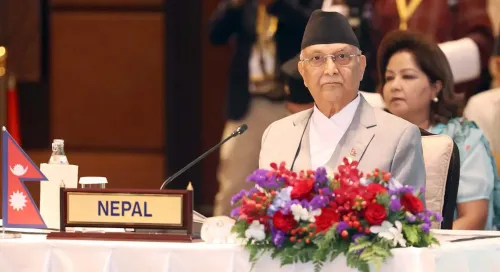
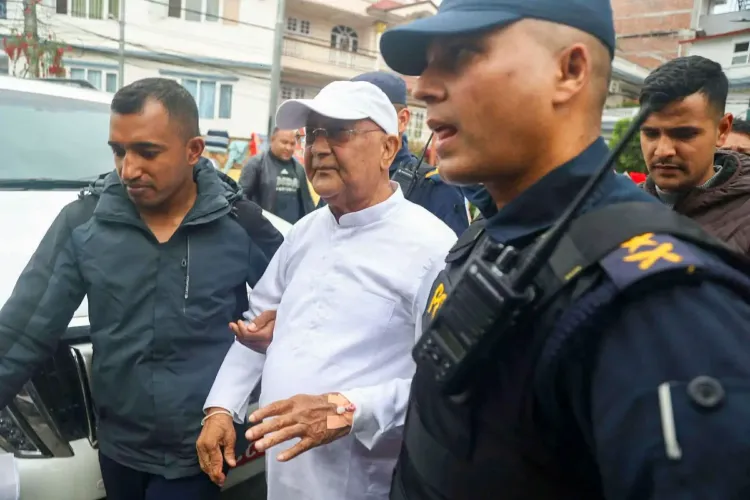
Kathmandu, March 28 (NationPress) The detention of former Prime Minister K P Sharma Oli of Nepal on Saturday morning ignited widespread protests throughout the Kathmandu Valley, led by members of the Communist Party of Nepal (Unified Marxist-Leninist) (CPN-UML).
Oli and former Home Minister Ramesh Lekhak were taken into custody early in the day due to their involvement in homicide-related cases connected to the crackdown on the Gen-Z uprising in early September of the previous year. Both leaders were apprehended at their residences in Bhaktapur district. Following his arrest, Oli was transferred to a teaching hospital in Kathmandu due to health complications.
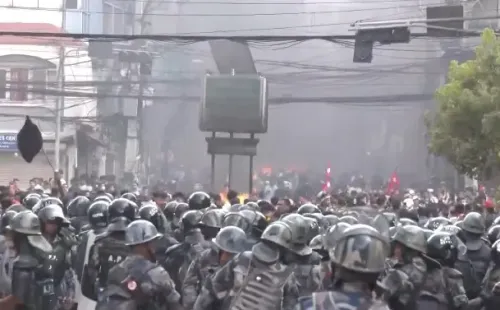
In response to the arrests, UML supporters organized protests across the Kathmandu Valley, following a directive from the party's Central Committee. Protesters set fire to tires and copies of the inquiry commission's report regarding the Gen-Z movement, which had called for the prosecution of Oli, Lekhak, and former police chief Chandra Kuber Khapung.
On Friday, the initial Cabinet meeting of Prime Minister Balendra Shah had resolved to act on the recommendations of the report. Clashes erupted between law enforcement and demonstrators, resulting in injuries among some protesters.
The UML announced that its district committees would hold demonstrations and submit memorandums to Chief District Officer (CDO) offices in all districts on Sunday.
The party expressed its commitment to dialogue and collaboration with all political entities, civil society, and citizens who advocate for democracy and the rule of law. The UML denounced the arrests of Oli and Lekhak, claiming they were retaliatory, biased, and unlawful.
In a statement following the meeting, the party called for the establishment of a high-level investigation commission led by a sitting Supreme Court judge to guarantee an unbiased and judicial investigation into the matter.
Amidst these events, former President of Nepal, Bidya Devi Bhandari, characterized the government’s decision to arrest the two leaders as premature. In her statement on Saturday, she expressed concerns that these arrests could lead to long-term repercussions and an increased risk of instability.
Bhandari stated, “Given that studies have indicated the Karki Commission’s report itself is incomplete, the decision taken on the very first day of the new government to implement that report and arrest then-Prime Minister and CPN-UML Chairman K P Sharma Oli, along with former Home Minister Ramesh Lekhak, is a delicate issue with far-reaching consequences. Such an immature decision does not seem consistent with the current Constitution, existing laws, and established democratic practices.”
The statement emphasized that the implementation of any inquiry commission's report necessitates due legal procedures, thorough study, and institutional consultation. “Hasty decisions can undermine public confidence in the rule of law and may heighten the risk of renewed conflict and instability in the nation,” the statement concluded.
Point of View
The events surrounding the arrest of K P Sharma Oli reflect a critical moment in Nepal's political history. The response from the UML party and the potential for escalated protests emphasize the delicate balance between governance and public sentiment. As the situation develops, maintaining an objective lens is vital for understanding the broader implications for democracy and the rule of law in Nepal.
NationPress
28 Sept 2026
Frequently Asked Questions
Why was K P Sharma Oli arrested?
K P Sharma Oli was arrested in connection with homicide-related cases linked to the suppression of the Gen-Z uprising in September last year.
What have the protests in Kathmandu involved?
Supporters of the UML party organized protests, burning tires and copies of the inquiry commission's report that recommended legal action against Oli and others.
What is the UML's stance on Oli's arrest?
The UML condemned the arrest as retaliatory and unlawful, calling for a high-level investigation commission to ensure impartiality.
What did former President Bhandari say about the arrests?
Former President Bidya Devi Bhandari described the government's decision to arrest Oli and Lekhak as immature and expressed concerns over potential instability.
How has the government responded to the protests?
The current government, led by Prime Minister Balendra Shah, has implemented the inquiry commission's recommendations, which has led to escalating tensions.