Putin: Russia Open to Arctic Cooperation, Not Just Rivalry
Synopsis
President Putin declared Russia open to Arctic cooperation with all nations while pledging to defend its sovereign interests — a strategic signal aimed at non-Western partners as the Transarctic shipping corridor gains global importance amid Red Sea disruptions and NATO's northern expansion.
Key Takeaways
President Vladimir Putin declared on April 23, 2025 that Russia is ready to cooperate with all interested nations in the Arctic , while firmly pledging to defend its national interests there.
The Transarctic Transport Corridor — spanning St.
Petersburg to Vladivostok via Murmansk — is being positioned by Moscow as a premier global shipping alternative amid Middle East trade disruptions.
The Arctic holds an estimated 13% of global undiscovered oil and 30% of undiscovered natural gas reserves, intensifying international competition for the region.
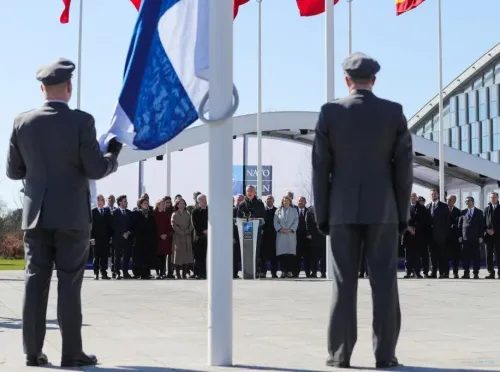
Finland and Sweden joined NATO in 2023 and 2024 respectively, increasing alliance pressure on Russia's northern flank and adding urgency to Moscow's Arctic diplomacy.
Putin linked recent internet outages in major Russian cities to active counter-terrorism operations , defending communication blackouts as a security necessity.
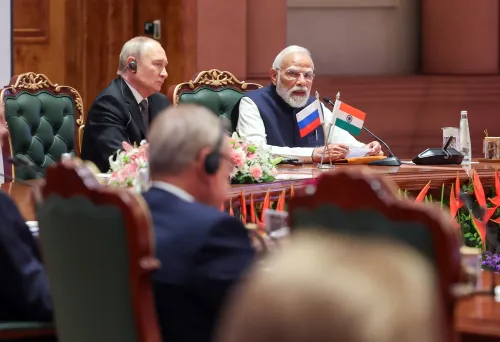
India and China are among the non-Western nations Russia is courting for Arctic trade and investment partnerships, given ongoing Western sanctions .
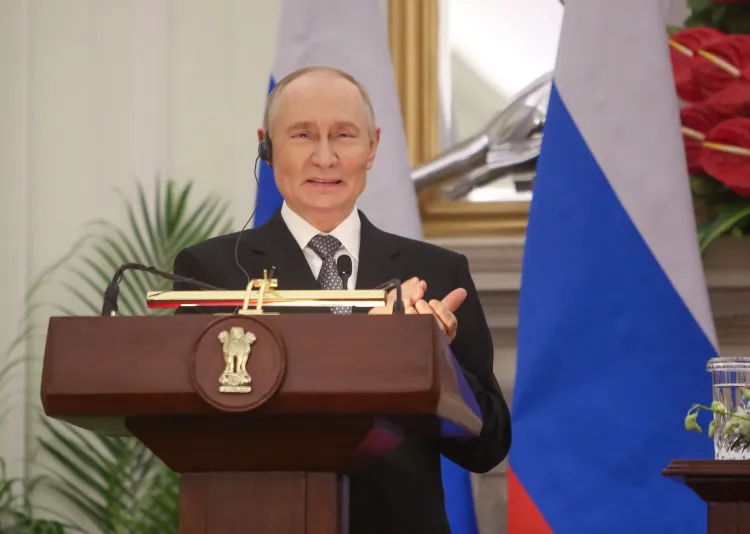
Moscow, April 23 — Russian President Vladimir Putin on Thursday declared that Russia is fully prepared to cooperate with all interested nations in the Arctic region, even as he firmly pledged to protect the country's sovereign interests there. Speaking at a high-level government meeting, Putin framed the Arctic not as a battleground for geopolitical rivalry, but as a zone of strategic global importance that demands multilateral engagement.
Putin's Arctic Cooperation Statement
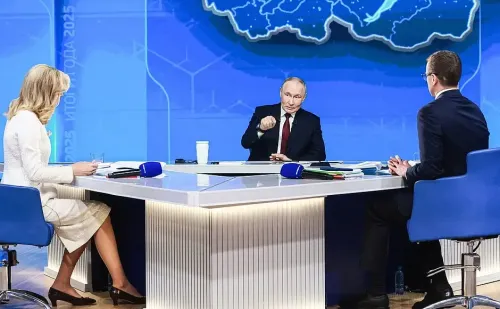
Chairing a government session focused on Arctic zone development, internet outages, and select public services, President Putin stated clearly: "We are ready for cooperation, not just competition or confrontation, but cooperation with all interested countries. We will certainly protect and, of course, defend our national interests in the Arctic."
The remarks signal a nuanced diplomatic posture — one that keeps the door open for international engagement while making no concessions on Russia's territorial and strategic claims in the region. This dual stance is particularly significant given the current state of Russia-West relations following the Ukraine conflict.
The Transarctic Transport Corridor: A Rising Global Trade Route
Putin highlighted the growing strategic value of the Transarctic Transport Corridor, which stretches from St. Petersburg through Murmansk to Vladivostok. He described it as one of the world's safest, most reliable, and most efficient shipping lanes — a claim that carries significant weight amid ongoing disruptions to global trade.
"The importance of the Northern Transarctic Route as the safest, most reliable and efficient route is becoming increasingly evident, against the backdrop of disruptions to global transport chains due to numerous conflicts, including in the Middle East," Putin said, as reported by state-owned news agency TASS.
This comes as Red Sea shipping disruptions — triggered by Houthi attacks on commercial vessels since late 2023 — have forced dozens of global shipping companies to reroute cargo around the Cape of Good Hope, dramatically increasing transit times and costs. Russia's Arctic route, by contrast, offers a shorter path between Asia and Europe, and Moscow is clearly positioning itself to capitalize on this global logistics crisis.
Arctic's Role in Global Ecology and Energy
Putin also underscored the broader planetary significance of the Arctic, emphasizing its role in global ecology, the international fuel and energy complex, and the stability of raw materials supply chains. "I would like to emphasise the growing role of the Arctic in the global context, namely for the planet's ecology, for the global fuel, energy and raw materials complexes, and for increasing the sustainability of international trade and logistics links," he said.
The Arctic is estimated to hold approximately 13% of the world's undiscovered oil reserves and 30% of undiscovered natural gas reserves, according to the U.S. Geological Survey. As climate change accelerates ice melt, these resources — and the shipping lanes above them — are becoming increasingly accessible, intensifying competition among Russia, the United States, Canada, Norway, and Denmark.
Internet Outages Linked to Counter-Terrorism Operations
Separately, Putin addressed reported internet outages in major Russian cities, linking them directly to counter-terrorism operational activities. He stated that when security agencies are actively working to prevent terrorist attacks, public advance notification could compromise those operations by alerting criminals to adjust their behaviour.
"Of course, if this is related to operational work to prevent terrorist attacks... the priority will always be ensuring the safety of people, our children, our loved ones, every citizen of Russia," Putin said. He did, however, acknowledge that relevant agencies should inform citizens of the reasons behind forced communication restrictions after the fact.
The acknowledgment comes amid growing public frustration in Russia over unexplained digital blackouts, which critics have previously attributed to state censorship and information control rather than security imperatives.
Strategic Implications for Global Trade and Geopolitics
Russia's Arctic outreach, framed as cooperative rather than confrontational, is a calculated diplomatic move. With NATO expanding its northern presence — Finland and Sweden joined the alliance in 2023 and 2024 respectively — Moscow faces increasing strategic pressure in its own backyard. By positioning the Northern Sea Route as a global public good and inviting cooperation, Russia seeks to attract investment and trade partnerships, particularly from China, India, and other Global South nations not aligned with Western sanctions.
For India, which has been deepening energy and trade ties with Russia since 2022, the Arctic corridor could offer a strategic alternative shipping route for commodities — a development worth watching closely as New Delhi navigates its multi-alignment foreign policy.
As Arctic ice continues to recede and global shipping pressures mount, Putin's statements are likely to be followed by concrete diplomatic outreach to non-Western partners. The next major indicator will be Russia's engagement at upcoming international Arctic forums and bilateral trade negotiations in the months ahead.
Point of View
' Moscow targets trade-hungry nations like India and China who need alternative shipping routes as the Red Sea burns. The timing is no coincidence: with Finland and Sweden now in NATO and Western sanctions biting deep, Russia needs economic allies in the Arctic more than ever. What the mainstream narrative misses is that India stands at a genuine crossroads — the Transarctic route could slash shipping costs for Indian trade, but embracing it deepens entanglement with a sanctioned Moscow. New Delhi's silence on this will itself be a statement.
NationPress
19 Sept 2026
Frequently Asked Questions
What did Putin say about Russia's Arctic cooperation policy?
President Putin stated on April 23, 2025, that Russia is ready for cooperation — not competition or confrontation — with all interested countries in the Arctic. He simultaneously pledged to protect and defend Russia's national interests in the region.
What is the Transarctic Transport Corridor?
The Transarctic Transport Corridor is a major shipping route stretching from St. Petersburg through Murmansk to Vladivostok along Russia's Arctic coast. Putin described it as one of the world's safest, most reliable, and most efficient shipping lanes, gaining importance as Middle East conflicts disrupt global trade routes.
Why is the Arctic strategically important right now?
The Arctic holds an estimated 13% of the world's undiscovered oil and 30% of undiscovered natural gas reserves, according to the U.S. Geological Survey. Additionally, melting ice is opening new shipping routes that offer shorter transit times between Asia and Europe, making the region a focal point of global geopolitical competition.
Why did Russia experience internet outages in major cities?
President Putin linked the internet outages in major Russian cities to counter-terrorism operational activities, saying advance public disclosure could compromise security operations. He acknowledged, however, that citizens should be informed of the reasons for communication restrictions after the fact.
How does Russia's Arctic strategy affect India?
India, which has expanded energy and trade ties with Russia since 2022, could benefit from the Transarctic shipping route as a cost-effective alternative to disrupted Red Sea lanes. However, deeper engagement with Russia's Arctic infrastructure also complicates India's navigation of Western sanctions and its multi-alignment foreign policy.