Is the Quad and 2+2 Dialogue Losing Traction Amid India-US Tensions?
Synopsis
Amid escalating tensions between India and the US, key security frameworks like the Quad and the 2+2 dialogue are reportedly losing momentum. Influential lawmakers express concern over the implications of these developments. Explore the dynamics of these relationships and their strategic importance in the Indo-Pacific region.
Key Takeaways
Quad and 2+2 dialogues are vital for India-US relations.
Strained relations are a cause for concern.
Trust-building mechanisms require consistent political focus.
Bipartisan support in Congress is crucial for long-term engagement.
Regional stability hinges on these cooperative frameworks.
Washington, Jan 28 (NationPress) The progress in vital India-US security arrangements, notably the Quad and the two-plus-two dialogue, is experiencing a slowdown due to increasing bilateral tensions, according to a prominent American legislator.
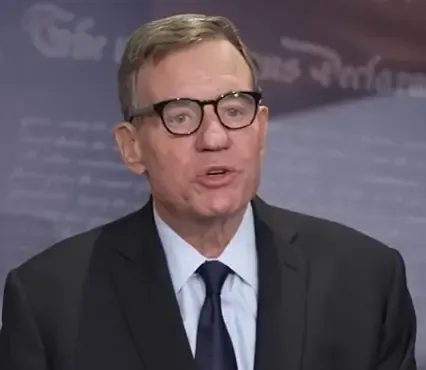
Mark Warner, the head of the influential Senate Intelligence Committee, pointed out that traditional diplomatic and security initiatives require continuous political engagement, which has diminished under the current Trump Administration.
“These traditional efforts involving the two-plus-two and the Quad serve as mechanisms for building trust,” Warner mentioned in an exclusive interview with IANS, referring to high-level discussions between India and the United States and the four-nation Quad alliance.
He emphasized that these processes are challenging but essential. “They demand considerable time and energy,” Warner said, noting that even modest achievements are significant. “Even small agreements carry importance,” he stated.
Warner raised alarms about these mechanisms being overlooked. “The lack of focus on them presents a long-term concern,” he remarked.
He attributed the slowdown to wider issues in India-US relations, including trade conflicts and escalating distrust. Warner cautioned that weakening trust-building platforms could have repercussions that extend beyond their bilateral relationship.
Nevertheless, he affirmed that collaboration among Quad nations remains crucial. “I believe the military ties between the Quad partners—India, Japan, Australia, and the United States—are strengthening,” Warner noted. “That’s vital,” he added.
Warner expressed concern that inconsistent engagement from Washington could impact how allies perceive US reliability. “I become anxious when American allies contemplate that China might be a more reliable partner than the United States,” he stated.
He underscored that such perceptions are alarming. “That deeply troubles me,” Warner remarked, warning that allies might start reevaluating their strategic affiliations.
This concern extends to India as well. “If segments of the Indian government express doubt about depending on America, that poses a significant worry for me,” Warner said.
Warner directly connected the issue to trust. He indicated that strained relations are not confined to India alone. “When the United States disrespects its allies and partners, it creates a trust gap,” he stated.
He argued that Congress has a role in maintaining long-term engagement when executive-level ties face pressure. Warner noted that the Senate India Caucus continues to function on a bipartisan basis to ensure channels remain open.
“We take pride in the fact that the Senate India Caucus is the largest bilateral caucus in Congress,” he said, adding that collective legislative action can help solidify long-term strategic priorities.
Warner emphasized that keeping regular communication through established frameworks is essential for regional stability, even during politically tumultuous times.
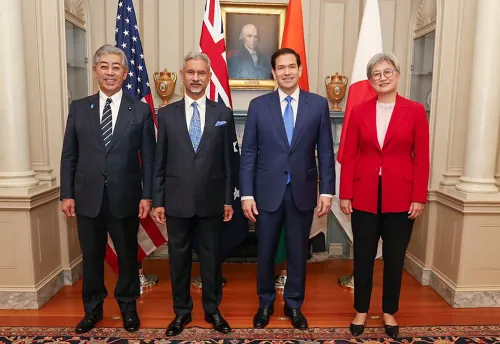
The Quad has become a pivotal platform for coordinating security, supply chains, and stability in the Indo-Pacific in light of China’s increasing regional influence.
For India, maintaining momentum in the Quad and the two-plus-two dialogue is viewed as crucial for balancing regional power dynamics while upholding strategic autonomy and enhancing defense collaboration with key allies.
Point of View
It is vital to recognize that the evolving dynamics between India and the US, especially regarding the Quad and the 2+2 dialogue, pose significant implications not just for bilateral relations but for regional stability in the Indo-Pacific. Engagement and cooperation among allies remain critical to counterbalance emerging global challenges.
NationPress
30 Sept 2026
Frequently Asked Questions
What is the 2+2 dialogue?
The 2+2 dialogue refers to meetings between the foreign and defense ministers of India and the United States, aimed at enhancing strategic cooperation.
Why is the momentum slowing in India-US relations?
The slowdown is attributed to increasing bilateral strains, including trade disputes and growing mistrust, which impact confidence-building measures.
What are the implications of weakening the Quad?
Weakening the Quad could undermine regional security cooperation and allow for increased influence from other nations, particularly China.
How can Congress help maintain US-India relations?
Congress can play a significant role in sustaining engagement through bipartisan efforts and ensuring that diplomatic channels remain open during challenging times.