Ramaswamy Calls for Pride Over Apology in US History
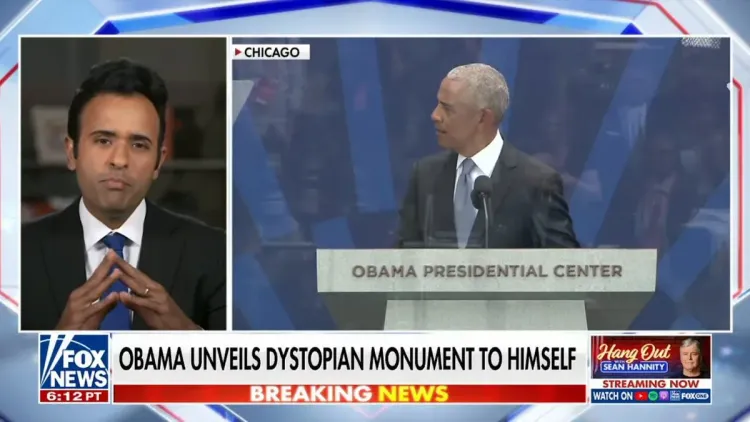
Synopsis
Entrepreneur and former DOGE co-lead Vivek Ramaswamy posted on X on June 19, 2026, calling on Americans to celebrate rather than apologise for their history. The statement enters a long-running US debate over how slavery, founding ideals, and national identity should be taught in public schools.
Key Takeaways
Vivek Ramaswamy posted on June 19, 2026 — Juneteenth — urging Americans to take pride in their history rather than apologise for it.
The post aligns with the 1776 Commission approach, established by executive order in September 2020 to promote patriotic civics education.
Ramaswamy is founder of Strive Asset Management , a 2024 Republican presidential candidate, and former co-lead of the DOGE advisory effort.
Republican-led state legislatures have passed multiple laws restricting how race and slavery are taught in public school classrooms.
American educators and public school students are the primary stakeholders as curriculum standards remain a live political battleground.
State legislative sessions and federal education budget proposals on history standards are the key developments to monitor going forward.
Entrepreneur and former DOGE co-lead Vivek Ramaswamy posted on X on Friday, June 19, 2026, urging Americans to stop apologising for their country's past and instead embrace it as a foundation for national ascent.
Context
In his post, Ramaswamy wrote: 'We're more likely to be a nation in ascent if we celebrate what got us here in the first place. It's time to stop apologizing for America's history and instead be proud of it.' The statement is a direct intervention in the long-running American debate over how national history should be taught and publicly remembered.
The post arrived on June 19 — Juneteenth, the federal holiday commemorating the emancipation of enslaved African Americans — a timing that adds layered significance to a message about historical pride versus historical reckoning.
Policy Backdrop
Ramaswamy's position aligns with a strand of conservative thought that has shaped education policy debates in the United States since at least the early 2010s. Republican-led state legislatures across the country have passed or proposed legislation restricting how race, slavery, and systemic inequality may be discussed in public school classrooms.
At the federal level, the 1776 Commission — established by executive order in September 2020 — was created to promote civics education grounded in founding principles and to counter what its proponents described as overly critical approaches to American history. The commission represents the institutional expression of the argument Ramaswamy is now amplifying.
Critics of this position argue that a complete account of American history must include sustained examination of slavery, segregation, and structural inequalities, and that framing such examination as 'apologising' mischaracterises honest historical inquiry.
Stakeholders and Impact
American educators and public school students are the most directly affected stakeholders in this debate. Curriculum standards set at the state level determine what version of history tens of millions of students encounter, making the political stakes of this argument concrete and immediate.
For Ramaswamy, whose public profile spans entrepreneurship through Strive Asset Management, a 2024 Republican presidential bid, and his role co-leading the DOGE advisory effort, the post reinforces his positioning as a cultural conservative willing to engage directly on identity and national narrative questions. His platform on X gives such statements significant reach in conservative media and political circles.
What's Next
The debate over history standards is unlikely to recede. State legislative sessions and federal education budget proposals that address civics requirements and history curricula will be the immediate arenas to watch. Ramaswamy's continued public engagement on cultural questions suggests he intends to remain a prominent voice shaping the conservative side of this argument well beyond his formal government-adjacent role.
How American institutions — school boards, state legislatures, and federal agencies — ultimately resolve the tension between national pride and historical accountability will shape civic education for a generation.
Point of View
' he adopts a rhetorical posture that has proven electorally effective for the Republican right since the early 2010s. The Juneteenth timing amplifies the signal, whether intentional or not, placing the statement in direct conversation with the memory of emancipation. For an entrepreneur-politician who has consistently used cultural conservatism to build a national profile, the post is less a policy proposal than a positioning move — staking out ground for future political relevance.
NationPress
20 Sept 2026
Frequently Asked Questions
What did Vivek Ramaswamy say about American history?
Ramaswamy posted on X on June 19, 2026 , saying Americans should stop apologising for their country's history and instead be proud of it, arguing that national pride is linked to national ascent.
What is the 1776 Commission and how does it relate to this debate?
The 1776 Commission was a presidential advisory body established by executive order in September 2020 to promote civics education grounded in founding principles, representing the institutional version of the argument Ramaswamy is making.
Why is the debate over US history teaching significant?
Curriculum standards in public schools shape how tens of millions of students understand national identity, slavery, and civic values, making this a high-stakes political and cultural argument with real policy consequences.
What is Vivek Ramaswamy's background and current role?
Ramaswamy is the founder and executive chairman of Strive Asset Management , a 2024 Republican presidential candidate, and former co-lead of the DOGE advisory effort under the Trump administration.
What should we watch for next in the US history curriculum debate?
State legislative sessions and federal education budget proposals addressing history and civics standards are the key arenas to monitor, as they translate this political debate into concrete classroom policy.