Vivek Ramaswamy Pays Tribute to Historian Gordon Wood
Synopsis
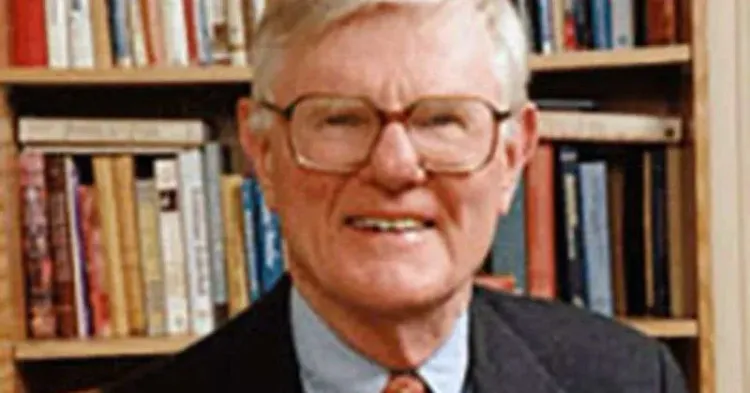
Vivek Ramaswamy paid tribute to Pulitzer Prize-winning historian Gordon Wood, recalling reading 'The Radicalism of the American Revolution' in 2001 at his Cincinnati high school and noting a recent November correspondence. He mourned Wood's passing and expressed hope that young Americans would continue learning from his account of the nation's birth.
Key Takeaways
Vivek Ramaswamy posted a tribute to Gordon Wood on June 9, 2026 , mourning the historian's passing.
Ramaswamy said he first read The Radicalism of the American Revolution in 2001 at St.
Xavier High School in Cincinnati, Ohio .
He disclosed that he and Wood had corresponded 'as recently as November' about what makes America special.
Gordon Wood won the Pulitzer Prize for History in 1993 for The Radicalism of the American Revolution .
Wood's scholarship on the American founding has influenced academic, public, and political discourse for decades.
Ramaswamy expressed hope that the next generation of Americans would continue to learn from Wood's account of the nation's birth.
Entrepreneur Vivek Ramaswamy — founder and executive chairman of Strive Asset Management and former co-lead of the US Department of Government Efficiency (DOGE) advisory effort — on Tuesday, June 9, 2026, paid tribute to Pulitzer Prize-winning historian Gordon Wood, mourning his passing and crediting Wood's scholarship with shaping his own understanding of the American founding.
Context
In his post, Ramaswamy recalled first reading Wood's landmark 1992 book The Radicalism of the American Revolution in 2001 while attending St. Xavier High School in Cincinnati, Ohio — an all-boys Jesuit college preparatory institution. He wrote: 'I'm grateful to Gordon Wood for shaping my understanding of the American founding, and I know I'm not alone.' The tribute underscores how Wood's work has reached well beyond academic circles, influencing public figures across generations.
Ramaswamy also noted that he and Wood had corresponded 'as recently as November' on 'what makes America special,' suggesting a personal intellectual relationship between the two men that extended into recent months. He closed with: 'May he rest in peace, as our next generation of young Americans continues to learn from his account of our nation's birth.'
Policy Backdrop
Gordon Wood was among the most consequential historians of the American founding era. His earlier work, The Creation of the American Republic, 1776–1787 (1969), established him as a leading voice on constitutional and ideological origins, while The Radicalism of the American Revolution won the Pulitzer Prize for History in 1993, arguing that the Revolution was a profound social and cultural transformation — not merely a political one.
Wood's scholarship has long served as a touchstone in debates over civics education and the interpretation of founding principles. References to his work by political figures like Ramaswamy reflect the enduring role of mid-20th-century historiography in shaping contemporary national identity discussions in the United States.
Stakeholders and Impact
Wood's death is being mourned by historians, educators, and public intellectuals who drew on his sweeping reinterpretation of the founding era. For students and policymakers engaged in debates over civics curricula and American history education, his passing marks the end of a formative scholarly era.
Ramaswamy's tribute is notable given his profile as a businessman and former presidential candidate who has consistently invoked founding-era principles in his public arguments. His acknowledgement that Wood's influence is widely shared — 'I know I'm not alone' — points to the broad reach of Wood's intellectual legacy across ideological lines.
What's Next
Wood's passing is likely to prompt renewed attention to his body of work among educators and policymakers who shape history and civics standards across American schools. Ramaswamy's public tribute may also invite further discussion among political figures about which historical frameworks should guide the next generation's understanding of the nation's founding. Any subsequent statements on required readings or history education standards in the coming weeks will be worth watching.
Point of View
A specific school, and a specific year, Ramaswamy grounds his intellectual identity in a recognisable conservative-leaning reverence for the founding — a posture central to his political brand. Wood's own scholarship, however, was broadly respected across the academic mainstream, making the tribute a relatively unifying gesture rather than a partisan one. The disclosure of recent personal correspondence adds a humanising dimension and may prompt further public reflection on how historians and political actors interact outside the public eye.
NationPress
19 Sept 2026
Frequently Asked Questions
Who is Gordon Wood and why is he significant?
Gordon Wood was a Pulitzer Prize-winning American historian best known for 'The Radicalism of the American Revolution' (1992) and 'The Creation of the American Republic' (1969), works that reshaped scholarly and public understanding of the American founding era.
What is 'The Radicalism of the American Revolution' about?
Published in 1992, the book argues that the American Revolution was not merely a political event but a sweeping social and cultural transformation that fundamentally altered the structure of American society. It won the Pulitzer Prize for History in 1993.
Where did Vivek Ramaswamy go to high school?
Ramaswamy attended St. Xavier High School, an all-boys Jesuit college preparatory school in Cincinnati, Ohio, where he said he first read Gordon Wood's book in 2001.
What is Vivek Ramaswamy's current role?
Ramaswamy is the founder and executive chairman of Strive Asset Management. He previously served as co-lead of the US Department of Government Efficiency (DOGE) advisory effort and ran for the Republican presidential nomination in 2024.
Why did Vivek Ramaswamy post about Gordon Wood?
Ramaswamy posted to mourn Wood's passing, crediting the historian's work with shaping his understanding of the American founding and noting that the two had corresponded as recently as November on what makes America special.