Ramaswamy Meets United Way of Cleveland on Ohio Mobility
Synopsis
Entrepreneur Vivek Ramaswamy met with United Way of Greater Cleveland leadership on May 21, 2026, discussing a shared vision for upward economic mobility in Ohio, with emphasis on family formation and well-paying jobs as the state's core drivers of prosperity.
Key Takeaways
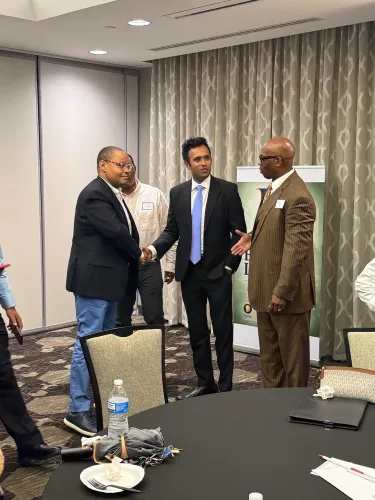
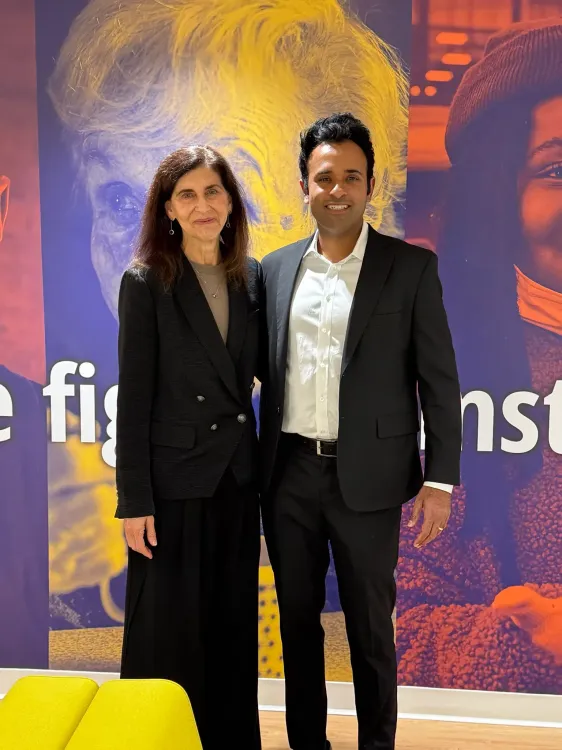
Vivek Ramaswamy held a meeting with Jordan Sobol and United Way of Greater Cleveland leadership on May 21, 2026 .
The discussion centred on 'upward economic mobility' for Ohioans, with family and well-paying jobs as focal themes.
Ramaswamy described both parties as sharing a common vision for Ohio's economic future.
The United Way of Greater Cleveland works on education, financial stability, and health outcomes across Northeast Ohio .
The engagement reflects a broader post-2024 pattern of Republican figures building ties with state-level nonprofits in the industrial Midwest.
No specific policy commitments or follow-up initiatives have been publicly announced from the meeting.
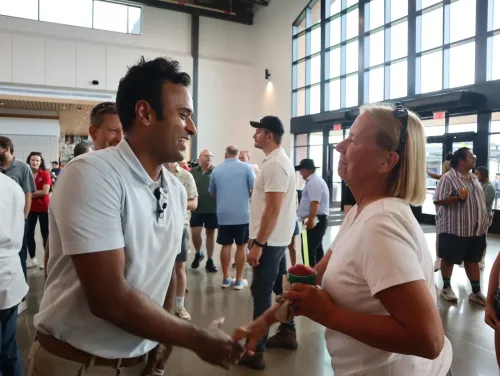
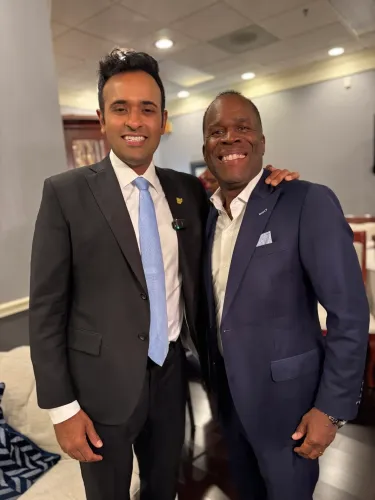
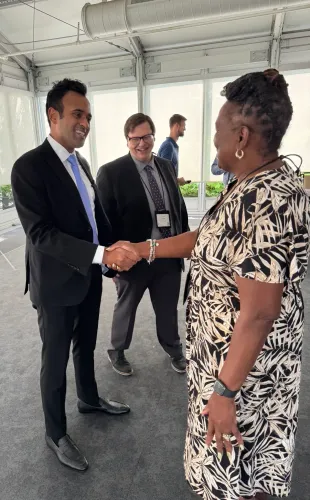
Entrepreneur Vivek Ramaswamy met with Jordan Sobol and the leadership of the United Way of Greater Cleveland on Thursday, May 21, 2026, for a discussion centred on expanding upward economic mobility for Ohioans, with family formation and well-paying jobs identified as core themes.
Context
Ramaswamy described the meeting as a 'thoughtful conversation,' noting a shared vision of 'delivering upward economic mobility to all Ohioans.' The United Way of Greater Cleveland is a nonprofit that works on education, financial stability, and health outcomes across Northeast Ohio through community partnerships. The discussion, according to Ramaswamy's post, focused specifically on 'the role of family and well-paying jobs' in the state's economic future.
Policy Backdrop
Ramaswamy's public positioning on economic mobility has long emphasised workforce participation, family formation, and reduced regulatory friction over expanded federal redistribution programmes. During his 2024 Republican presidential campaign, he consistently argued that cultural and labour-market factors — not direct government transfers — are the primary levers for lifting Americans out of poverty. This meeting reflects a continuation of that framework at the state and civic level.
Ohio presents a complex economic landscape: the state carries a legacy of manufacturing employment alongside persistent urban poverty challenges, making it a recurring venue for policy conversations about job quality and community stability. Post-2024 election, several Republican figures have conducted targeted outreach to state-level nonprofits in the industrial Midwest to align private and civic efforts on these themes.
Stakeholders and Impact
The United Way of Greater Cleveland serves families across the Northeast Ohio region, operating at the intersection of workforce development, financial stability, and social services. Engagement from a prominent national figure such as Ramaswamy — founder of Strive Asset Management and former co-lead of the US Department of Government Efficiency (DOGE) advisory effort — can raise the visibility of regional nonprofits and potentially attract private-sector interest in their programmes.
For Ohio families, particularly those in working-class and lower-income brackets, the alignment of civic organisations with influential policy voices could translate into greater advocacy for workforce-focused initiatives at the state legislative level. Nonprofits like the United Way often depend on such partnerships to amplify their reach and funding pipelines.
What's Next
The meeting's outcome in terms of concrete commitments or follow-up initiatives has not been disclosed. Observers will watch whether Ramaswamy announces any formal partnerships, policy proposals, or endorsements tied to Ohio workforce or family-support programmes ahead of future state legislative sessions. His continued engagement with civic institutions in Ohio also signals a sustained interest in the state's political and economic landscape beyond his 2024 presidential run.
Point of View
A common move for national figures positioning themselves for future electoral or policy influence. By anchoring the conversation around family and jobs rather than government programmes, he reinforces a distinctly conservative framework for addressing poverty — one that competes with progressive narratives dominant in urban Ohio. The choice of Cleveland, a city with deep manufacturing roots and significant economic inequality, is strategically deliberate. This pattern of Midwest nonprofit engagement is worth tracking as a leading indicator of Ramaswamy's post-DOGE political ambitions.
NationPress
23 Sept 2026
Frequently Asked Questions
What did Vivek Ramaswamy discuss with United Way of Greater Cleveland?
Ramaswamy discussed upward economic mobility for Ohioans, with a focus on the role of family formation and well-paying jobs in the state's economic future.
Who is Jordan Sobol?
Jordan Sobol is an executive leader at the United Way of Greater Cleveland involved in regional economic mobility initiatives in Northeast Ohio.
What is the United Way of Greater Cleveland?
The United Way of Greater Cleveland is a nonprofit organisation that works to improve education, financial stability, and health outcomes for communities across Northeast Ohio through local partnerships.
What is Vivek Ramaswamy's stance on economic mobility?
Ramaswamy has consistently argued that workforce participation, family formation, and reduced regulatory barriers — rather than expanded government programmes — are the primary drivers of upward economic mobility.
Why is Ohio significant for Ramaswamy's outreach?
Ohio combines a legacy of manufacturing employment with persistent urban poverty, making it a key venue for policy conversations about job quality and community stability, and a state of ongoing political importance for Republican figures.