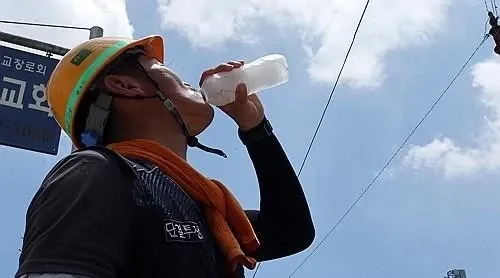
South Korea heat wave: Daegu hits 40.9°C, 16 dead, 2,025 ill

Synopsis
South Korea's heat wave has turned historic — Daegu crossed 40°C for the first time since 1942, Yangsan hit 42.5°C, the highest since modern records began in 1904, and Seoul is about to receive its first-ever highest-level heat warning. With 16 dead and over 2,000 hospitalised since May, this is no longer a weather event — it is a public health emergency.
Key Takeaways
Daegu recorded 40.9°C on 3 August — above 40°C for the first time since 1 August 1942 .
Yangsan hit 42.5°C on Sunday, the highest temperature since modern weather observations began in 1904 .
At least 16 people have died from heat-related illnesses; 2,025 have been treated at emergency rooms since 15 May .
The KMA will issue its highest-level heat warning for the greater Seoul area on Tuesday — the first time since the warning system launched in June.
Overlapping high-pressure systems and clear skies are driving the prolonged extreme heat, according to the KMA .
South Korea is enduring one of its most severe heat waves on record, with temperatures breaching historic thresholds across multiple cities on Monday, 3 August. The crisis has claimed at least 16 lives and sent more than 2,025 people to emergency rooms since 15 May, according to the Korea Disease Control and Prevention Agency (KDCA).
Record Temperatures Across the Country
The southeastern city of Daegu recorded a high of 40.9°C on Monday, surpassing the 40°C mark for the first time since 1 August 1942, according to the Korea Meteorological Administration (KMA). Goryeong County, approximately 230 kilometres southeast of Seoul, logged the day's peak at 41.2°C at 3:37 pm.
On Sunday, the southeastern city of Yangsan had already set a more alarming benchmark — 42.5°C, the highest temperature recorded since modern weather observations began in 1904. Temperatures in Yangsan eased to 38°C on Monday but remained dangerous.
Heat Wave Warnings Expand to Greater Seoul
Severe heat wave warnings were already in effect across southwestern parts of the country, triggered when perceived temperatures exceed 38°C for more than a day. The KMA announced that additional severe warnings will take effect at 11 am Tuesday in southern Seoul, parts of Gyeonggi Province, and Jangseong and Gokseong counties in South Jeolla Province.
Notably, this will mark the first time the highest-level heat warning has been activated in the greater Seoul area since the warning system was introduced in June. The KMA attributed the prolonged extreme heat to overlapping high-pressure systems over the peninsula, compounded by intense, direct sunlight under clear skies.
Deaths and Health Emergencies
The human toll has been severe. In Incheon, west of Seoul, a man in his 40s died Monday morning after his body temperature neared 40°C; he had been hospitalised the previous day. On Sunday, two farmers — aged in their 60s and 80s — were found dead in the central province of South Chungcheong.
A total of 108 people were treated at emergency rooms nationwide on Sunday alone. Seoul reported 18 heat-related patients on Sunday, bringing the capital's tally to 185 since mid-May. Nationwide, the cumulative count since 15 May stands at 2,025, with 16 confirmed heat-related deaths so far.
What's Next
With warning systems expanding to the capital region for the first time and no immediate relief forecast, health authorities are urging vulnerable populations — the elderly, outdoor workers, and those without air conditioning — to take precautions. The extension of severe warnings to Seoul and Gyeonggi Province signals that the crisis, which began in mid-May, is far from over.
Point of View
And the data now confirms it is structurally unprecedented. The extension of the highest-level heat warning to Seoul, a dense urban metro of over 10 million people, raises the stakes sharply. What is missing from the official response is a clear accounting of how many of the 16 deaths were preventable — and whether cooling infrastructure, particularly for elderly rural residents, is adequate. The two farmers found dead in South Chungcheong are a pointed reminder that the heat burden falls hardest on those with the least access to relief.
NationPress
3 Aug 2026
Frequently Asked Questions
How severe is South Korea's current heat wave?
South Korea is experiencing one of its worst heat waves on record. Daegu reached 40.9°C on 3 August — the first time above 40°C since 1942 — while Yangsan hit 42.5°C on Sunday, the highest temperature since modern weather records began in 1904.
How many people have died or been hospitalised due to the heat in South Korea?
At least 16 people have died from heat-related illnesses, and 2,025 have been treated at emergency rooms across the country since 15 May, according to the Korea Disease Control and Prevention Agency.
Why is Seoul being placed under a severe heat warning for the first time?
The Korea Meteorological Administration will activate its highest-level heat warning for southern Seoul and parts of Gyeonggi Province on Tuesday — the first time since the warning system was introduced in June. The trigger is perceived temperatures exceeding 38°C for more than a day, a threshold the capital region is now expected to breach.
What is causing the extreme heat in South Korea?
The KMA attributes the prolonged high temperatures to overlapping high-pressure systems sitting over the Korean Peninsula, combined with strong, direct sunlight under persistently clear skies — a combination that has prevented any cooling relief since mid-May.
Which areas of South Korea are worst affected?
The southeastern cities of Daegu and Yangsan, Goryeong County, and the central province of South Chungcheong have seen the most extreme temperatures and fatalities. From Tuesday, the greater Seoul area and South Jeolla Province will also fall under the highest-level heat warning.